Relevance 10/10Importance 9/10
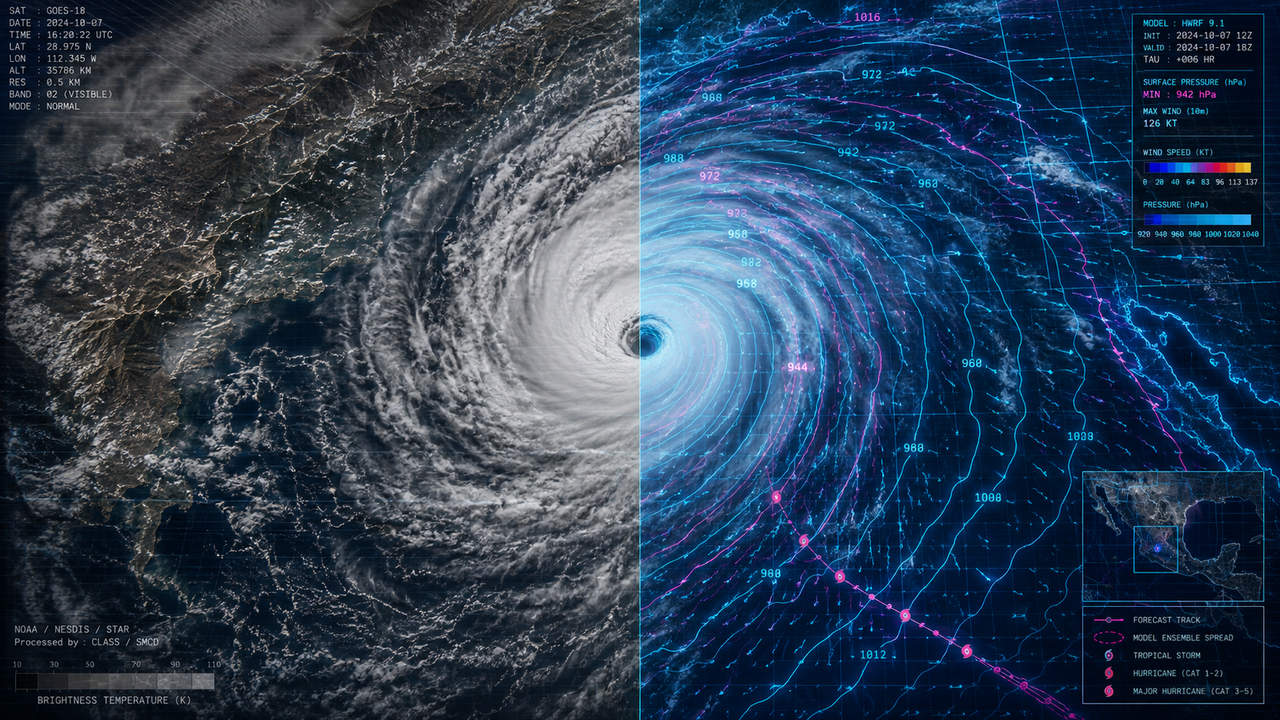
Google DeepMind's newest AI weather model now generates hourly global forecasts by ingesting raw satellite imagery directly, at 5km resolution for temperature and humidity and 10km for wind. It's already shipping into Search, Maps, and Gemini, with enterprise access via BigQuery, Earth Engine, and Google Cloud Storage. The solar-radiation and cloud-cover outputs are aimed squarely at the renewable energy market.
Relevance 7/10Importance 10/10
Researchers pulled off Ken Thompson's classic trusting-trust attack, but instead of backdooring a compiler they backdoored GNU strip inside the NixOS bootstrap. The payload self-propagates through successive generations of the tool and survives even after the originally infected binary is dropped from the dependency graph, backdooring nearly every binary in the distro. The upshot: any build utility that touches executables is a viable supply-chain vector, not just compilers.
Relevance 7/10Importance 7/10
The MartyPC author commissioned a 5.6-gigapixel die photo of an NEC V20 CPU, then hand-labeled about a thousand microcode bits and trained a PyTorch CNN to classify the remaining 29,928 at better than 98% accuracy. Collaborators on the VCF forums helped decode the microcode word fields and the instruction-decode PLA. The payoff is a genuinely cycle-accurate V20 emulator core instead of an approximation.
Relevance 6/10Importance 7/10
The top-scoring story on the front page argues that compactness and simplicity are orthogonal: a tiny program can be deeply coupled, and a huge one can be genuinely simple. Small Unix pipelines get called out as the canonical example of minimalism that hides tangled dependencies between components. Real simplicity means decoupled features and clean abstractions, which takes deliberate engineering effort — see SQLite and Chrome.
Relevance 6/10Importance 5/10
Justin Jay Wang walks through three techniques for generating random gradient imagery, work he did partly at OpenAI. The layered SVG radialGradient approach shipped on OpenAI's homepage from 2020 to 2022, serving a unique one-off gradient to every visitor at just 6KB. He also covers Perlin-noise heightmaps and DALL·E 2 prompting, which he describes as "more akin to a slot machine than exact science."
Relevance 5/10Importance 5/10
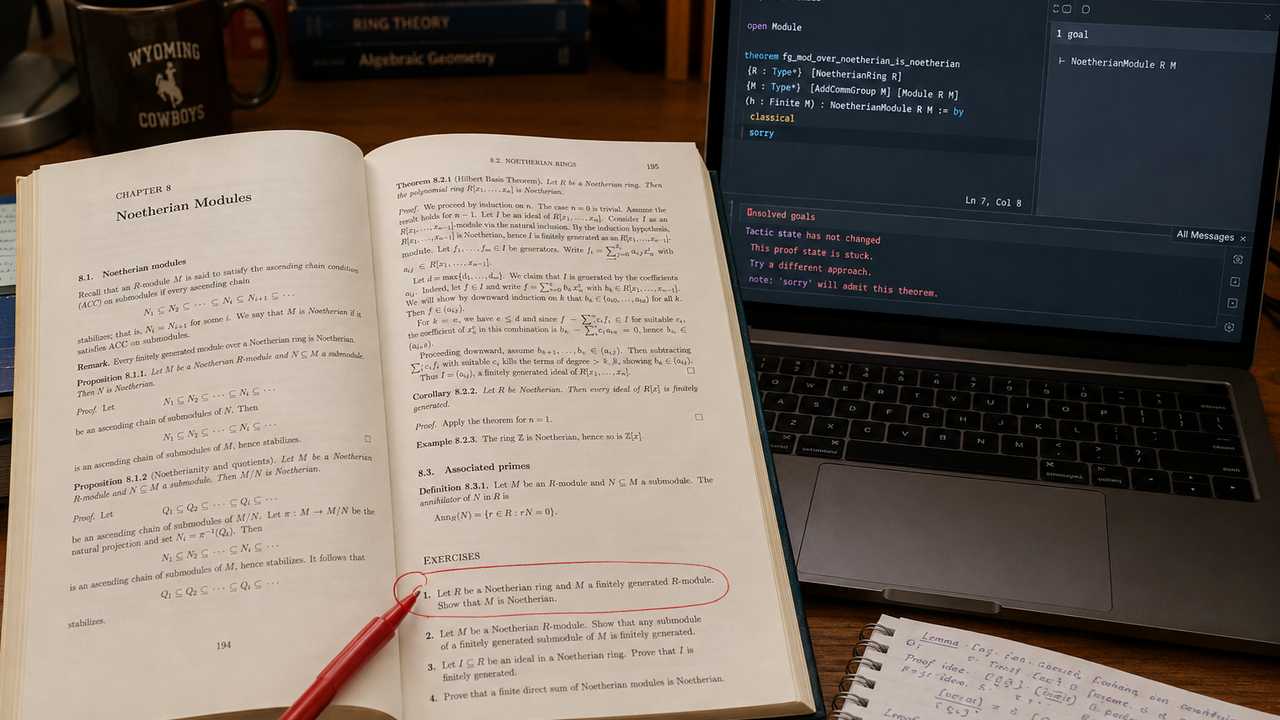
Ben Kallus found a counterexample to the very first proof exercise in the standard graduate algebra textbook: with an empty domain and a nonempty codomain, the empty function is injective but has no left inverse. He only caught it because repeated failures to close the proof in the Rocq proof assistant made him suspect the statement itself. It turned out to already be in the published errata.
Relevance 5/10Importance 4/10
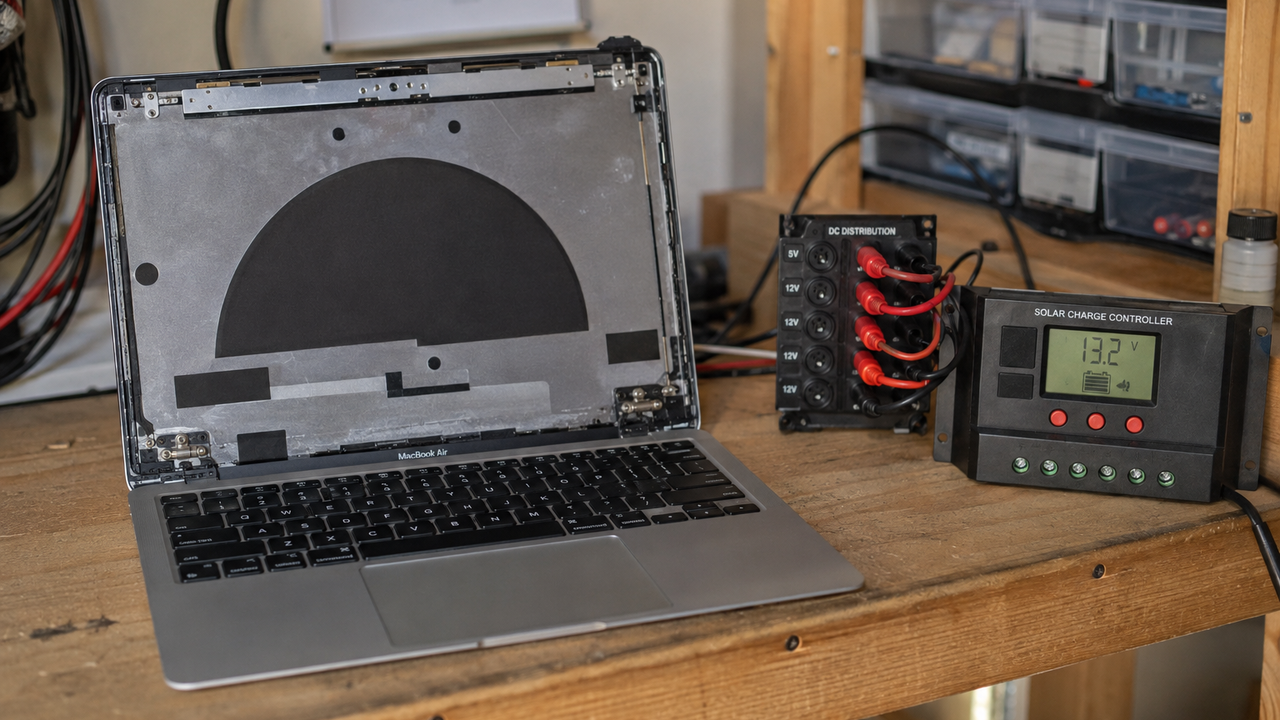
A developer bought a screen-damaged M1 MacBook Air for £300, removed the display entirely, and turned it into a headless remote build server for iOS and macOS work. They rewired power delivery to run off a custom 20V DC solar setup, chasing the M1's performance-per-watt in a low-power home. Access is over SSH and NoMachine from an Android tablet — VMs, cloud CI, and the fan-equipped Mac Mini all got rejected.
Relevance 4/10Importance 5/10
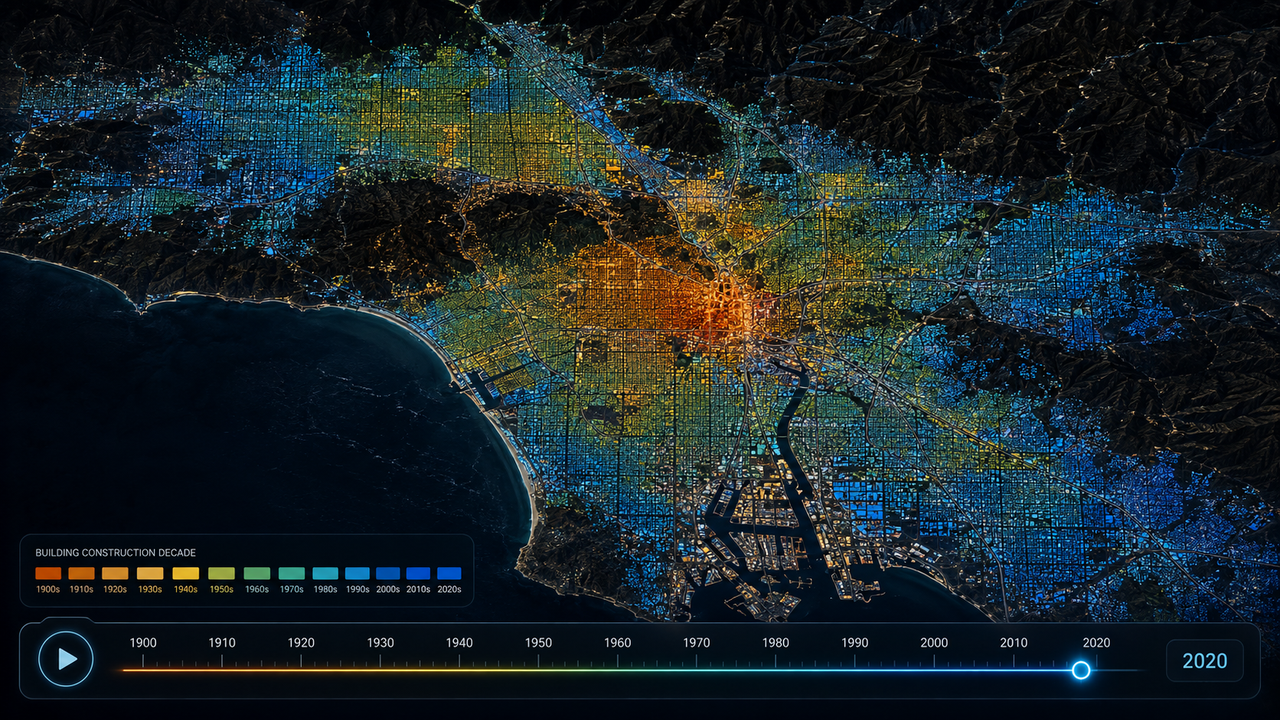
An interactive Parcelscope map renders every standing building in Los Angeles by construction year, letting you scrub or animate the city's growth across 146 years. It's built on LARIAC 2020 building outlines joined to LA County Assessor roll data, switching from individual footprints at close zoom to aggregated grid tiles when you pull back. Toggle between decade and height modes and click any building for address and construction details.
Relevance 3/10Importance 8/10
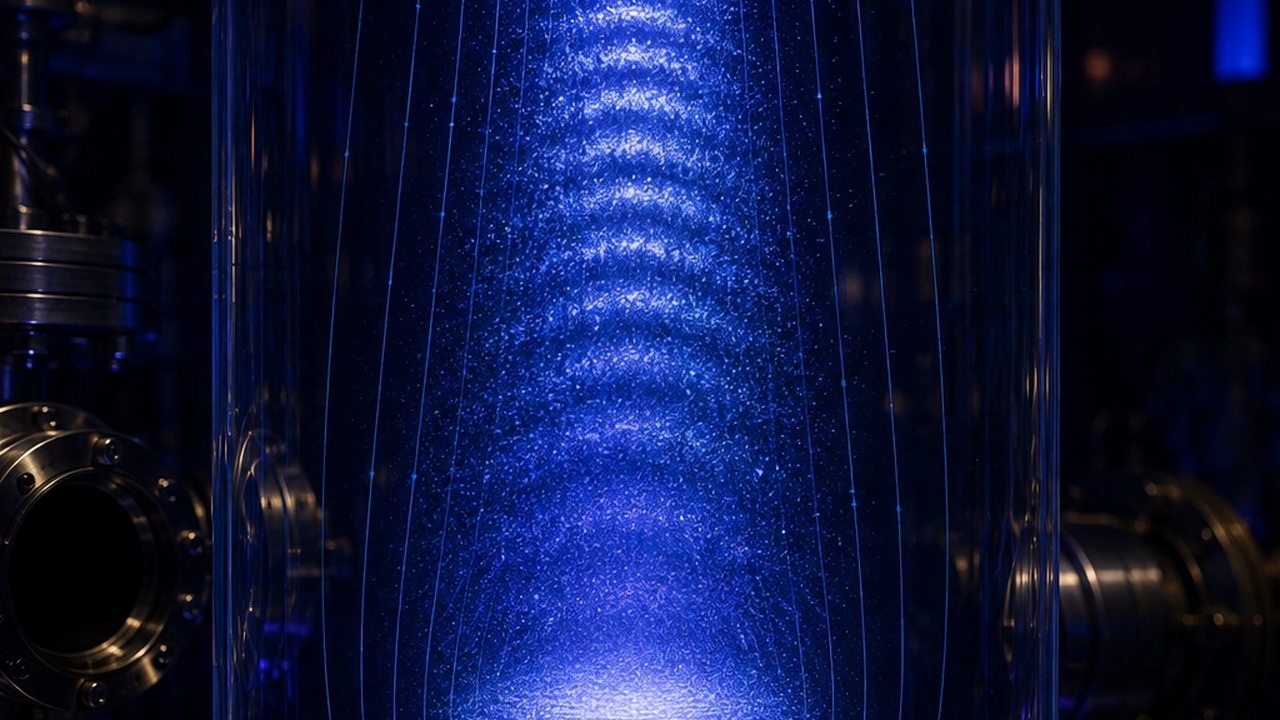
A team from Ben-Gurion University, Ulm, and Oxford — with Roger Penrose among the authors — used a "Quantum Galileo Interferometer" on ultracold rubidium near an atom chip to measure the gravitational phase of a freely falling quantum wave. Published in Science Advances, it's the first observation of this long-predicted effect, showing Einstein's equivalence principle holds for a quantum object. It doesn't unify gravity with quantum mechanics, but the technique scales toward heavier test masses like nanodiamonds.
Relevance 1/10Importance 3/10
A literary essay in Portico Quarterly whose title deliberately echoes T.S. Eliot's famous "Hamlet and His Problems," turning that critical lens on the Scottish play instead. The site blocked automated fetching, so this summary is based on the title and venue rather than the text — treat it as a guess. It's the lowest-scoring item on the front page at eleven points, so HN itself seems ambivalent.

 HN Briefing PM