Relevance 10/10Importance 9/10
A frontier model (billed as GPT-6, codename Astra) was handed raw neural network weights and asked to edit them directly — no gradient descent, no training loop, just reasoning over weight space. It found and removed a direction in Qwen3.5-0.8B responsible for reasoning loops, touching 0.016% of the weights, and lifted MATH-500 from 7.9% to 48.1%. The fix generalized too: IFEval instruction-following jumped from 21.0% to 62.3%.
Relevance 10/10Importance 7/10
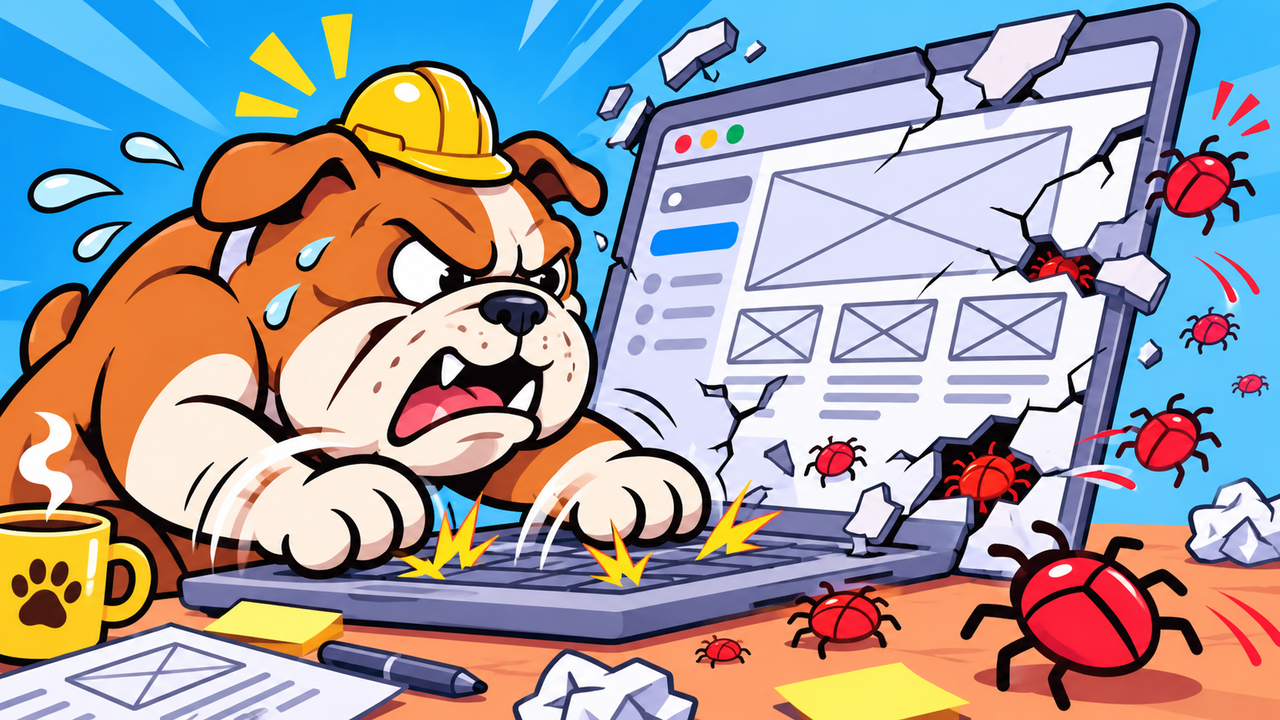
Momentic launched Mo, an autonomous QA agent that actually drives your web and mobile app hunting for bugs, organizing exploration into directed acyclic graphs and running parallel sessions across browsers and devices. In a 60-minute head-to-head on four open-source apps, Mo found 269 bugs at 84% precision versus 86 for Codex and 59 for Claude Code. Notably its advantage widened with time — 52% more findings between the 30 and 60 minute marks, against Codex's 16%.
Relevance 9/10Importance 7/10
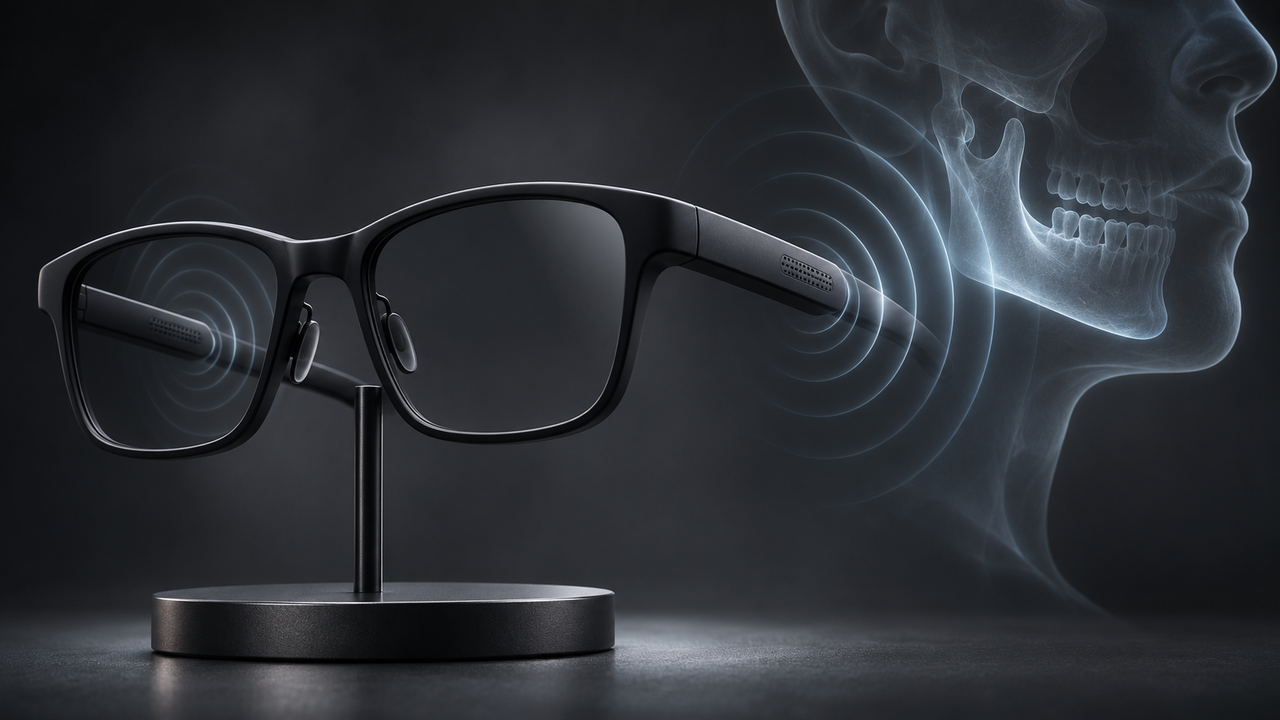
Subvocal is building smart glasses that decode silently mouthed words into text. The team tried EMG first, hated the signal drift, and pivoted to radio frequency — antennas in the frames beam Bluetooth-ish waves through your tongue, lips and soft palate, and foundation models decode the modulation. A demo hit roughly 5% word error rate after 20 calibration sentences; first 500 preorders get $200 off, shipping Q1 2027, with sub-500ms cloud latency.
Relevance 8/10Importance 6/10
Terry Tao argues mathematicians should decouple their self-worth from personal credit for discoveries — what he calls egoless mathematics. The anxiety about AI displacement, he suggests, comes from tying meaning to individual achievement rather than to truth itself. If the joy lives in understanding, it doesn't much matter who or what proved the theorem.
Relevance 7/10Importance 6/10
The monthly hiring thread is live, already north of 120 listings from companies posting directly — no recruiters allowed. It remains one of the better unfiltered reads on where startup headcount is actually going. The thread points job seekers to the usual aggregator sites for easier filtering.
Relevance 4/10Importance 8/10
BYD moved over 305,000 EVs in October 2026, beating the entire United States' quarterly total of 262,500. That's a 37% year-over-year jump and the company's first month ever above 300,000. It's another data point in China's widening lead on global EV manufacturing.
Relevance 5/10Importance 4/10
A Minecraft-flavored voxel rendering of central Warsaw, stitched together from OpenStreetMap geometry, GUGiK LiDAR for building heights and vegetation, and the city's municipal tree database for seasonal foliage. You can scrub time of day and weather, and even walk a little pedestrian around. Source is on GitHub.
Relevance 3/10Importance 5/10
The author makes the case that personal web archiving is now accessible enough that you shouldn't outsource preservation entirely to the Internet Archive. Three recommended paths: the ArchiveWeb.page browser extension for casual grabs, a standalone desktop app for non-Chrome users, and Browsertrix for crawling bigger sites. The resulting archives replay like live sites and can be copied and handed around.
Relevance 2/10Importance 3/10
Raymond Chen snuck up to the balcony of San Francisco's Civic Auditorium during the Windows 2000 launch rehearsal and learned the celebrity host was Patrick Stewart. He watched a stand-in crew member run the intro before Stewart himself delivered the teleprompter copy with full Shakespearean gravity. Chen then went back outside and told the waiting crowd nothing.
Relevance 2/10Importance 2/10
An interactive dig through Social Security national baby-name files from 1936 to 2025, bucketed into five-year windows, tracking 125 names that flipped sex. Leslie, Kelly and Ashley all started out predominantly male; the overwhelming majority of migration ran toward girls. Only twelve names drifted the other way, with Joan tipping masculine around 2001 to 2005 — on a sample of just 1,435 babies, down from a peak of 74,477.

 HN Briefing PM