Relevance 9/10Importance 8/10
Xe Iaso's Anubis — the proof-of-work gate that exploded in popularity after AI scrapers started flattening self-hosted Git servers — finally shipped WebAssembly-based challenges after roughly a year of work. The big win is moving from plain SHA-256 to a memory-hard function like argon2id, which largely neuters the GPU-accelerated solvers people had been vibe-coding to blow past the gate. Commenters called it the death of the "have Claude write me a CUDA Anubis solver" workaround, though the usual proof-of-work-is-wasteful debate showed up right on cue.
Relevance 9/10Importance 7/10
Bryan Cantrill's broadside against LinkedIn users outsourcing their posts to LLMs, arguing the output is instantly recognizable and quietly destroys the author's credibility. He allows that models are genuinely useful for brainstorming and editing, but insists they're bad writers who flatten your actual voice. The closing plea: have some confidence in your own voice and write your own content.
Relevance 8/10Importance 9/10
On September 5th, Munich-based Isar Aerospace flew its Spectrum rocket from Andøya Space in Norway, cleared MaxQ, staged cleanly, crossed the Kármán line, and deployed payloads after a circularization burn — on flight number two. That makes Isar the first European commercial company to put satellites into orbit, which CEO Daniel Metzler framed as a real alternative for commercial and institutional customers. The 2018-founded startup now runs over 400 people across five locations, backed by private international investors plus the German Space Agency's ESA-funded Microlauncher Competition.
Relevance 7/10Importance 5/10
Mador is a reactive DOM runtime that clocks in around 855 bytes minified and lets you bolt reactivity onto existing HTML without adopting a framework. It works off three ideas: a selector-update-read binding pattern, batched state writes through a Proxy, and automatic teardown when the bound element leaves the DOM. No build step, no global runtime, ships as a native ES module.
Relevance 6/10Importance 6/10
GrapheneOS announced it's modernizing its bundled Messaging app with a completely rewritten interface built in Jetpack Compose, plus a pile of fixes and improvements. The post is part of a broader push to bring the hardened Android fork's default apps up to modern standards alongside clipboard-handling work. Nice signal for the privacy-phone crowd, though the announcement itself is light on clipboard specifics.
Relevance 6/10Importance 4/10
VODForge is a free, MIT-licensed desktop app that turns YouTube videos and playlists into local MP4 or MP3 files, up to 4K video and 320 kbps audio. It handles metadata preservation, cover art, and a sequential processing queue, with no account required. Runs on macOS 12+ and Windows 10/11 64-bit, with a paid cloud service planned as a separate offering later.
Relevance 4/10Importance 6/10
Announced today, NetBSD 9.5 is the final release off the version 9 branch, carrying a curated set of security and stability fixes accumulated since 9.4. The announcement simultaneously ends support for the entire 9.x line. Anyone still running it should move to NetBSD 11.0 or 10.2.
Relevance 3/10Importance 4/10
A NetBSD project page cataloging academic and industrial research built on top of the OS, spanning TCP tuning for satellite links, IPv6 and IPsec implementations, Internet land-speed records, virtual memory design, real-time storage, and timer subsystems. The page doubles as an open invitation for researchers to submit their own NetBSD-based work. The pitch: permissive licensing plus broad hardware architecture support makes it an unusually good research substrate.
Relevance 2/10Importance 3/10
Atlas Obscura's entry on the legendary surplus store run by Ed "Atomic Ed" Grothus, a former Los Alamos National Laboratory machinist who bought a 17,000-square-foot ex-grocery store and filled it with castoff hardware from America's nuclear weapons program. Oscilloscopes, galvanometers, Geiger counters, and centrifuges stacked in canyons — nothing dangerously radioactive, despite the reputation. Grothus used it as a base for anti-nuclear activism until his death in 2009; the store has since gone dark.
Relevance 1/10Importance 3/10
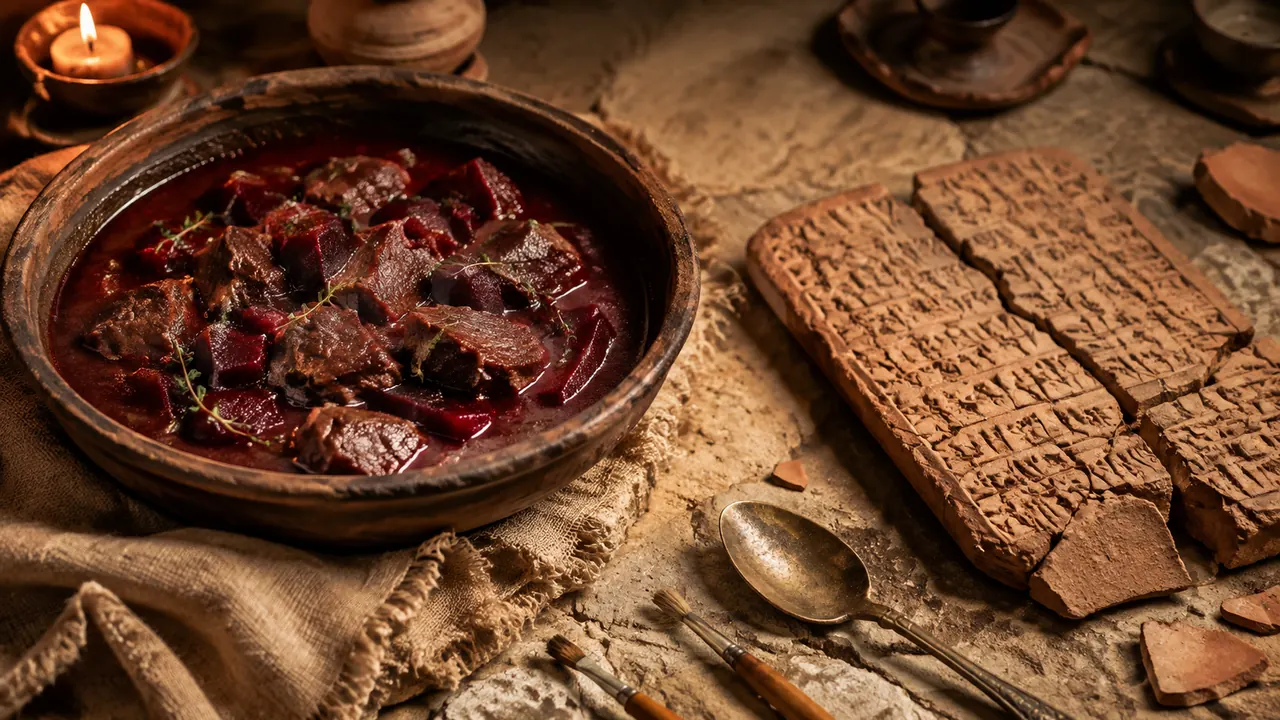
Yale's Babylonian Collection published recreations of the world's oldest known recipes, transcribed from cuneiform tablets nearly four thousand years old. The headline dish is a lamb stew built on beer, beets, cumin, and cilantro, simmered until the sauce thickens and finished with coriander and a fresh herb paste. A companion barley broth shows how Babylonians folded fermented bread into their cooking.

 HN Briefing PM