Relevance 10/10Importance 9/10
Anthropic's new life sciences group turned roughly 950 Claude agents loose on DNA sequence databases for 21 hours, and they surfaced a previously uncharacterized system in bacteriophages: array-associated reverse transcriptases, a reverse transcriptase paired with CRISPR-like repeat arrays. The function is still unknown, but the architecture resembles programmable systems that manipulate DNA. The team backed it with wet-lab validation and published preliminary results as a proof point for AI-driven biological discovery.
Relevance 10/10Importance 8/10
The argument: hardware efficiency, architecture improvements, better inference engines, and small specialized models are compounding into roughly two and a half orders of magnitude of cost reduction per year. Once a token costs less than a conventional compute operation, inference stops being a premium feature and becomes plumbing embedded everywhere in the stack. The author sees that unlocking a wave of startups while structurally favoring hyperscalers, and forcing incumbents to compete on quality rather than capability.
Relevance 9/10Importance 8/10
Google shipped Gemini 3.8 Flash TTS and Flash-Lite TTS, billing them as its most expressive audio models to date. The pair extends Gemini's existing speech stack with a cost-tiered split between the full Flash model and the lighter variant. Announced today on Google's blog, aimed squarely at developers building voice into apps.
Relevance 9/10Importance 7/10
Anthropic's engineering team made claude.ai three times faster in two weeks by instrumenting four core user journeys and then letting Claude propose and ship the optimizations itself. Every change landed behind a feature flag, validated against both lab benchmarks and field telemetry, with automated tests and human review as guardrails. Over 3,000 changes merged without an incident, and the takeaway is that measurement is the actual bottleneck, not the optimizing.
Relevance 9/10Importance 6/10
Apple released LensVLM-9B, a vision-language model built on Qwen3.5-9B that treats long documents as compressed images and selectively expands only the pages it actually needs. It offers 5x, 10x, and 15x compression settings, spending compute only where the answer lives. It runs under Transformers, vLLM, and SGLang for local or cloud inference.
Relevance 8/10Importance 6/10
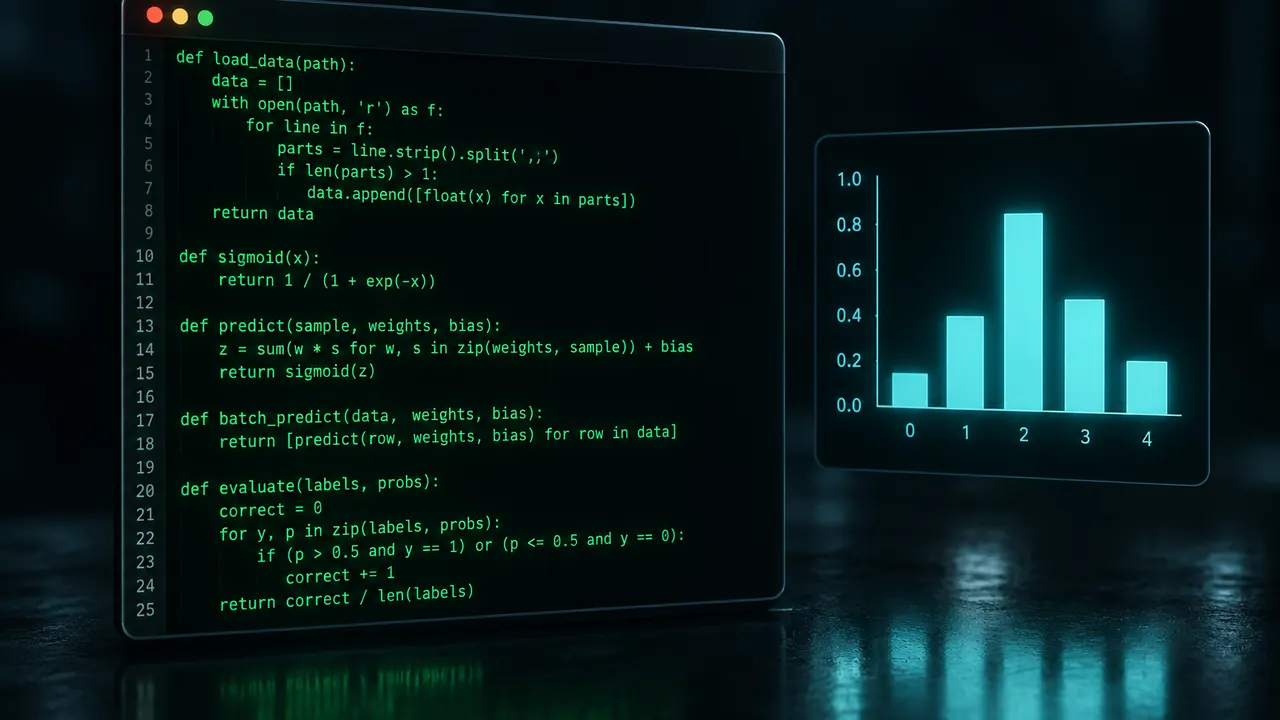
NobodyWho demonstrates that Jev — feeding a prompt with multiple-choice options and getting calibrated probabilities back — is implementable in 25 lines against a local model. The trick is reading the logits for each option token directly and normalizing them into probabilities, no API and no fine-tuning required. Their point is that this is just fast, local, private classification wearing a fancier name.
Relevance 4/10Importance 7/10
Radicle disclosed that its peer-to-peer network protocol has shipped without encryption or authentication in every released version. An attacker on the network path can read traffic in the clear and impersonate allow-listed nodes to reach private repositories. The team says stop using private repos until the fix lands, and the remedy is a major version that swaps the homegrown protocol for iroh, which also brings NAT traversal.
Relevance 3/10Importance 8/10
Italy's parliament voted to reopen the door to nuclear power, reversing a policy stance that dated back to the post-Chernobyl referendum that shut the country's reactors down. It puts Italy alongside other European states rethinking nuclear as baseload for electrification and, increasingly, for data center demand. (Summary based on the AP headline and HN discussion — the article itself was not fetchable.)
Relevance 2/10Importance 3/10
Raymond Chen traces two decades of scroll bar behavior, including the Windows 7 right-click context menu with "Scroll Here" and the obscure Shift-click jump-to-position shortcut. The catch is fragmentation: Chromium and WPF honor these, WinUI supports neither. The result is that no Windows user can count on consistent scroll bar behavior across apps anymore.
Relevance 2/10Importance 2/10
A volunteer with Action Porty walks through repairing the clock tower at Edinburgh's historic Portobello Police Station, including disconnecting the motor and hand-rotating the shaft to set the time. The chime system runs off a mystery circuit board from around 2001 that had to be reverse-engineered on the spot. It worked at 4pm, they went to the pub, and now they're scheming about remote chime control and themed lighting.

 HN Briefing PM