Relevance 10/10Importance 9/10
OpenAI launched a legal-research product built on its Astra model, indexing over 230 million URLs of U.S. case law, statutes, regulations and court rules via a partnership with the Free Law Project's CourtListener — claiming coverage of more than 99.9% of published U.S. precedential case law. API customers like Harvey and Legora can build on it, which HN immediately read as OpenAI both supplying and competing with its own ecosystem. Commenters piled on about hallucination risk, liability when AI legal work goes wrong, and whether this accelerates winner-take-all dynamics in litigation.
Relevance 8/10Importance 9/10
Fujitsu unveiled MONAKA, a 144-core ARMv9 server CPU on a 2nm compute die with 5nm cache and I/O, 3D-stacked, pushing roughly 845 GB/s across twelve DDR5-8800 channels. It targets AI inference with custom ISA extensions including FP8, landing in the 4.3 to 6 TFLOPS range, with servers shipping November 2026 to Japanese, European, academic and defense buyers. HN poked at the sovereignty framing, since the dies are actually fabbed by TSMC in Taiwan even though the server is integrated in Japan.
Relevance 10/10Importance 7/10
This arXiv paper proposes generating model weights on the fly from live interaction data instead of storing them statically, using a compact hypernetwork plus Bayesian belief updating to get "effectively infinite" weights from a fixed parameter footprint. The authors claim it amortizes compute, preserves context window space, and carries knowledge across conversation turns. If the generalization claims hold up against in-context learning baselines, it's a genuinely different answer to the memory problem.
Relevance 9/10Importance 7/10
The argument is that the "tokenmaxxing" phase of coding agents is over and the real work now is making codebases agent-ready. Engineers should keep the creative and architectural work while agents take bug detection, frontend consistency and optimization. Getting there needs new primitives — agent-legible environments, global memory, and active defense against codebase rot — discovered by systematically fixing bugs to see which dev-environment gaps actually bite.
Relevance 8/10Importance 7/10
A blistering essay arguing that AI adoption has degraded professional standards, with people shipping unvetted solutions and writing like LinkedIn influencers. The author contends that millions of engineering hours poured into AI-driven vulnerability discovery haven't made anyone safer, because patching — not finding bugs — is the actual bottleneck. The closing worry is dependency: as understanding erodes, complex system failures become impossible to debug.
Relevance 7/10Importance 6/10
Hister is a self-hosted Go server that full-text indexes the web pages you actually visit — via a browser extension — plus your local files, keeping everything on your own hardware. It offers semantic search, browser history import, multi-user support and no telemetry, queryable from a web UI, the terminal, or an AI assistant. The MCP integration is the part that makes it interesting right now: your own browsing history as a tool an agent can call.
Relevance 7/10Importance 6/10
Bend is a programming language pitched explicitly at the post-AGI era, pairing native-code C-level single-core speed with automatic parallelization across CPUs and GPUs for claimed 100x speedups. Its headline idea is LAWS.bend files — formal proofs that constrain AI-generated code so certain classes of bugs are mathematically impossible to ship. It's an ambitious bet that the bottleneck on machine-written code is verification, not generation.
Relevance 6/10Importance 7/10
Starting October 19, 2026, GitLab.com moves to subscription-tier-based rate limits, hitting Free accounts first with Premium and Ultimate following in January 2027. Unauthenticated requests get capped at 60 per hour per IP, with GitLab citing demand "climbing quickly" and the need to stop one workload from degrading everyone's service. Most signed-in humans won't notice; heavy automation and scrapers absolutely will.
Relevance 5/10Importance 7/10
CrowdSec disclosed that in May 2026 its private GitHub repos were compromised through a backdoored TanStack component, exposing source for the SaaS console, AWS routines and connectors. The company says no client data, credentials, names or organizations were leaked, and the exposed code can't function outside their proprietary systems. All credentials and tokens were rotated — but the supply-chain vector is the story here.
Relevance 1/10Importance 3/10
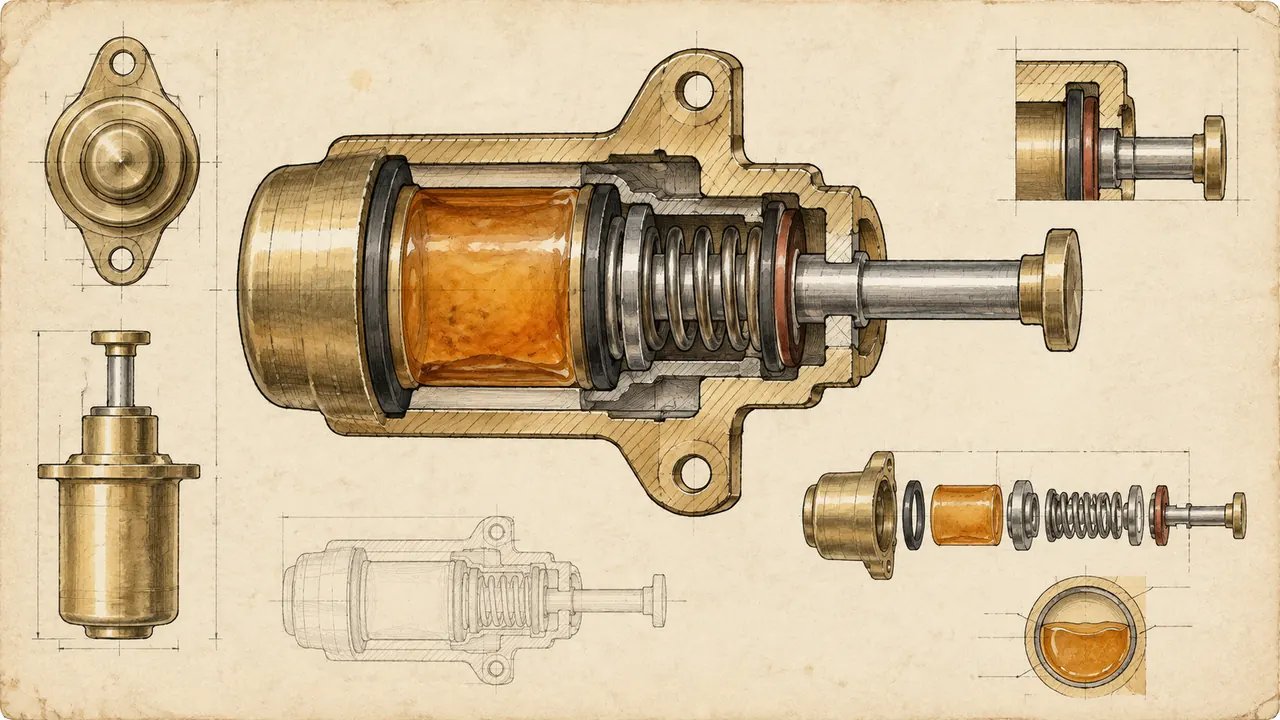
A wax motor is a linear actuator that turns heat into motion by exploiting the phase-change expansion of wax — heat it, the wax swells and pushes a plunger; cool it, the plunger retracts. No electronics, no control loop, just thermodynamics doing the work. They're quietly everywhere: dishwasher detergent dispensers, washing machine door locks, heating zone valves, greenhouse vents and aerospace temperature controls.

 HN Briefing PM