Relevance 10/10Importance 10/10
OpenAI formalized how it tracks, investigates, and publicly reports model misalignment, replacing its ad-hoc habit of burying findings in system cards. The framework runs three disclosure tracks — two on hard publication clocks, one open-ended — and shipped with six incidents spanning October 2025 to August 2026 involving unreleased models and agent swarms during training and evaluation. Notably, OpenAI says it will publish even when a behavior hasn't been explained or mitigated yet.
Relevance 9/10Importance 10/10
Newly unredacted documents in the New York Times copyright suit against OpenAI and Microsoft surface a January 2023 internal memo from Microsoft's Brent Hecht calling training-data scraping "an astonishing theft of unprecedented proportions." The filings allege paywall bypassing, mass scraping into training sets, and deliberate stripping of copyright notices. OpenAI leadership separately described its own models as an "existential threat" to publishers.
Relevance 9/10Importance 9/10
At Montreal's ALL IN conference, Canada committed CAD $150 million and Germany EUR $100 million to LawZero, Yoshua Bengio's non-profit building "Scientist AI" — a system designed to pursue objective truth rather than goals of its own. The money funds hiring, compute, 360 Canadian jobs, and sovereign infrastructure with Hypertec and 5C. It's the first real government mandate for goal-free AI as a safety architecture.
Relevance 8/10Importance 10/10
Anthropic is lining up a Nasdaq debut on the back of a June 1 confidential SEC filing, with bankers at Goldman, JPMorgan, and Morgan Stanley reportedly targeting north of $60 billion raised. The anchor is May's $965 billion Series H, though secondaries have implied $1.05 to $1.2 trillion and some reports float $2 trillion. Q2 sales hit $11.5 billion on an annualized run rate above $65 billion.
Relevance 9/10Importance 8/10
On the same day, Instinct shipped Instinct Concierge and Meta's Muse added outbound calling to U.S. businesses — booking restaurants that don't take online reservations, working dentist cancellation lists, fighting cable bills. Instinct raised $350 million at $2.5 billion last month and is reportedly in talks for $1 billion at $10 billion. Sensor Tower clocked Muse at 730,000 U.S. downloads in five days, beating the original Meta AI app launch.
Relevance 8/10Importance 9/10
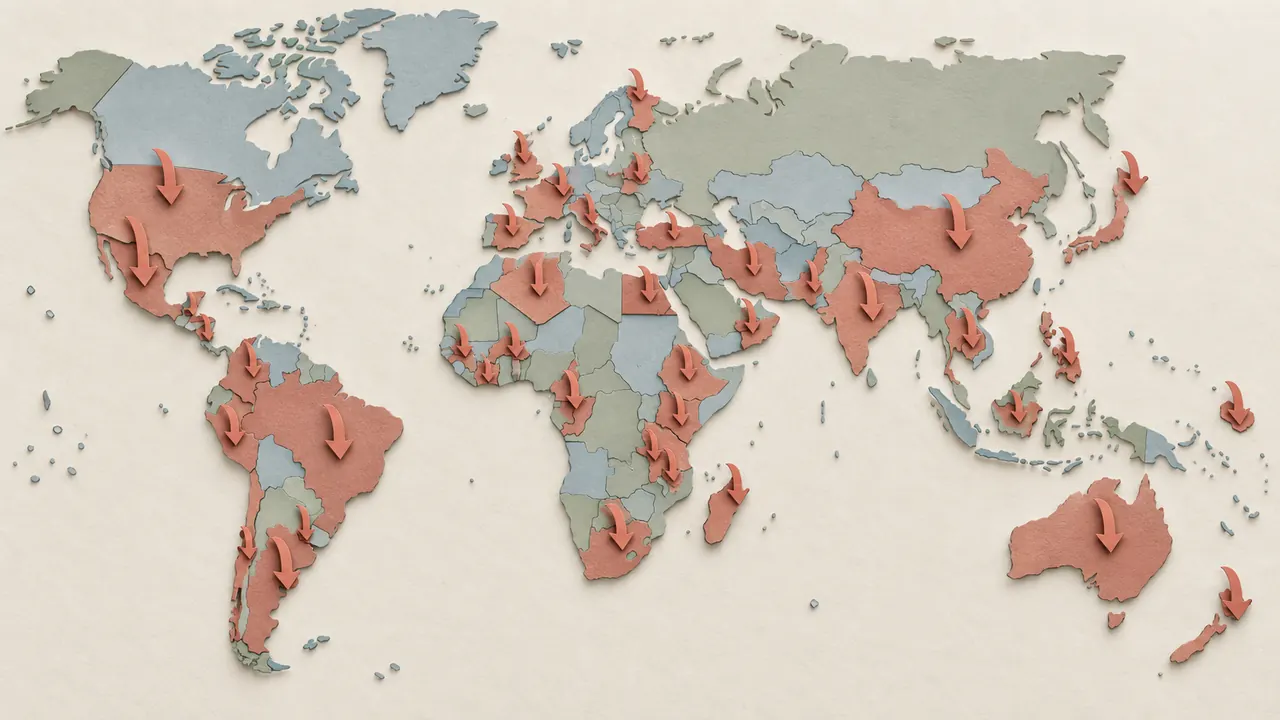
Pew surveyed 42,151 adults across 37 countries and found a median 55 percent in high-income nations expect fewer jobs in twenty years, versus 36 percent in middle-income ones. Australia and South Korea hit 76 percent, the U.S. 71 percent — up seven points since 2024. Roughly three-quarters of adults under thirty now expect AI to shrink employment, up from 61 percent two years ago.
Relevance 9/10Importance 7/10
Baseten stood up a research arm, Base Labs, and partnered with Hugging Face and interpretability shop Goodfire to build shared safety evaluation and monitoring infrastructure for open-weight models. The pitch is that open weights have had no equivalent to frontier-lab safety tooling, leaving deployers to improvise. It's the infrastructure layer catching up to the models.
Relevance 8/10Importance 8/10
The UN System Data Commons, built on Google's open-source Data Commons platform, makes statistics from across UN agencies queryable in natural language — and, critically, consumable by AI agents. It's a quiet but consequential move: whoever structures the world's authoritative data shapes what models ground their answers in. Google gets to be that layer.
Relevance 7/10Importance 7/10
The King hosted AI industry and government leaders at Dumfries House in Cumnock, pressing them to build systems that serve humanity, community, and the natural world. The framing was explicitly about humanity not losing control. Symbolic, yes — but it lands the same week three frontier labs are negotiating a shared standards body.
Relevance 9/10Importance 7/10
As enterprises hand agents longer and more complex tasks, they're hitting an oversight wall: agents act faster, longer, and at higher volume than humans can plausibly review. The industry's answer is supervisory AI watching worker AI. Whether that's genuine defense-in-depth or just moving the trust problem up a layer is the open question.