Relevance 10/10Importance 10/10
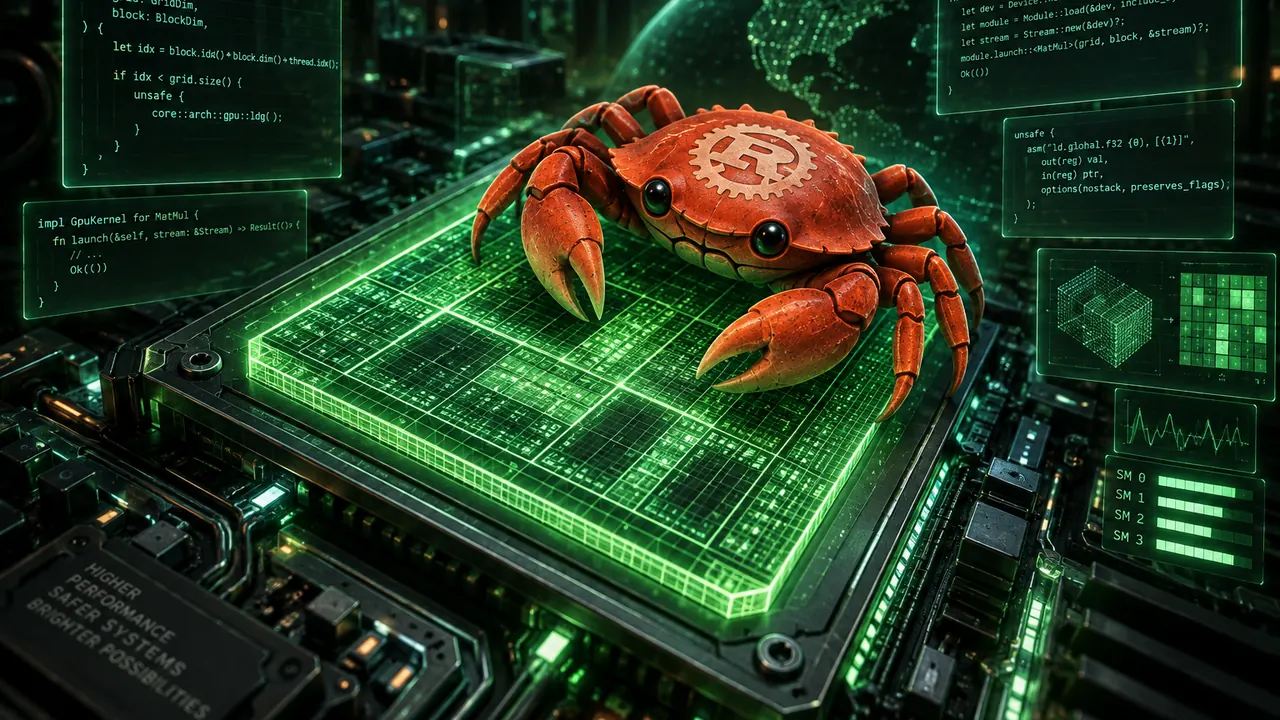
NVIDIA is shipping two Rust-based GPU kernel frameworks: cuda-oxide, which brings the classic SIMT model via a custom rustc backend, and cutile-rs, which handles the Tile model through JIT compilation. Both let developers write CUDA kernels natively in Rust with compile-time memory safety, no C++ or wrapper layer required. At 841 points and 336 comments it's the runaway top story, and it closes the last big gap keeping Rust out of the AI systems stack.
Relevance 10/10Importance 7/10
The author paid Google's Gemini API nine dollars to label 4,290 Reddit comments about chef's knives, then fine-tuned an open-source GLiNER model on those labels to extract brands, models, and materials locally. Training on a Tesla T4 cost another two-fifty and landed a 0.83 F1 against Gemini's own output. It's a textbook distillation play: break even after roughly 4,300 more comments, then inference is free forever.
Relevance 8/10Importance 9/10
Fujitsu announced global sales of MONAKA starting November 2026: a 144-core Armv9 chip with 2nm compute dies hybrid-bonded onto 5nm cache tiles, 3.8 GHz peak, 12 channels of DDR5. It packs hardware matrix acceleration for AI inference plus Arm CCA confidential computing. Fujitsu claims double the AI inference throughput of comparable CPUs at half the power, aimed squarely at sovereign-AI buyers in Japan and Europe.
Relevance 9/10Importance 6/10
Martin Fowler concedes LLMs are genuinely useful and productivity-enhancing, then explains why he still can't stand them. His objections: the uncanny-valley voice, the habit of confidently fabricating with the exact same tone as when they're right, and the Silicon Valley subculture whose values they bake in. It's a distaste argument rather than a capability argument, which is what makes it land differently than the usual AI-skeptic post.
Relevance 9/10Importance 4/10
mysetup.ai is a community site where engineers post detailed breakdowns of their AI tooling — which agents they run, how they route models, what guardrails and custom skills they've built, and crucially why. The founder's pitch is that everyone shows off finished projects but nobody shows the workshop. Early days at 14 points, but it targets a real gap for solo founders and backend folks assembling agent stacks.
Relevance 6/10Importance 4/10
flat.social is a browser-based meeting platform that ditches the video grid for a customizable 3D space with proximity-based spatial audio. You walk your avatar over to someone and the volume rises, the way rooms actually work. It's built on web multiplayer game mechanics and aimed at remote teams, educators, and event organizers.
Relevance 4/10Importance 7/10
Jake Smith wrote a 174-line polyfill for http_build_url() in 2014 as a stopgap during a PHP 5.2-to-5.3 migration, and it quietly accumulated almost 20 million installs via Packagist, WPML, and Debian. Twelve years later PHP 8.5 ships a standards-compliant URI API in core, and better community alternatives exist. He's deprecating it on the grounds that continued maintenance is riskier for users than migrating off.
Relevance 3/10Importance 7/10
PostgreSQL takes an AccessShareLock on every index of a table at planning time, including the ones your query never touches. The fast-path lock array holds exactly sixteen slots through version 17, so heavily-indexed tables overflow into the shared lock table and start burning CPU on contention. Fixes: use prepared statements to skip replanning, upgrade to PG 18 where fast-path slots scale with max_locks_per_transaction, or just drop the indexes nobody uses.
Relevance 3/10Importance 6/10
Josh Bowman-Matthews spent a year funded purely by OpenCollective and GitHub donations working on Servo, the Rust browser engine. The tally: 1,150 pull requests reviewed, 8 new maintainers nominated, 114 contributor-friendly issues filed with 92 percent resolved, plus killing off intermittent GC panics and flaky tests. It's a case study in one sponsored maintainer changing a project's whole governance trajectory.
Relevance 2/10Importance 5/10
The Chaos Computer Club's fortieth annual Congress runs December 27th through 30th, 2026 in the Hamburg exhibition halls. This year's theme is "Model Citizens," a call to reimagine society beyond authoritarian templates with an emphasis on solidarity and community. Calls for content, art, music, and performances are open now.

 HN Briefing AM