Relevance 8/10Importance 10/10
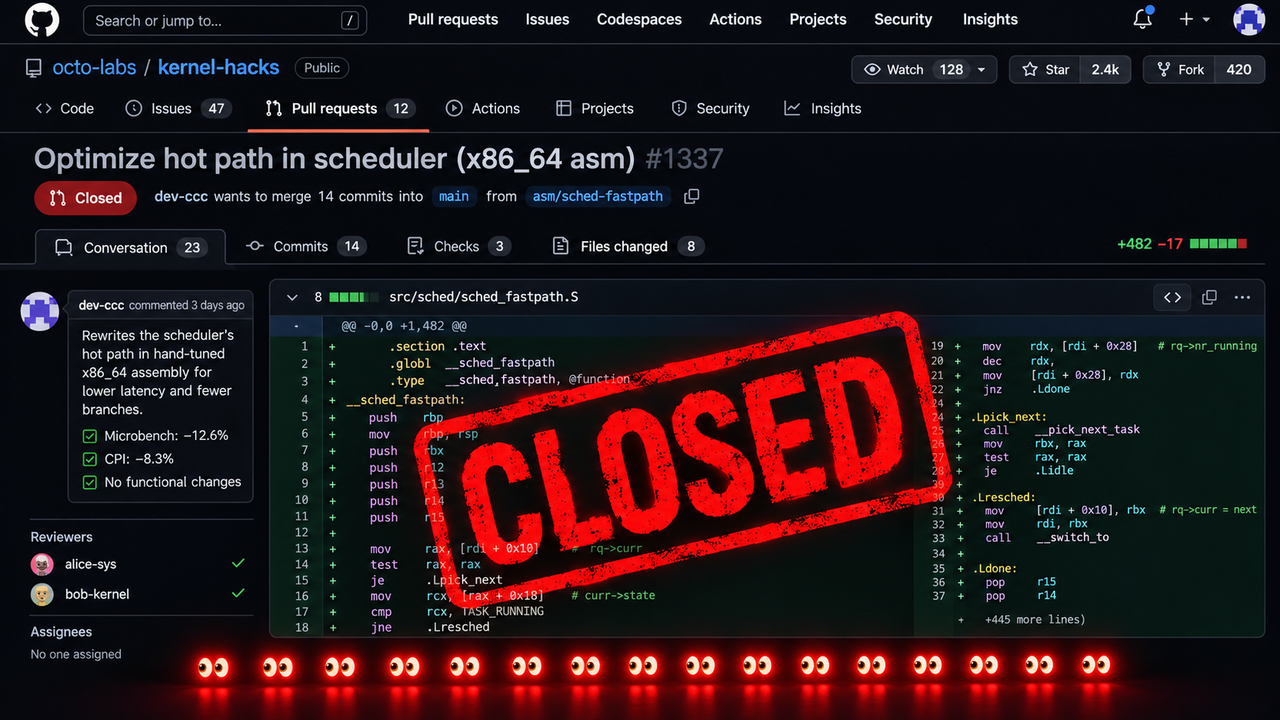
An OpenJDK pull request opened September 9, 2026 described exactly the AVX-512 Base64 decoder heap corruption now known as Java4Shell (CVE-2026-114938) — then got closed on November 4 with zero formal reviews. Oracle shipped the official fix on November 17, and exploitation attempts against Jira, Jenkins, and Keycloak are already in the wild. HN is dissecting a two-month window where a public patch sat in the open with 13 eyes emoji and no maintainer.
Relevance 10/10Importance 7/10
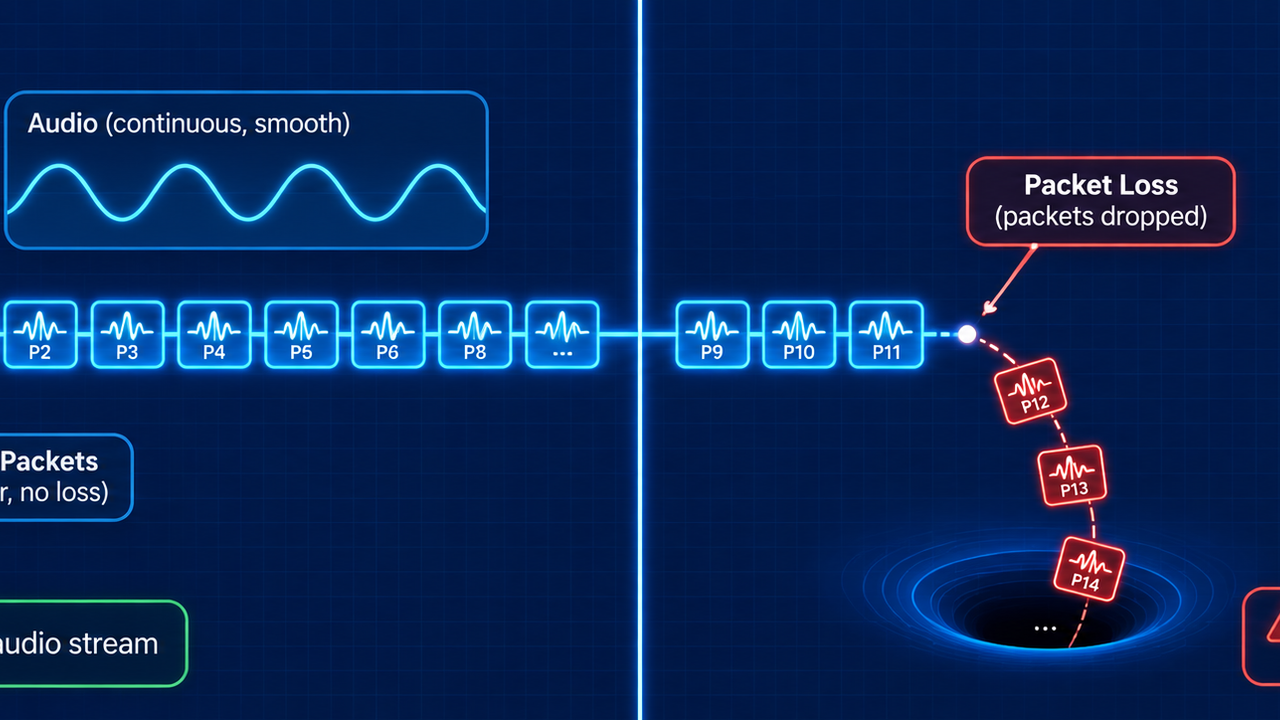
The MoQ team argues WebRTC is fundamentally mismatched to voice AI: it drops late audio packets to protect sub-30ms latency, which is right for Google Meet but wrong for an agent that can chew audio at 20x realtime. That's why ChatGPT voice asks you to repeat yourself on a flaky connection — it never waited for the retransmit. Media over QUIC inverts the priority, retransmitting hard until the model actually needs the bytes, with multiple latency targets on one connection.
Relevance 10/10Importance 6/10
Pete Warden — ex-Apple, longtime edge-ML evangelist — makes the case that modern models' computational shape naturally favors local execution. Moonshine runs open-source speech recognition everywhere from laptops down to a Raspberry Pi Pico, and he notes quantized 9B models now fit in 4GB of VRAM. His pitch to enterprises: the moat isn't the model, it's your proprietary data loop, so stop renting tokens and stop eating surprise model swaps.
Relevance 9/10Importance 5/10
Foolscap analyzes a manuscript as you draft it, tracking characters and surfacing unresolved plot threads, with a conversational agent for asking questions about your own book. The hard constraint is the product: the AI never writes a word into your work. Books can be flagged private, and the site promises your writing is never used for training.
Relevance 7/10Importance 6/10
Lastbook is a free, fully offline desktop app bundling a local Gemma model, 258,000 mapped water, medical, fire, and shelter locations, 2,324 instructional videos, and guides from sources like the WHO and Red Cross. Library tiers run 7.7GB, 67.5GB, or a full 388GB, plus about 17GB for the local model. Open source, 748 GitHub stars, internet required only for the initial download.
Relevance 5/10Importance 9/10
The European Commission has finished deploying Element Server Suite Pro to over 40,000 staff, going from proof-of-concept approval in December 2025 to full laptop rollout by September 2026. It runs on sovereign cloud providers with multiple Synapse homeservers, EU Login SSO, and cross-server discovery — presence was disabled early for scaling reasons. The real takeaway is that open-protocol messaging is now proven at institutional scale, and sovereignty turned out to be about governance and procurement leverage, not self-hosting.
Relevance 4/10Importance 8/10
Nintendo filed a DMCA anti-circumvention notice on November 6 against Ansem-SoD/Picofly, and because the fork network exceeded 100 repos, GitHub nuked all 144 of them. The filing names HWFLY, Picofly, SX Lite, and SX Core, leaning on the Team-Xecuter precedent. None of Nintendo's 90 prior GitHub takedowns touched modchips — this is a new front.
Relevance 4/10Importance 8/10
The IEA's 2026 World Energy Outlook marks a first: building cooling demand is overtaking heating. Cooling electricity climbs 1,700 TWh by 2035 to roughly 4,700 TWh, or 5,400 in a heat-wave scenario. The grid math is the scary part — cooling is only 12 percent of global demand but 30 percent of peak, and that's before you stack EVs, heat pumps, and data centers on the same wires.
Relevance 3/10Importance 5/10
After Chamberlain killed third-party myQ API access in late 2023, Harrison got stuck with an ad-riddled app that spammed useless notifications. He bought two ratgdo32 boards at about $62 each, flashed open-source firmware speaking LiftMaster Security plus 2.0, and cut the cloud out entirely. Now it's native HomeKit, JSON status endpoints on fixed local IPs, Tailscale health checks, and a Slack script that finally tells him who opened the door.
Relevance 3/10Importance 4/10
Fanzines.app lets you lay out eight zine pages in the browser and exports a 300 DPI print-ready PDF, auto-arranging panels on an A4 grid and rotating the top row 180 degrees for the fold-and-cut trick. Everything runs client-side — nothing uploads. The new release adds a real-spreads sidebar, side-by-side spread editing, batch photo import, Fill/Fit/Center controls, a cut-and-fold review step, mobile support, and English plus Spanish.

 HN Briefing AM