Relevance 10/10Importance 10/10
Researchers at Crissy Field GmbH scanned 159,041 Lovable projects and found 24,664 sites leaking database records with no authentication at all — including 80,000+ user profiles, 200,000+ private chat messages, 280,000 customer emails, and over a thousand records containing passport numbers. Because vibe-coded apps share recurring database patterns, one working exploit scales across thousands of targets with almost no extra effort. The platform's position is that security is the customer's responsibility, which is a tough sell to a userbase explicitly recruited for having no technical expertise.
Relevance 9/10Importance 9/10
Judge Noël Wise refused to toss an antitrust suit alleging Samsung, SK Hynix, and Micron conspired to choke conventional DRAM supply while redirecting wafer capacity to high-bandwidth memory for AI accelerators — with prices up 171.8% in a year. The court found the pattern plausibly conspiratorial rather than coincidental: long-term HBM contracts, refusal of long-term DDR5 deals, production delays, and no capacity expansion despite record prices. Notably, the judge was unpersuaded by the defense that "booming AI demand" explains everything.
Relevance 9/10Importance 7/10
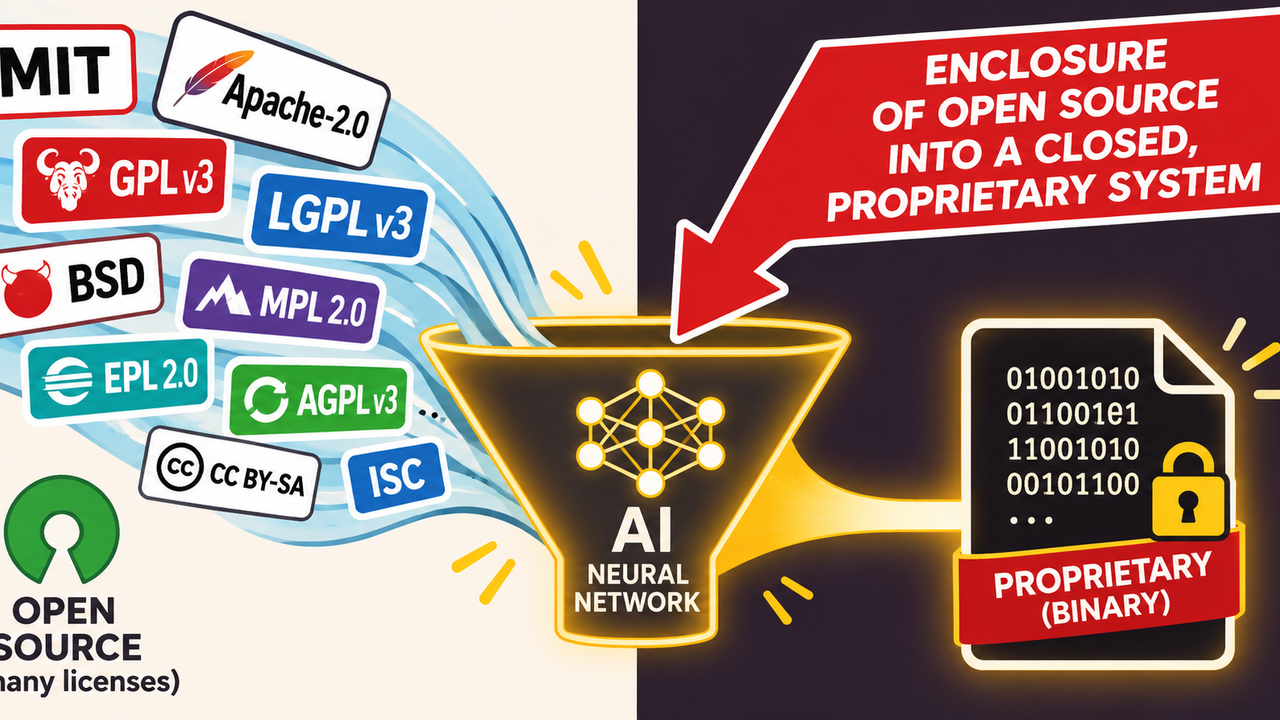
Jakub Jankiewicz argues two things: that shipping AI-generated code as proprietary amounts to "license laundering" of the open-source corpus the models trained on, and that purely machine-generated code lacks human authorship and therefore shouldn't be copyrightable in the first place. He leans on the Monkey Selfie precedent and Wikimedia's public-domain policy for AI images, and suggests CC0 as the honest default. He concedes the line between automation and human authorship is genuinely blurry in modern workflows.
Relevance 9/10Importance 6/10
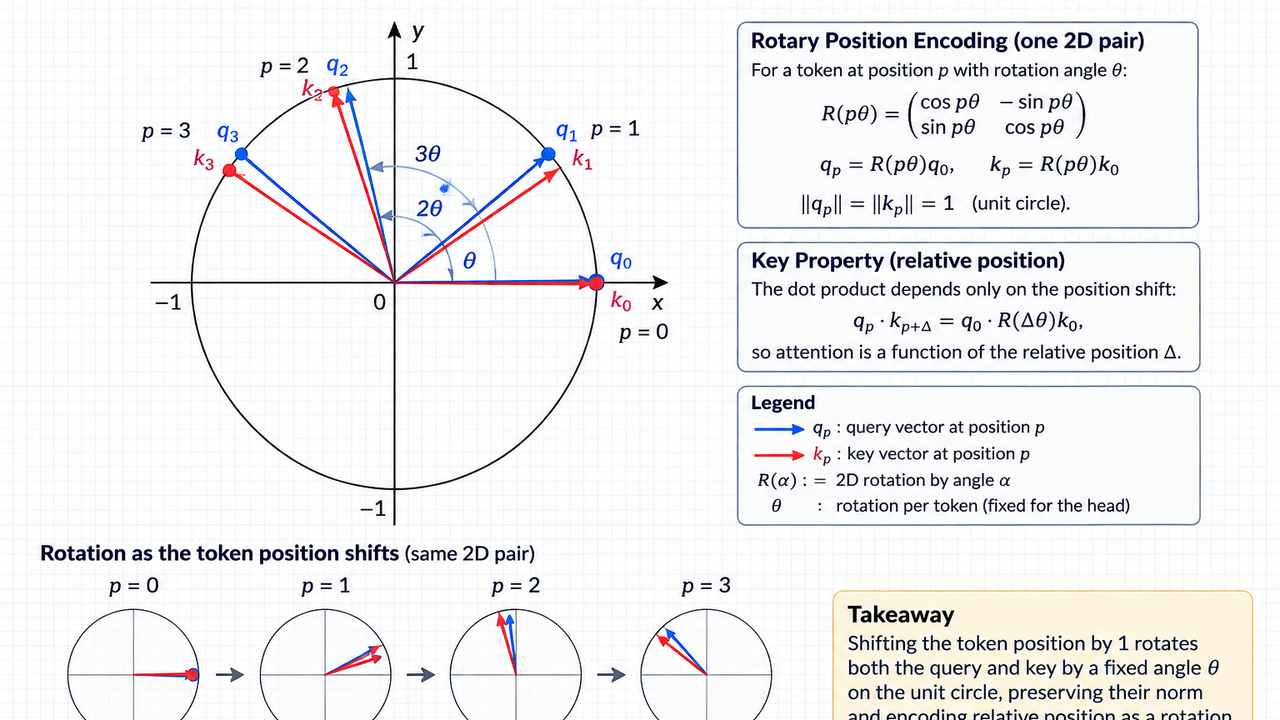
Sebastian Raschka walks the full lineage of position encoding: GPT-2's learned absolute embeddings, the original transformer's fixed sinusoids, and RoPE's trick of rotating query and key vectors so that shifting both positions preserves their dot product. He then covers the current frontier — partial RoPE, which rotates only a subset of features to cut memory, and NoPE layers that drop explicit encoding entirely and let the causal mask carry the signal. The trend line: RoPE still dominates, but partial RoPE got noticeably more common across 2025 and 2026, often mixed with NoPE layer by layer.
Relevance 4/10Importance 10/10
Starship Flight 15 lifted off from Starbase on November 13, deployed 26 Starlink V3 satellites, and then on the 14th did the thing nobody had done before: the upper stage flew 14 revolutions, reentered, and got caught by the Mechazilla tower arms. The booster side didn't go as well — one of 33 engines went out and the team waved off the catch attempt, losing Super Heavy. SpaceX commentator Dan Huot called the ship catch "the missing link, the holy grail of spaceflight," and the 976-comment HN thread suggests people largely agreed.
Relevance 4/10Importance 7/10
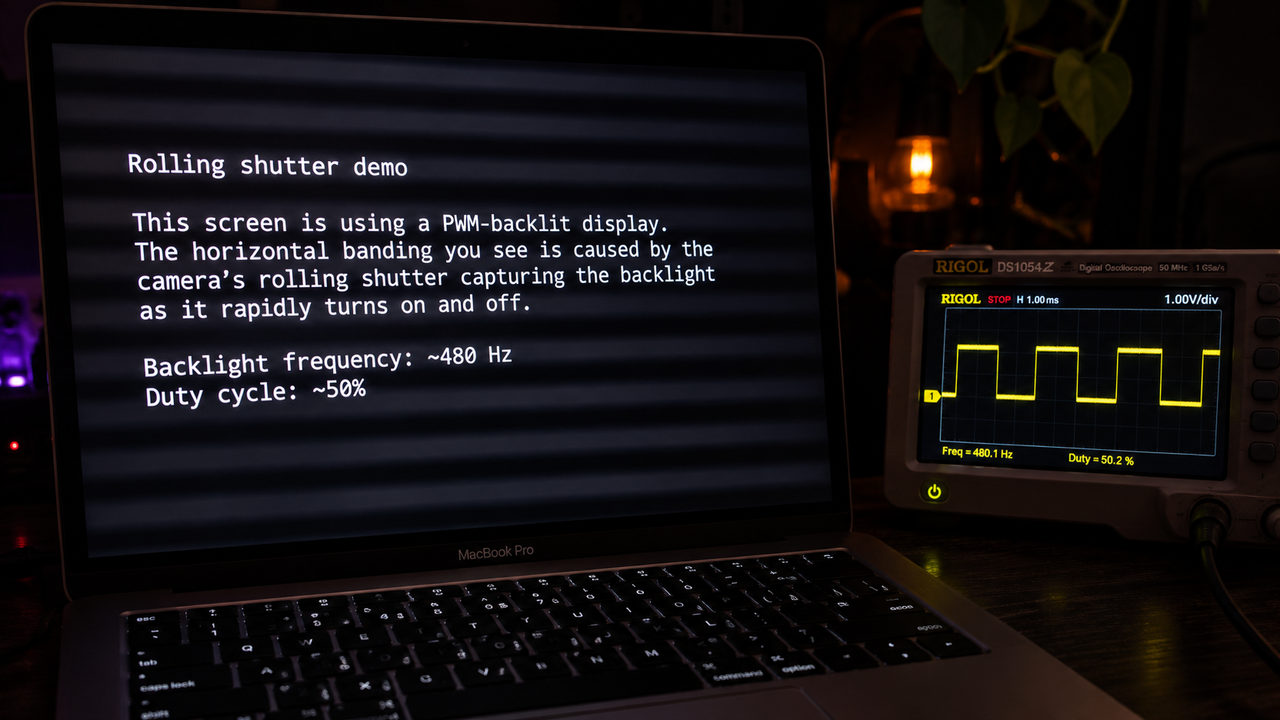
Apple's first OLED laptop started shipping November 6, and some buyers are reporting eye strain, headaches, and dizziness — especially when reading text in dark mode. The culprit appears to be the PROLED XDR panel's pulse-width-modulation dimming, measured at 240 Hz with 56% amplitude at every brightness from 99% down; the outgoing mini-LED M4 Pro flickered at 14,880 Hz, roughly sixty times faster. macOS currently has no setting to disable PWM or switch dimming methods, so some users are returning the machines and going back to mini-LED.
Relevance 3/10Importance 5/10
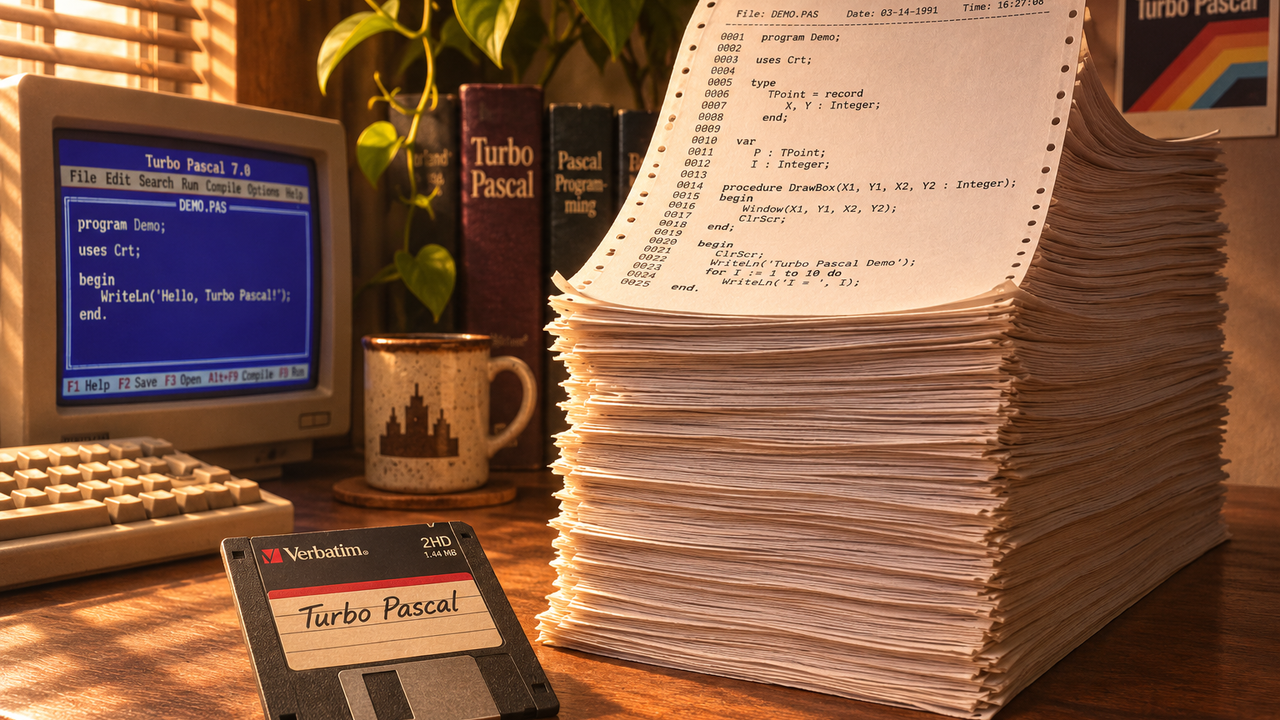
A 2011 classic making the rounds again: the entire Turbo Pascal 3.02 executable — compiler and IDE together — was 39,731 bytes. For scale, minified jQuery 1.6 was 90,518 bytes, macOS Lion's zlib.h header was 80,504 bytes, and the `touch` binary was 44,016 bytes. A complete, production-grade dev environment fit in less space than a single header file.
Relevance 2/10Importance 5/10
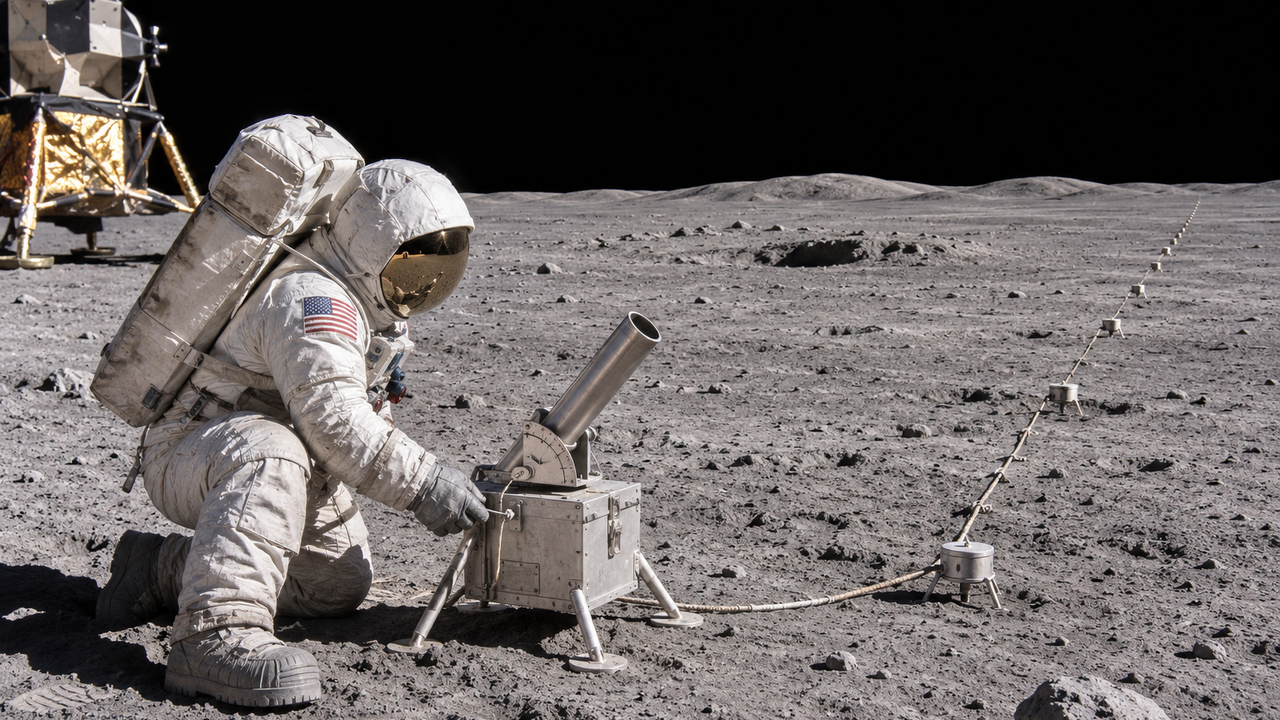
Apollo 14 and 16 carried the Active Seismic Experiment, which needed to put energy into the lunar crust at known times and distances. That meant two sources: an astronaut-operated "thumper" with 21 small explosive initiators, and a rocket grenade mortar that lobbed four charges out to 150, 300, 900, and 1500 meters from the geophone array. The returns let researchers build a compressional velocity profile of the upper kilometer of lunar subsurface.
Relevance 3/10Importance 3/10
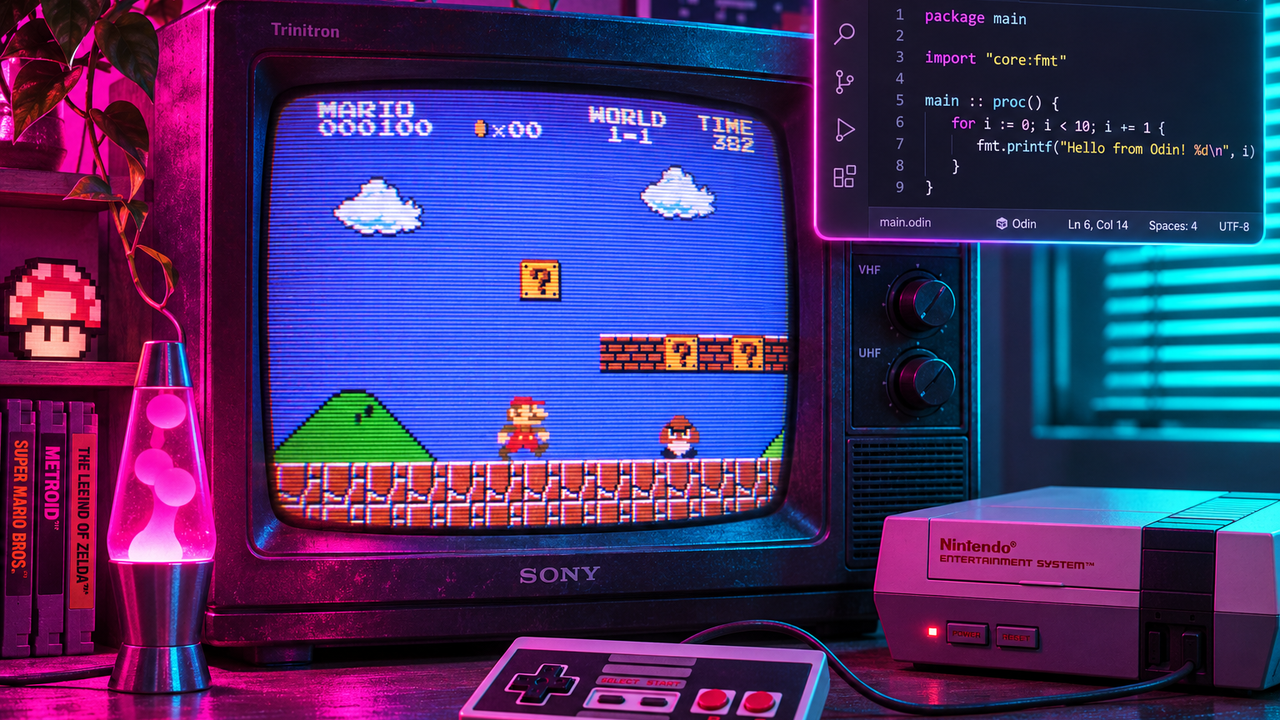
lucyNES is a cycle-accurate NES emulator built over about seven months in Odin, chosen for its C-like syntax, strong typing, and low-level control. It runs hundreds of games including Battletoads — the usual accuracy canary — with seven mappers, a debugger view, save states, a CRT shader, and accurate PPU timing. The write-up is candid about the memory architecture (three separate allocators) and about the fact that sound and DMC are still incomplete, because "it's the last 10% that takes a long, long time."
Relevance 1/10Importance 2/10
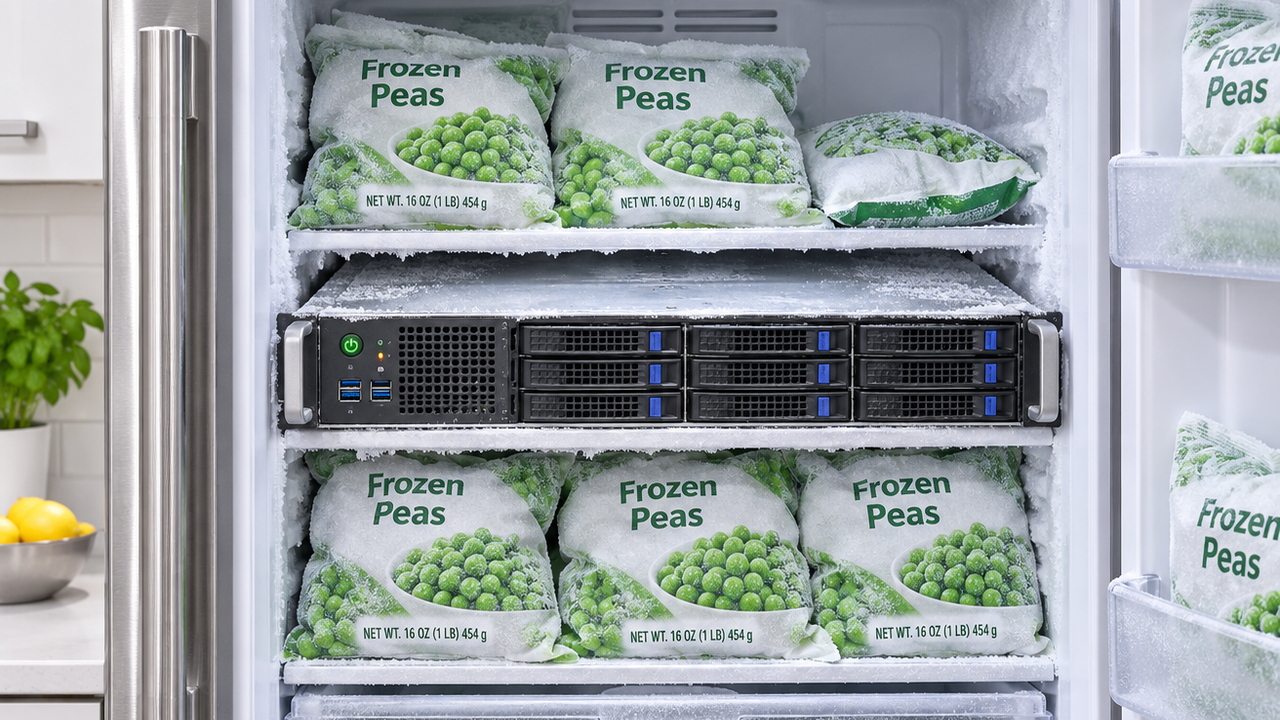
A straight-faced IETF draft proposing status code 483 for servers that understand a request requiring freezing or refrigeration but cannot provide it. It's a loving parody of RFC 2324, the Hyper Text Coffee Pot Control Protocol, complete with careful distinctions between freezers, refrigerators, and cold storage. It also formally warns against installing servers inside domestic freezers, citing the objections of other freezer occupants.

 HN Briefing AM