Relevance 10/10Importance 10/10
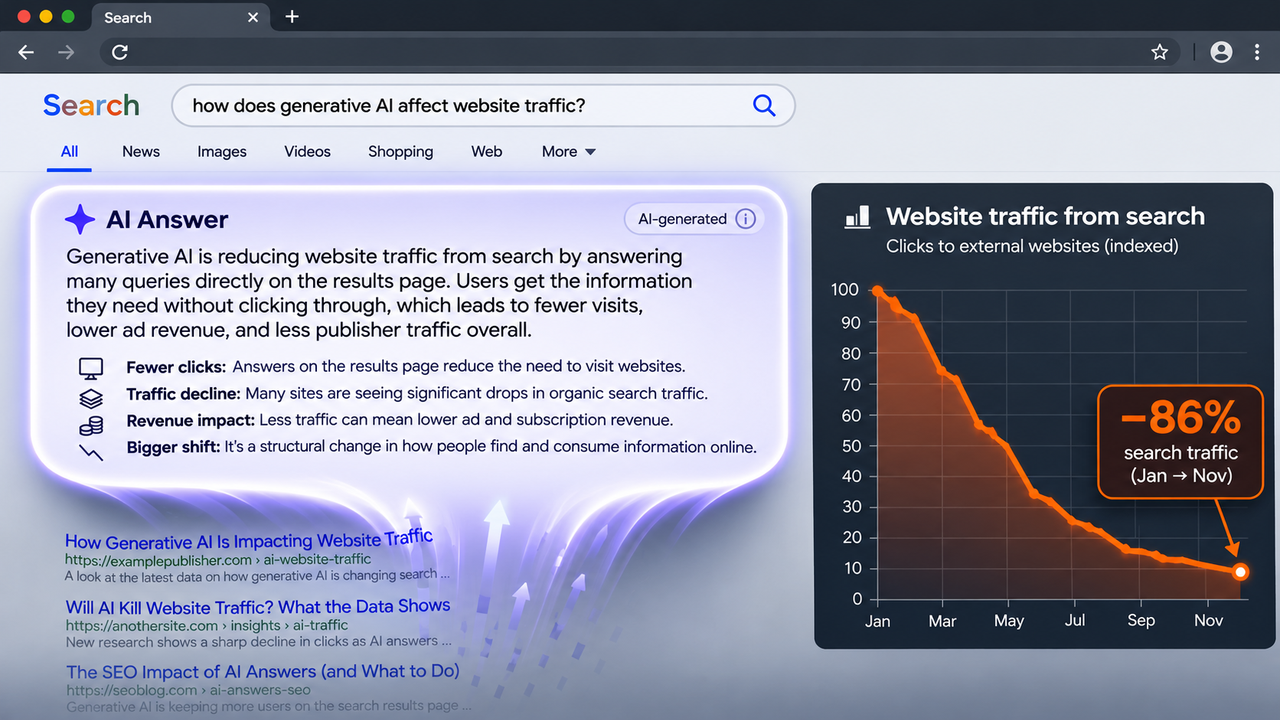
A randomized study found AI Overviews cut clicks to outside sites by roughly 40%, with zero-click searches jumping from 54% to 73%. Overviews now appear on over 61% of US results, up from 6% two years ago, and desktop top-rank CTR collapsed 58% year over year, from 17.83% to 7.43%. Meanwhile AI assistants themselves sent just 0.28% of referral traffic in March 2026 — about 100-to-1 against Google — so the advice shifts from traffic volume to revenue per visitor.
Relevance 10/10Importance 8/10
Researchers from Duke, UIUC, and Harvard learn an energy function over latent states and refine answers by gradient descent, stopping automatically once the solution converges. A 1.8-million-parameter model hits 99.9% on Sudoku-Extreme and perfect single-sample accuracy on N-Queens and graph coloring, using roughly 345 times less inference compute than the next-best model. Adaptive stopping alone buys about 10.9 times fewer FLOPs than fixed-depth reasoning.
Relevance 4/10Importance 10/10
Wiz disclosed two critical memory-safety bugs in nginx's HTTP/2 stack: CVE-2026-123633, a use-after-free from connections marked reusable while still processing, and CVE-2026-123007, an integer underflow in flow control that corrupts the send window. Both allow unauthenticated remote code execution regardless of how clean your application code is, scoring 9.2 critical on CVSS 4.0. Fixes land in 1.30.7 and 1.31.9 for open source; the stopgap is http2 off; and a reload.
Relevance 7/10Importance 5/10
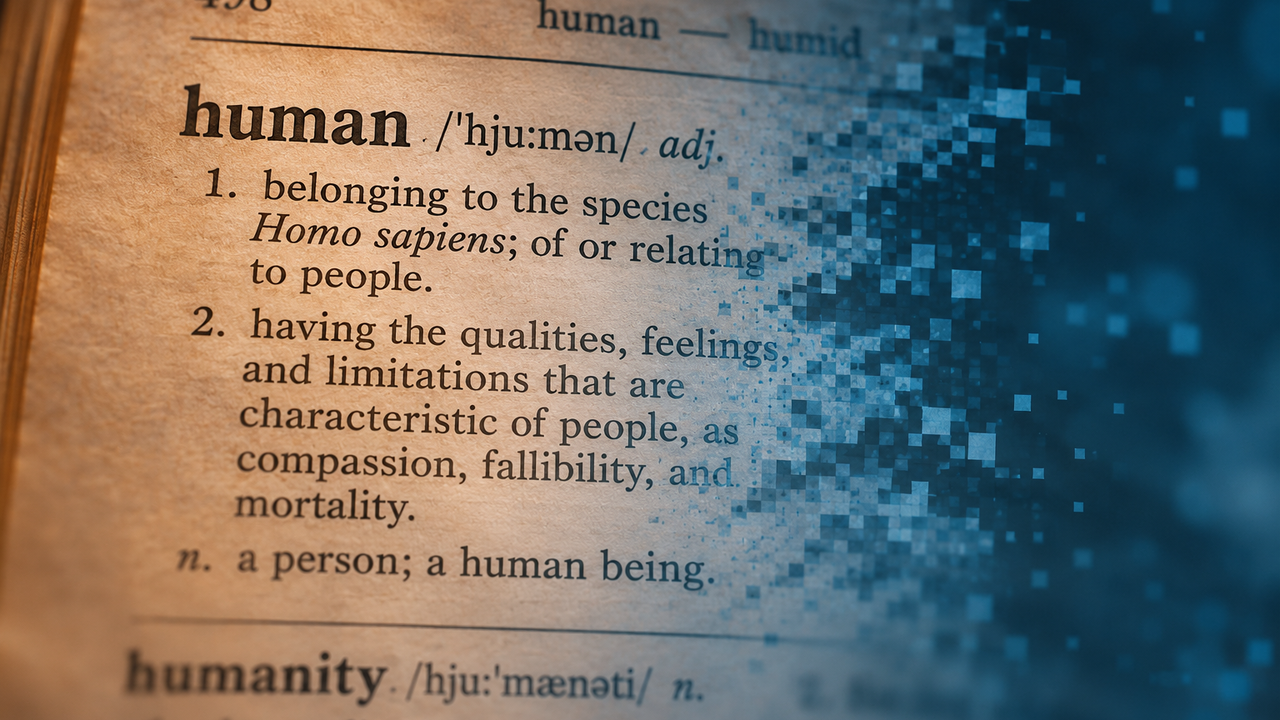
Cambridge picked "human" to capture a year spent anxiously drawing lines between people and machines. The evidence trail runs from Bill Gates floating "human reserved jobs" to Taylor Swift and Matthew McConaughey trademarking their voices and likenesses against deepfakes. Cambridge's own scholars push back on fatalism, with one philosopher noting that nothing about AI's future is inevitable.
Relevance 4/10Importance 8/10
The Swiss non-profit resolver pulls out of France on November 24, 2026, after a Paris court levied 1,000 euros per day for refusing to block pirate sports-streaming domains. Quad9 argued that France's Article L.333-10 effectively demands geolocation filtering it can't implement without degrading its global service. The precedent threatens resolver choice across Europe while pushing users toward less accountable DNS providers and barely touching the piracy itself.
Relevance 2/10Importance 8/10
A cross-border journalism consortium is publishing from a leak of more than 15 million Deutsche Bank files. The reporting targets what the project calls systemic blind spots and profit over compliance, covering sanctioned clients, weapons financing, and money-laundering ties. Dozens of publishing partners are coordinating releases worldwide.
Relevance 6/10Importance 3/10
An arcade-flavored touch-typing trainer that's free, account-free, and keeps progress local, with QWERTY, AZERTY, and QWERTZ layouts. It introduces letters incrementally, graduating from character pairs to real words. Commenters loved the presentation but pushed back on the pedagogy, arguing it should lead with common English letters instead of rare nonsense combos — plus the usual chorus asking for Dvorak and a free practice mode.
Relevance 3/10Importance 4/10
A history arguing that x86's weirdness is sediment, not design — accumulated through decades of backward compatibility. Little-endian ordering and the parity flag trace back to the rejected Datapoint 2200 terminal, the 8086's segmentation and AX/BX/CX/DX naming existed to keep 8080 code alive, and IBM's 1981 choice of the 8088 locked the industry in. Every chip since has had to carry the behavior forward or engineer around it.
Relevance 2/10Importance 5/10
The F-22 program office posted a sources-sought notice for PC Card or CompactFlash media of at least 256 megabytes, with responses due December 1, 2026. The cards feed the jet's Data Transfer Cartridge, and higher-capacity modern parts often aren't compatible with the aircraft's software or operating envelope. The notice also probes where components are manufactured and how suppliers guard against counterfeits.
Relevance 2/10Importance 3/10
Algorithmic experimentation reverse-engineers the 1989 SimCity scoring function, and the optimum is absurd: a 12,000 to 16,000 population town with minimal infrastructure and zero emergency services scores near 950. A 700,000-person megacity scores worse. Other gems include parks damaging land values via byte overflow, and a large unemployment bonus when jobs exceed residents — meaning the game quietly rewards restricting housing.

 HN Briefing AM