Relevance 10/10Importance 9/10
Google dropped Gemini 4 Neon, a mid-tier model that lands between Hydrogen and Carbon and claims Carbon-grade quality at Flash-grade speed. It keeps the one-million-token context window, four thinking levels, and multimodal input across text, images, video, audio, and PDFs, while ranking #1 on the Artificial Analysis Coding Agent Index at 58.6 and hitting 65.2% on Terminal-Bench 4.1. It's live for AI Pro and Ultra subscribers today, with API pricing at three dollars in and fifteen dollars out per million tokens from December 1 — roughly 25% under Carbon.
Relevance 10/10Importance 9/10
OpenAI says its models delivered up to 14% power-performance-area gains on heavily optimized AMD flagship GPU IP, with some AI-authored circuit rewrites already taped out for manufacturing — about a year of design progress in under five months. The same models cut standard-cell area roughly 13% in the warp engine and 10% in the matrix unit of OpenAI's own inference chip, Jalapeño. It also fleshes out the Synopsys partnership, where GPT-Synopsys is being trained to drive EDA tools directly the way a senior designer would.
Relevance 10/10Importance 8/10
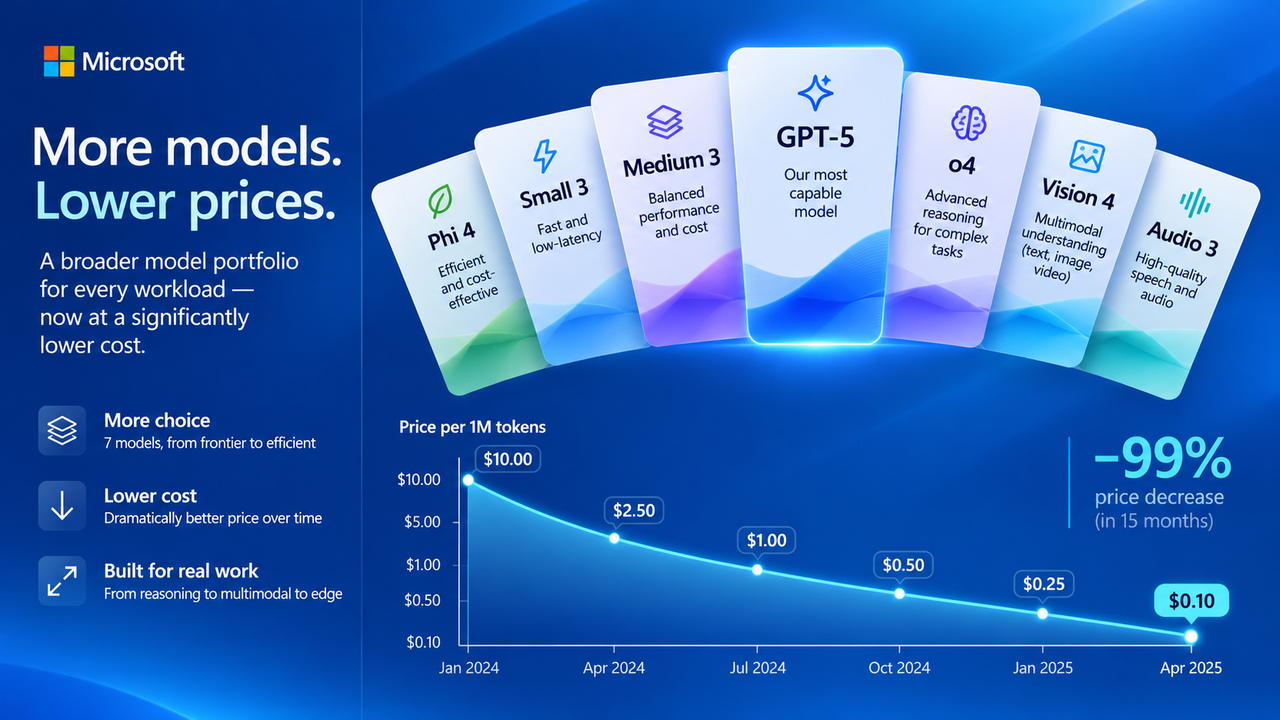
At Ignite 2026 Microsoft unveiled seven in-house MAI models, including MAI Cyber 2 Flash for security, MAI Code 2 for enterprise coding, MAI Image 2.7, MAI Realtime 1 for speech-to-speech, and Decision 1.1 for routing. The entire pitch is price-performance rather than frontier bragging rights: Cyber 2 Flash allegedly beats GPT-6 Astra quality at under 2% of cost per task, and Code 2 hits 98% of GPT-6.1 Sol's coding quality at about 40% of the price. Realtime 1 starts at a penny per audio minute.
Relevance 9/10Importance 7/10
RadixArk's debut release is a 27-billion-parameter model built on Qwen3.8 and post-trained with reinforcement learning on just 1,200 curated long-horizon tasks. Training ran 18 days on 144 H200s in fully asynchronous mode using the open-source Miles framework, with inference and training never blocking each other. Terminal-Bench 4.1 more than doubled from 5.6% to 12.0%, alongside gains on Terminal-Bench 2.1, DeepSWE, and SWE-Bench Pro.
Relevance 8/10Importance 8/10
KPMG UK ran over a hundred AI agents alongside human auditors on a FTSE 250 company's financials in an experiment called Project Exponential. The firm's audit head says the agents "in several instances, went considerably deeper into issues than the regular audit team," surfacing questions the humans had missed — though humans still had to step in on regulatory matching. The uncomfortable implication is that the Big Four model of billing armies of juniors for repetitive work may not survive this.
Relevance 4/10Importance 10/10
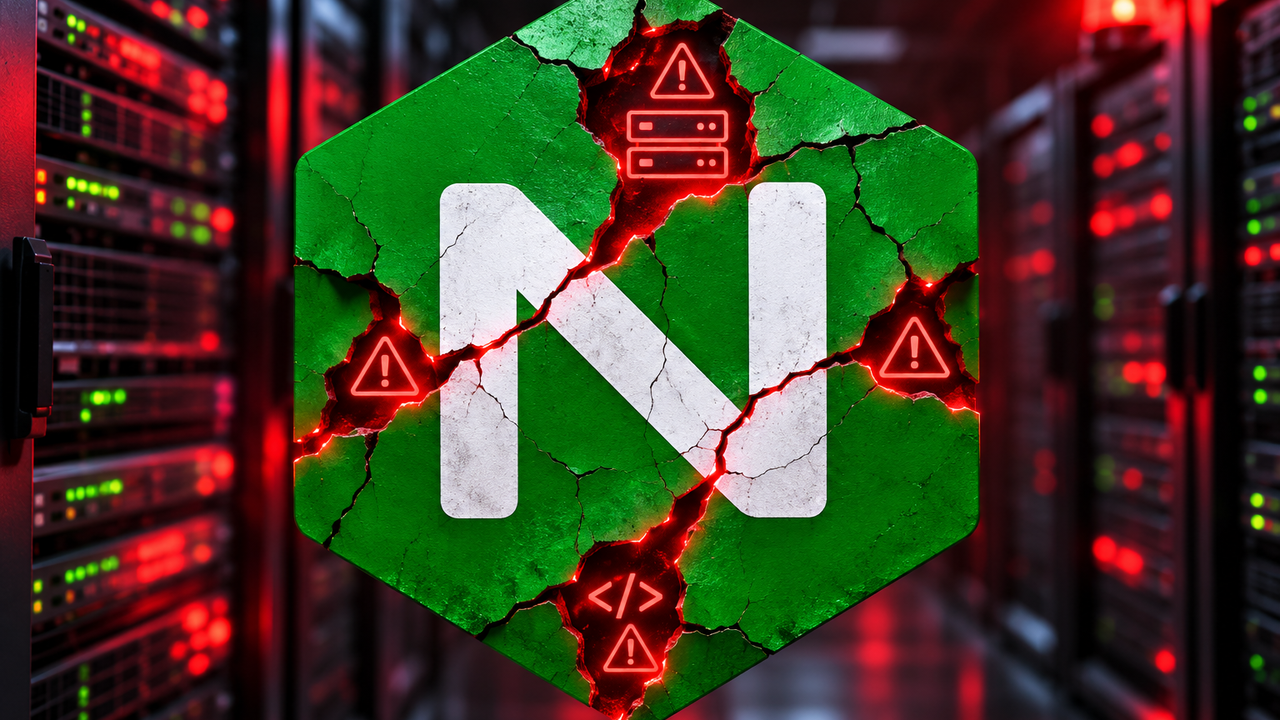
Wiz disclosed two memory-safety flaws, CVE-2026-123633 and CVE-2026-123007, that allow unauthenticated remote code execution whenever HTTP/2 is enabled — CVSS 9.2, with vulnerable code dating back to 2015. Nginx fronts over 225 million websites, and a single compromised instance can expose every app behind it. F5 has patches out; if you can't upgrade and test immediately, turn HTTP/2 off.
Relevance 7/10Importance 5/10
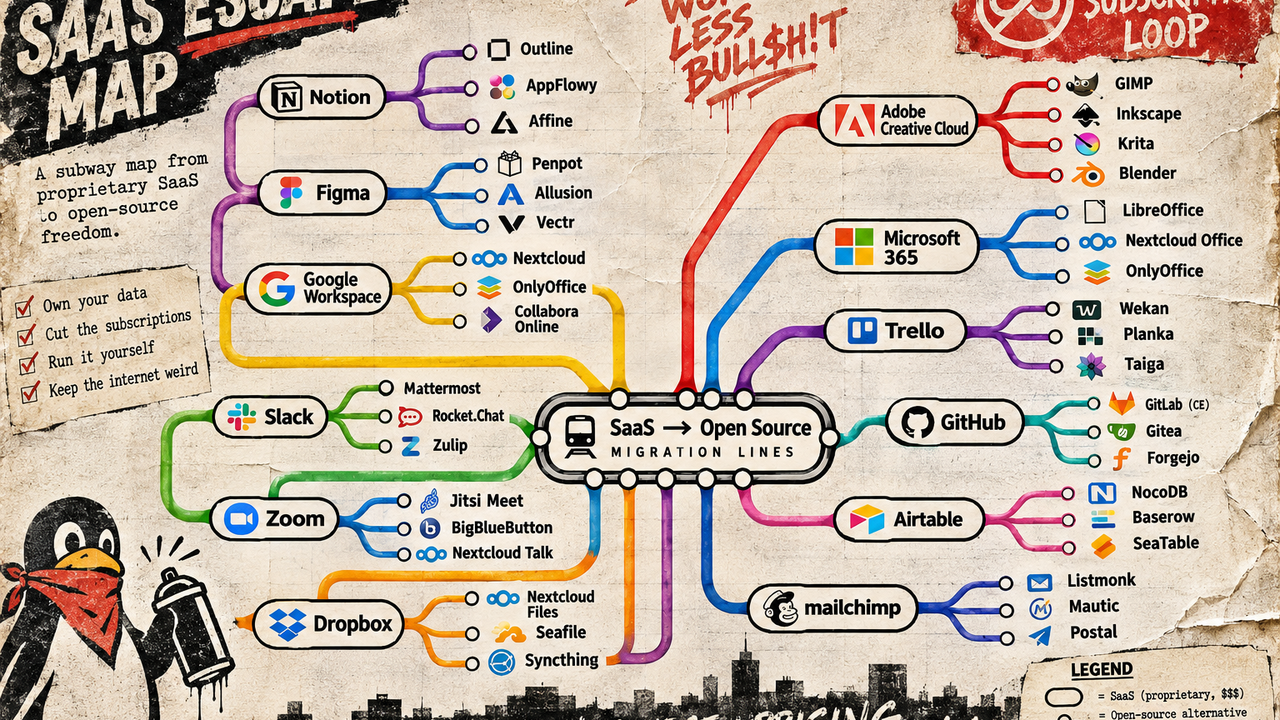
ExitPath is an open-source directory mapping escape routes from the big SaaS platforms, pairing each proprietary tool with self-hostable replacements. HN liked the discovery value but hammered the obvious gap: migration isn't a tooling problem, it's an operations problem. Commenters zeroed in on identity and SSO — offboarding someone across a dozen self-hosted services is brutal — plus Outlook's free/busy calendar lookup, which nobody has cleanly replicated.
Relevance 3/10Importance 8/10
Quad9, the Swiss non-profit security resolver, is pulling out of France on November 24, 2026 after a Paris court hit it with €1,000-a-day penalties for refusing to block pirate sports-streaming domains under Article L.333-10 — with roughly 20 more cases queued up. The statute lets rights holders obtain dynamic blocking orders against "any person able to help stop the infringement," which now sweeps in public resolvers and VPN providers, not just ISPs. The piece argues DNS blocking removes nothing, is trivially bypassed, overblocks, and lands hardest on small privacy-focused operators.
Relevance 2/10Importance 9/10
An investigative consortium published findings from a leaked cache of more than 15 million internal Deutsche Bank documents. The material details systematic compliance failures, including transactions tied to oligarchs, kleptocrats, weapons dealers, and sanctioned entities, where revenue consistently outran risk controls. It's a structural indictment of financial oversight at one of the world's largest banks, not a one-off scandal.
Relevance 3/10Importance 5/10
Meta ported Android's Cuttlefish virtual-device framework to run natively on Apple silicon Macs. Getting there meant reviving QEMU support inside Cuttlefish, making vhost-user device backends portable off Linux, expanding memory-region tracking in QEMU's Hypervisor.framework layer, and wiring up native macOS display and code signing. Mobile teams get one high-fidelity emulation platform with instant state resets and parity between laptops and CI.

 HN Briefing PM