Relevance 10/10Importance 8/10
At the APEC CEO Summit in Shenzhen, Baidu's Robin Li said AI bubble fears could become reality if the enormous capex never converts into actual profit — and for most companies, he said, it hasn't yet. Xiaomi's Lei Jun piled on, noting that despite rapid model progress there still aren't any truly revolutionary AI products, though he expects breakthroughs in AI phones, vehicles, and humanoid robots. Two of China's biggest tech founders publicly calling the gap is a notable shift in tone from the infrastructure-first narrative.
Relevance 10/10Importance 7/10
Runta's FrontierHarness Eval v1.1 benchmarked 27,280 coding agent runs and found 64.5% of list-price spend went to runs that never succeeded — and most failures confidently concluded rather than timing out, so there's no easy early-exit signal. Model choice explained 92.8% of cost-per-task variance, and harness-model pairing matters enormously: Codex CLI ranked first with GLM-5.3 but sixteenth with Kimi-K3. Correlation between harness cost and pass rate ranged from negative 0.39 to positive 0.22, meaning paying more buys you nothing reliable.
Relevance 6/10Importance 8/10
CMU launched CS Learn, publishing full lecture series from its own faculty on YouTube at no cost, spanning AI, robotics, and systems. Currently premiering are Machine Learning with Large Datasets and Principles of Computing, with more courses landing in January 2027. The roadmap includes self-paced courseware with badges and AI tutoring — and at nearly two thousand points, it's the runaway top story on HN today.
Relevance 7/10Importance 6/10
Jordan Krueger argues the AI coding boom is being aimed at the wrong target: instead of spinning up yet another app, developers should be hardening the open source tools millions already depend on. The pitch is four concrete axes — faster, easier to install, friendlier to operate, and light enough that nonprofits and individuals can actually self-host. The payoff is escaping corporate platform dependence while keeping ownership of your data.
Relevance 5/10Importance 6/10
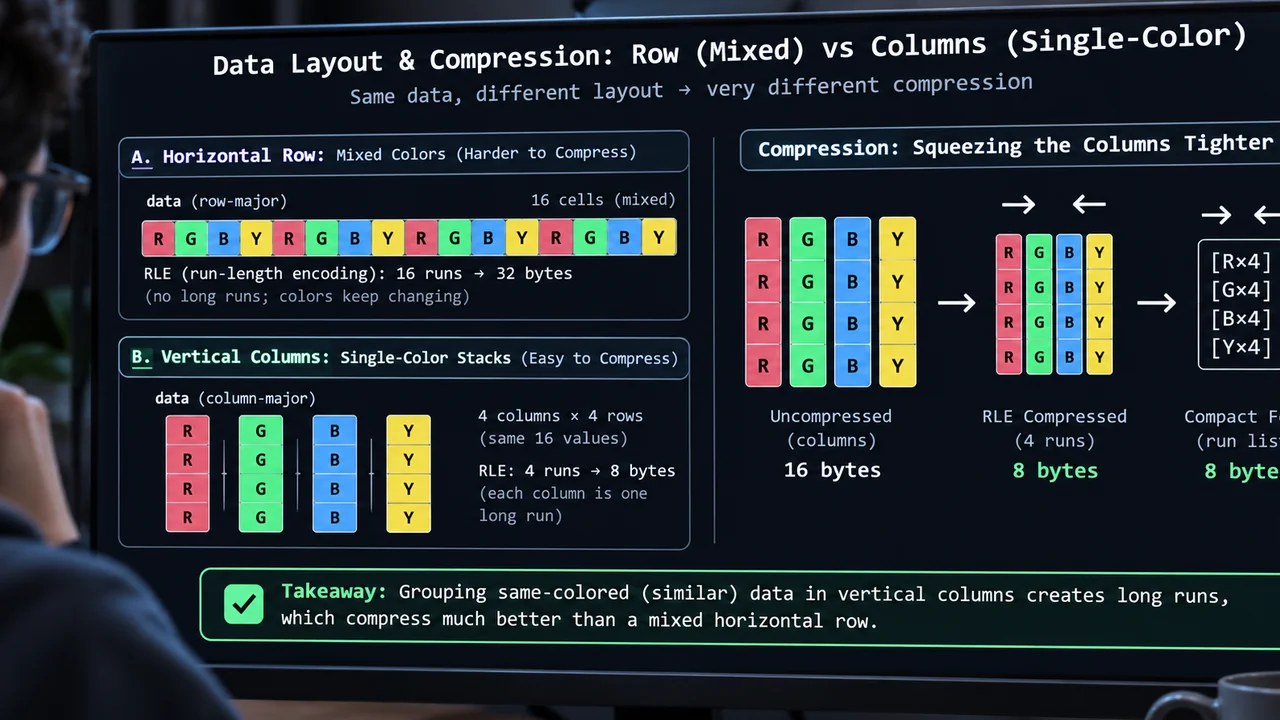
SpiralDB walks through the one physical layout decision that cascades through an entire database: row storage keeps a record's fields adjacent, which is great for single-record transactions but forces you to haul in data you don't need. Column storage groups same-field values together, so queries touch only relevant columns and unlock aggressive compression plus vectorized SIMD execution. Query execution and compression strategy are both built on top of that single choice — which is why OLTP and OLAP engines diverge so sharply.
Relevance 2/10Importance 7/10
Harvard and Dartmouth researchers tracked more than three million students across five school years and found schools using locked phone pouches saw test score gains worth roughly one to two extra weeks of school per year. That's about half the 2-to-3 weeks of annual learning US students started shedding around 2013. The caveat matters: a peer-reviewed April study found close to zero effect, and this newer paper hasn't been peer-reviewed yet.
Relevance 4/10Importance 4/10
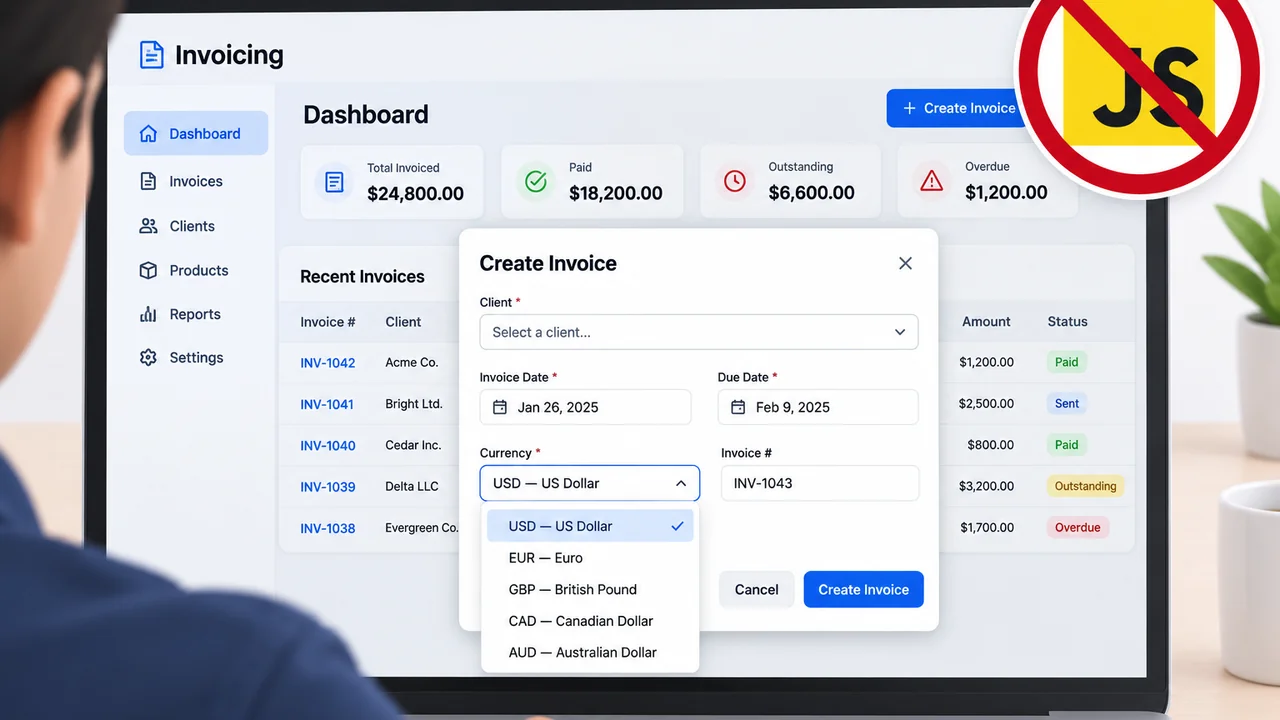
Alloy CSS is a styling framework that delivers genuinely interactive components — dialogs, dropdown menus, tab panels — using nothing but HTML and CSS. The demo is a fake invoice app called Ledger, shipped as one single HTML file with zero JavaScript. It's aimed at developers who want lightweight, zero-maintenance interfaces that degrade gracefully.
Relevance 2/10Importance 5/10
Researchers captured the first detailed images of the poles of a rod-shaped bacterium using atomic force microscopy, which required keeping live E. coli both alive and perfectly still on glass. The poles hold critical structural information about cell division and are a known antibiotic target. Mapping them could expose new vulnerabilities in antibiotic-resistant pathogens.
Relevance 2/10Importance 3/10
VisualBasic.World is a visual archive preserving Visual Basic programs submitted to Planet Source Code between 1997 and 2012. It's a browsable gallery of an entire amateur programming era — the shareware utilities, games, and GUI experiments that taught a generation to code. Pure nostalgia bait, and HN bit hard with over 150 points and 57 comments.
Relevance 2/10Importance 2/10
Steven Garrity recounts being handed some supposed wisdom about how to park illegally and get away with it, and concludes the move isn't clever — it's just selfish. He reaches for Kant's categorical imperative: if everyone exploited the loophole, the whole system collapses. His conclusion is that ethical people simply decline, even when the loophole works.

 HN Briefing AM