Relevance 10/10Importance 10/10
Xiaomi open-sourced the MiMo-V2.6 series today, including a 1.02-trillion-parameter sparse MoE flagship (Pro) that activates ~42B params per token, plus a 30.9B Flash variant and an UltraSpeed edition claiming up to 20x faster output. Pro scores 46.32 on the Artificial Analysis Intelligence Index — the highest open-weight result on the board and level with Grok 4.7 at roughly one-fifth the token price. Weights are on Hugging Face under MIT, which makes this the most permissive frontier-class release yet.
Relevance 9/10Importance 9/10
The piece draws a hard line between a watermark (a visible mark that proves authorship) and what it calls a spymark — a hidden signal that makes your work traceable without your knowledge or consent. It argues that Google, OpenAI and others are embedding account-linked identifiers into generated images, audio and text while calling it provenance tooling. The stated risk is surveillance-by-default: whistleblowers, activists and anyone leaking a document become trivially traceable through the file itself.
Relevance 9/10Importance 8/10
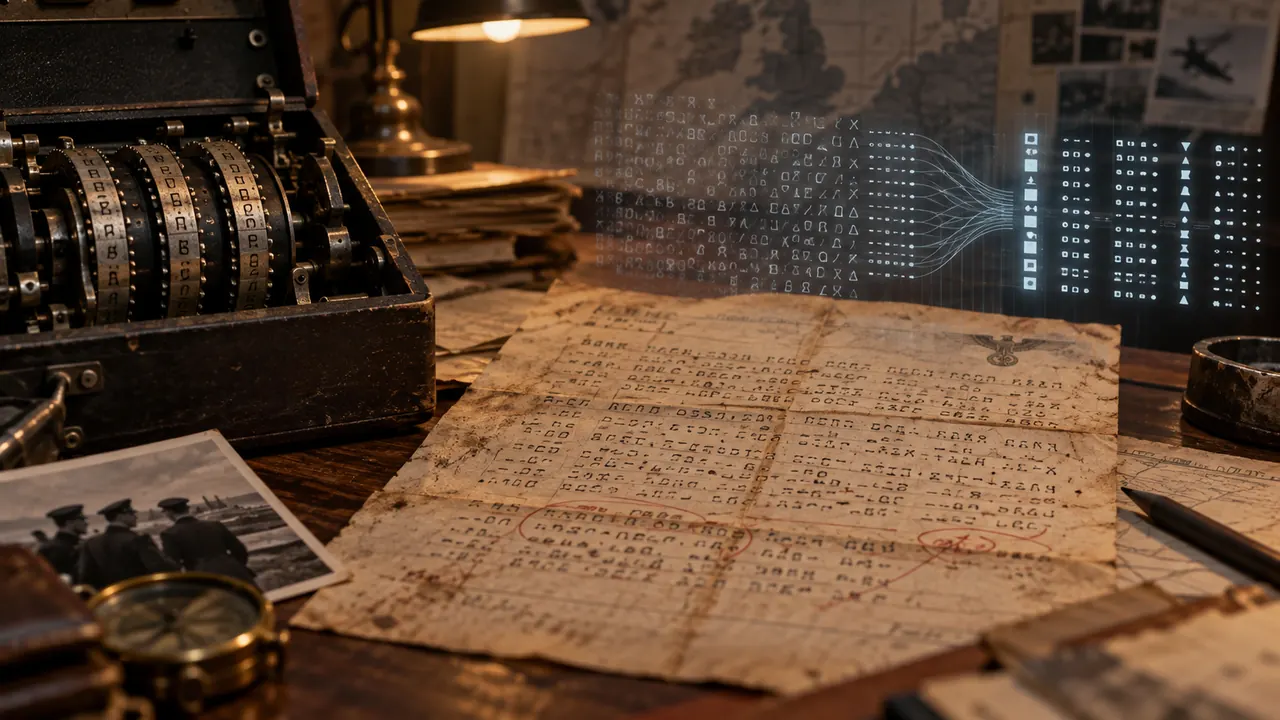
An 82-letter German Army Enigma message from July 10, 1941, indicator MVUEH, had sat on Frode Weierud's CryptoCellar unbroken-messages list since 2005. Carter Leffen ran GPT-6 Astra against it and announced the break on September 17, using the repeated town name ROSENOWROSENOW from a related 2017-solved message as a 14-letter crib to prune the key space. The plaintext asks for a route of march and requests immediate reply by radio — a real, verifiable result rather than a benchmark score.
Relevance 8/10Importance 6/10
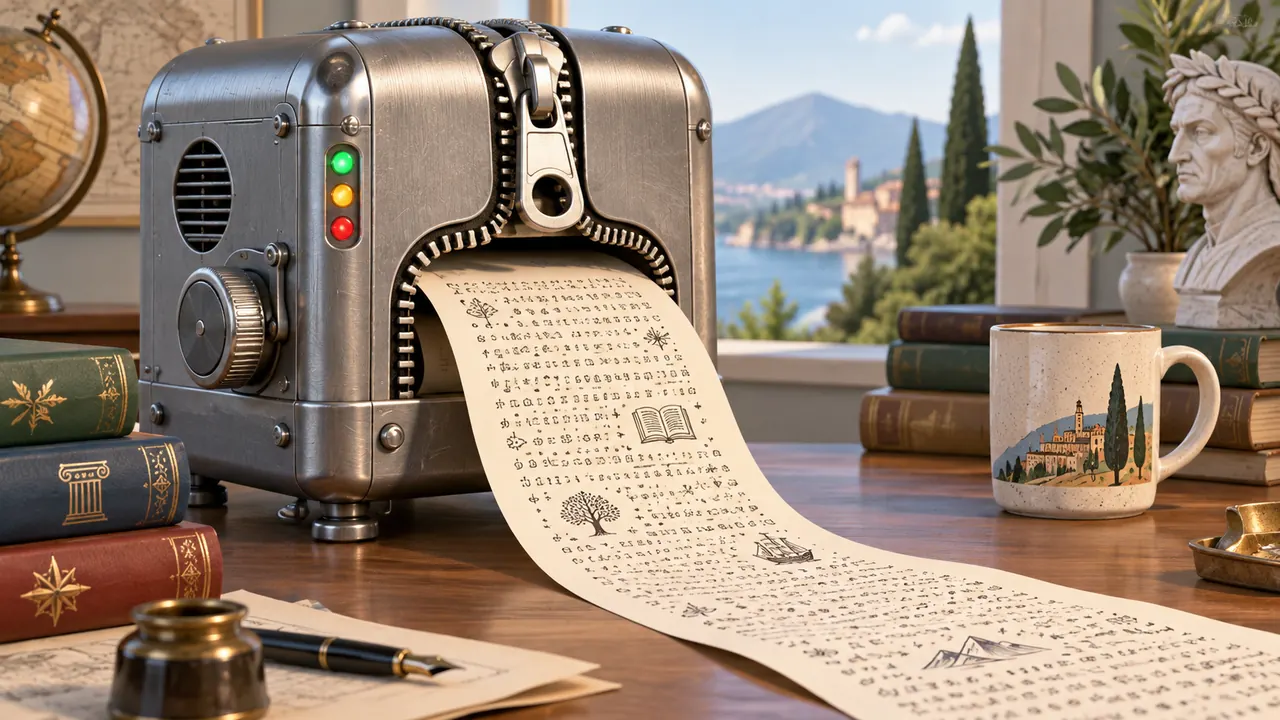
Built on the old equivalence that every predictor is a compressor and every compressor is a predictor, the author primes gzip with a corpus and scores candidate continuations by how well they compress. A beam search extends the sequence, always keeping the most-compressible branches, and the output picks up real structure — it learns Shakespeare's formatting conventions — while staying fragmented rather than fluent. The takeaway is that a parameterless 1992 algorithm contains an implicit language model, no training run required.
Relevance 8/10Importance 6/10
Drop spins up isolated, disposable Linux environments so you can run untrusted code and AI agents without exposing your real system, while still sharing your existing distro. It runs rootless via Linux namespaces with optional gVisor for kernel-level isolation, and a TOML config declares exactly which files, directories and local network services get through. The pitch targets two live threats: prompt-injected coding agents and supply-chain-poisoned packages from PyPI and npm.
Relevance 9/10Importance 5/10
Jev is TypeSafe's model that skips text generation entirely and returns calibrated probability distributions over tokens for instant classification decisions. The author argues OpenAI is already most of the way there — tool-calling is LLM-as-implicit-classifier — and could fold the capability straight into its own models. The whole question is whether TypeSafe's training data and RL pipeline are a real moat; if not, OpenAI just builds it and the window closes fast.
Relevance 8/10Importance 3/10
An awesome-list for TypeSafe's Jev, the model that answers typed questions about text or JSON — pick an option, estimate truth, score against a rubric — to produce bounded decisions instead of prose. The repo catalogs 33 reviewed picks spanning SDKs, browser integrations, games and creative tools. Demos pulled from X, YouTube and GitHub show Jev driving automation, search and game-playing agents.
Relevance 6/10Importance 5/10
The essay separates profit (value created through innovation) from rent (value extracted by controlling access), and argues modern capitalism has drifted hard toward the latter — land enclosure, then patents, now platforms. Every transaction carries an invisible rent surcharge you never see itemized. The AI hook: the author reads the current buildout as metered intelligence, an infrastructure play to lease cognition back to us in perpetuity.
Relevance 4/10Importance 6/10
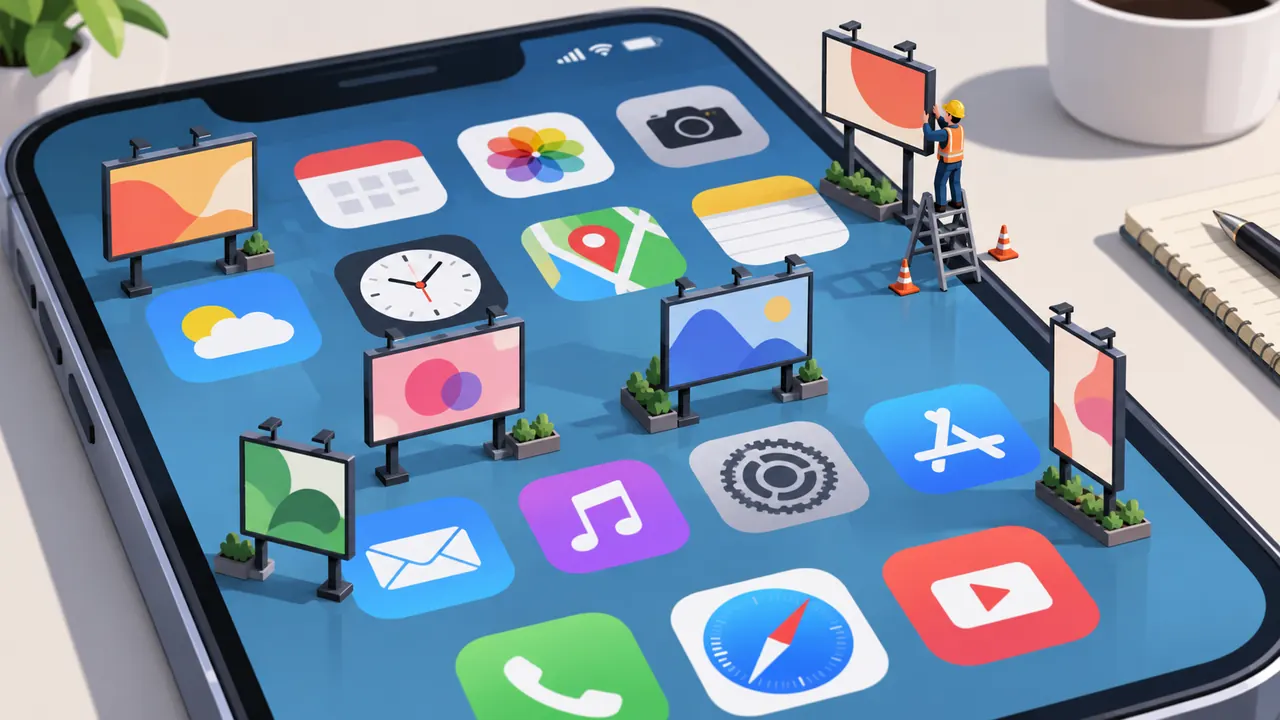
Apple expanded App Store ad inventory on iOS 26.2 and later, pushing placements into the Today tab, a You Might Also Like slot on individual app pages, and the Suggested section of search. The broader search-results expansion landed in March and reshaped how discovery works on the platform. Users are calling it another reason to avoid iOS 26, and the complaint volume is what put it on the front page.
Relevance 3/10Importance 4/10
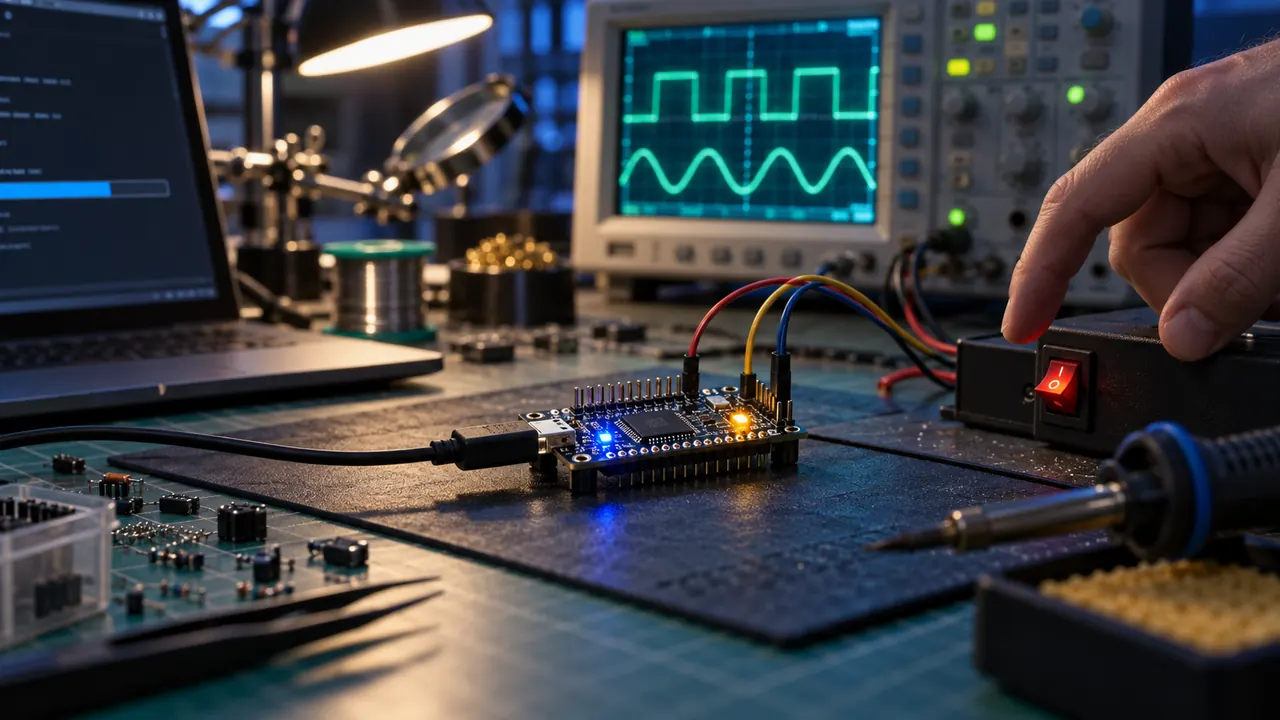
The Groundrun team took an ESP32-C6 mid-OTA-update and attacked it three ways: software reset, hardware reset, and yanking power. The point was to prove the recovery path actually works, because a bricked fleet is the worst failure mode a connected product has. Every single interruption was survived — the device rolled back to old firmware and completed a fresh update, with recovery times between 93.5 and 223.2 seconds.

 HN Briefing AM