Relevance 10/10Importance 9/10
Fireworks AI released Ember-1, a reasoning model that claims to match Kimi K3's quality while burning 35 to 50 percent fewer reasoning tokens. It was built on Fireworks' Serverless Training platform across 50-plus experiments, and hit a Pareto frontier on Doximity's Bedside Bench against GPT-6 Astra and Claude Opus 5. For agentic and coding workloads where reasoning tokens dominate the bill, roughly half the token cost at equal quality is the whole ballgame.
Relevance 9/10Importance 8/10
Alex Ewerlöf argues the "AI solved coding" narrative confuses code generation with software engineering. His case: non-functional requirements like reliability, security, and maintainability eat most of the cost, and a stochastic system can't own logical correctness or accountability. He allows AI-generated code in personal projects and proofs of concept, and warns that agencies billing premium rates for AI output are sitting on a pricing collapse.
Relevance 8/10Importance 8/10
The day's runaway thread — over fifteen hundred points and eight hundred comments — argues Google has swapped information retrieval for AI-powered emotional support. The author's example: searching a 2014 basketball meme phrase and getting an empathetic AI Overview consoling them over an imagined breakup, with the actual relevant results buried below. The broader charge is that an anthropomorphized chat layer has quietly displaced Google's stated mission.
Relevance 7/10Importance 8/10
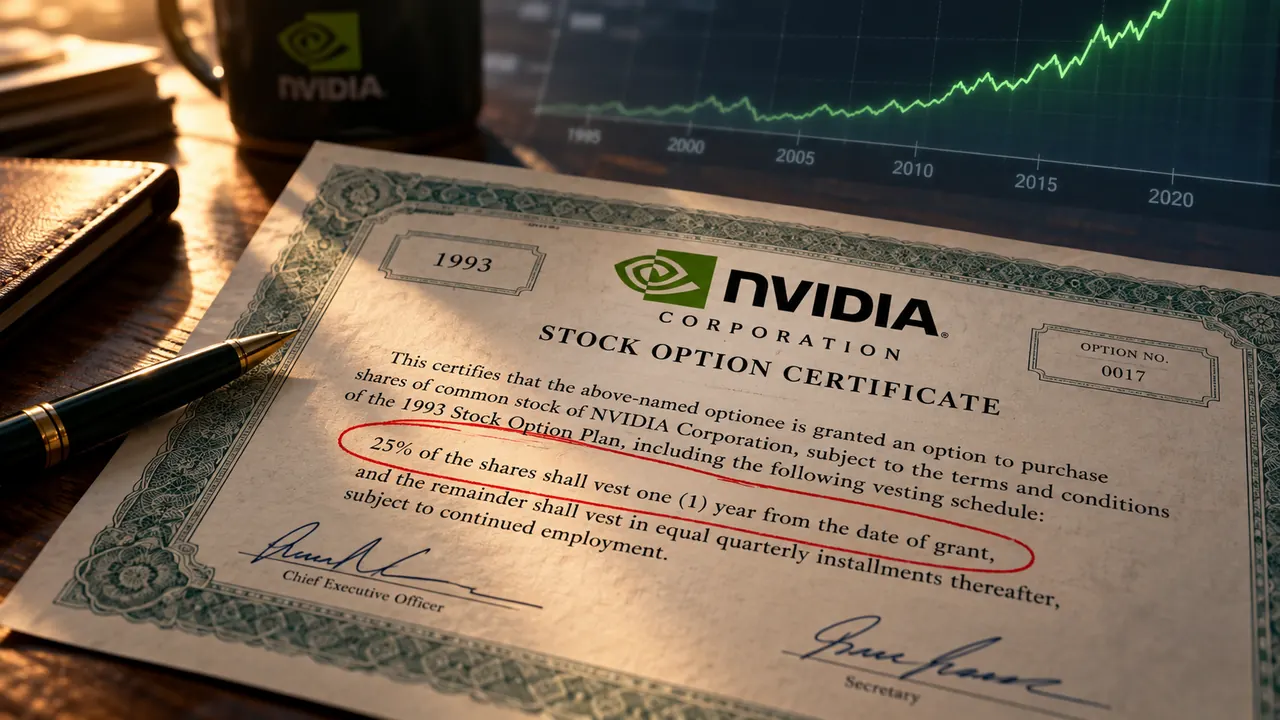
Eric Gullichsen, an early Nvidia technical advisor, got 25,000 options from Jensen Huang in 1993 for texture mapping work, with paperwork saying they vested over one year. Nvidia's CFO and counsel treated it as a four-year schedule and exercised only 62.5 percent in 1996; after 480x in cumulative splits, the missing 9,375 shares would be about 4.5 million shares and roughly a billion dollars. His attorneys concluded the statute of limitations killed the claim, and he closes with philosophical acceptance.
Relevance 6/10Importance 4/10
An ESP32-S3 paired with a 3.97-inch touch e-paper display becomes a wall-mounted household shopping list that syncs with a phone web app. Items are grouped by aisle in the order you actually walk the store, Wi-Fi only wakes for hourly syncs or immediate edits, and a FastAPI plus SQLite backend coordinates everything. Optionally it calls Claude to auto-categorize new items into the right aisle.
Relevance 5/10Importance 6/10
Prologic's Parley is a federated chat network where each org runs an instance for its own domain and identities look like email addresses. Instances find each other via DNS SRV records and well-known identity documents, then exchange signed messages over HTTPS — and new domains peer automatically on first contact. The kicker: you connect with stock irssi or WeeChat, no plugins, and moderation is per-user blocklists rather than central authority.
Relevance 5/10Importance 6/10
Applying AT TIME ZONE 'UTC' to a timestamptz silently converts it to a naive timestamp that no longer represents a real moment in time. That breaks comparisons — naive versus aware always returns false — and makes interval arithmetic depend on the server timezone instead of UTC. The fix is to apply the conversion twice, wrapping the arithmetic, so you land back in timestamptz.
Relevance 5/10Importance 4/10
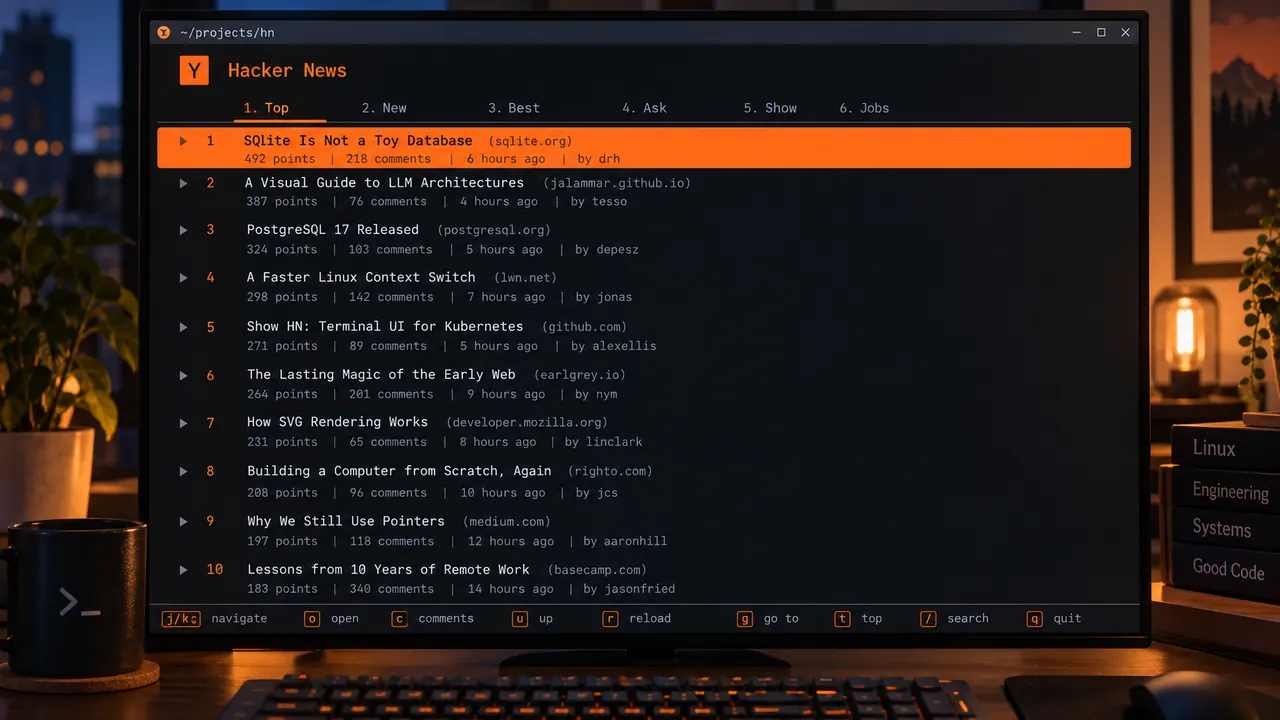
A sleek terminal client for Hacker News covering all six feeds — Top, New, Best, Ask, Show, and Jobs — with collapsible comment threads and locally persisted saved posts. It's built on OpenTUI with Bun and the Effect library handling the data layer, hitting the public Firebase API. Ships as a self-contained binary for macOS and Linux with both vim keys and full mouse support.
Relevance 3/10Importance 4/10
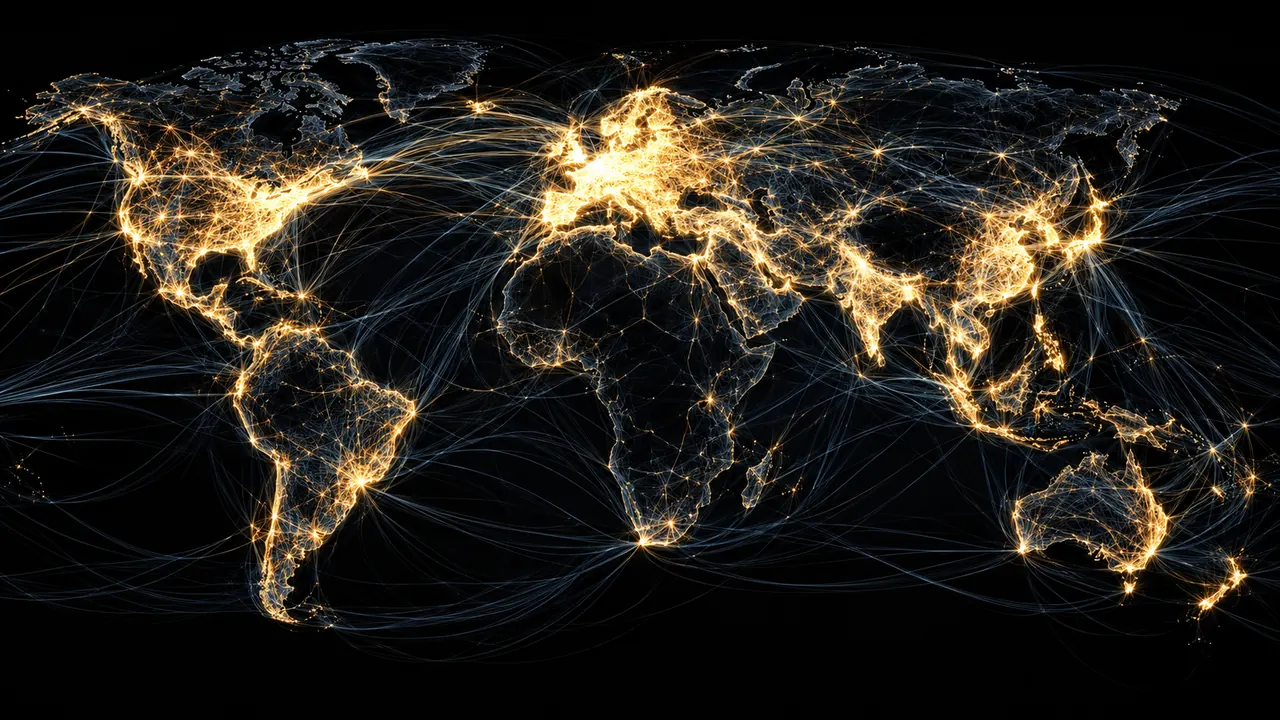
The Drawn World layers roughly 37,500 hand-drawn border and coastline attempts collected from players of the geography game Borderline. Drawings are opacity-weighted by accuracy on a zoomable canvas, showing grid aggregates when zoomed out and individual strokes up close. Nothing gets dropped for being a bad guess, and a weighting system keeps sparsely drawn regions visible next to a heavily over-drawn Europe.
Relevance 1/10Importance 6/10
Dr. Elizabeth Martin argues assaults on educators have been normalized into a routine occupational hazard rather than treated as crises. She recounts being tackled by a student at 22, requiring multiple surgeries, and then facing administrators who questioned what she could have done differently. She cites APA national survey data showing high rates of verbal and physical violence from students, parents, and colleagues, with post-pandemic numbers rising.

 HN Briefing AM