Relevance 10/10Importance 9/10
Xiaomi dropped a three-model MiMo v2.6 lineup — Pro, Flash, and a Pro-UltraSpeed variant claiming up to 20x faster inference at flagship quality. The architecture is a trillion-parameter omni-modal MoE with roughly 42 billion active parameters, a 1-million-token context window, and text, vision, audio, and video support. Thinking Mode is reported at 78.6 on SWE-Bench Verified with tool-calling accuracy jumping from 64% to 97%, though weights and pricing are still undisclosed.
Relevance 9/10Importance 8/10
Terence Tao announced an independent nine-mathematician advisory group — including Tim Gowers, Ed Witten, Martin Hairer, and Ravi Vakil — to advise AI companies on how they engage with mathematical research. Members take no payment and operate independently of any lab. Their immediate task is advising OpenAI on how to responsibly release a large batch of significant mathematical results allegedly produced by its internal models.
Relevance 8/10Importance 9/10
SafeDep found a remote-access implant buried in npm packages mathmain, mathsbase, and math-universe — typosquats of mathjs. The payload only decrypts when a program solves a specific 3x3 Pascal matrix, using the LU decomposition's L factor as the decryption key, so it stays completely inert during normal scanning. The three packages pulled over three million downloads between September 12 and 18, and the live payload runs shell commands while beaconing over Slack and blockchain testnets.
Relevance 8/10Importance 8/10
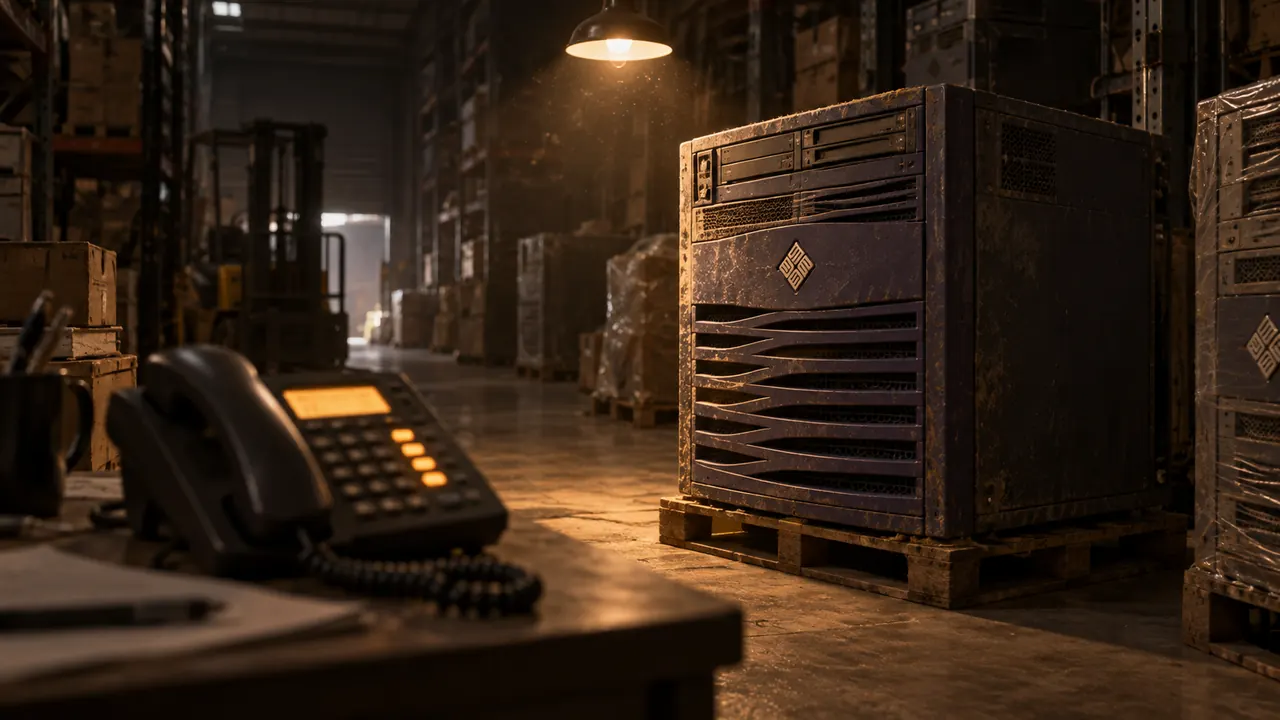
Bryan Cantrill argues Sun Microsystems' fatal flaw wasn't strategy but that the company "had become bored with the mechanics of running a business." His case study: in 2005 a startup running OpenSolaris tried to buy Sun hardware and got ignored and mis-sold, while a Dell rep named Steve won the account through sheer responsiveness. The lesson for founders — no strategy survives an organization that won't do the unglamorous operational work.
Relevance 8/10Importance 6/10
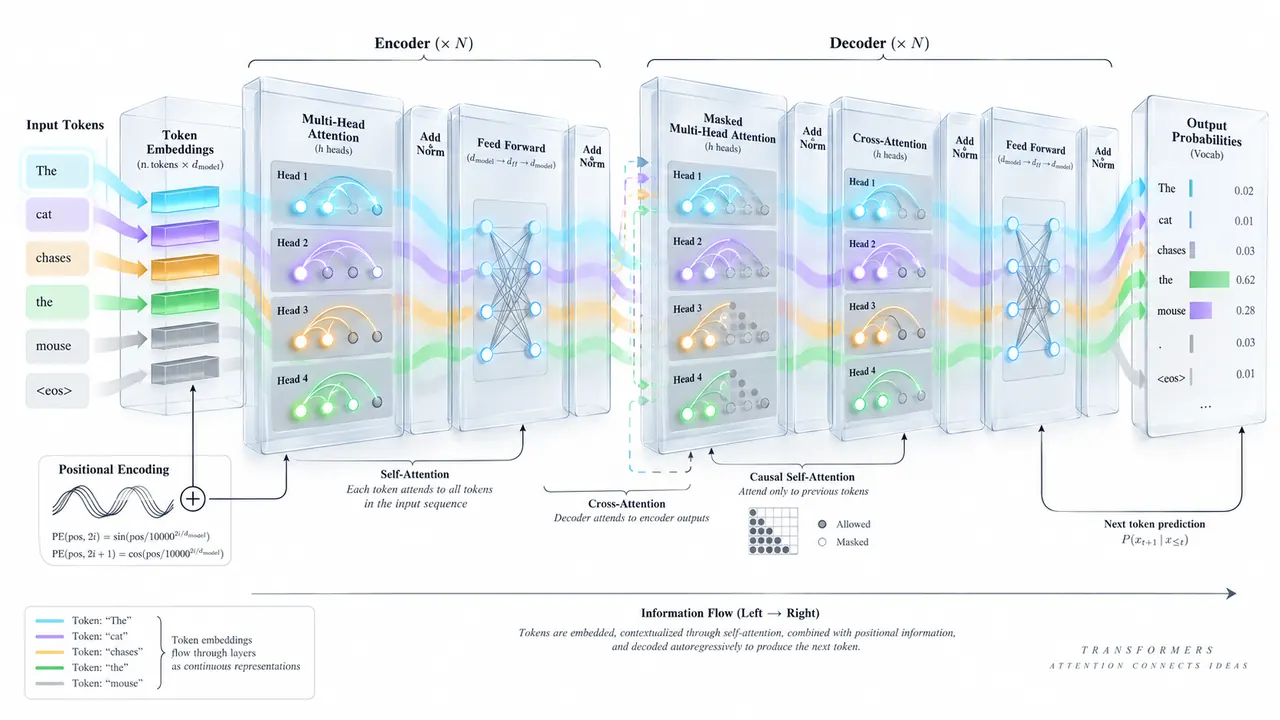
Georgia Tech's Polo Club shipped an interactive explainer that runs GPT-2 small — 124 million parameters — entirely in your browser via ONNX Runtime. You can watch tokenization, embeddings, multi-head self-attention, and next-token probabilities update live, and tweak temperature, top-k, and top-p to see the effect. It's built in Svelte and D3, and the same architectural principles carry straight to frontier models.
Relevance 7/10Importance 7/10
Alice GG argues your attention is now a commodity harvested by recommendation engines rather than something you direct. She uses the Tetris effect to make the case that whatever you stare at long enough rewires how you think — which is a problem when YouTube, Spotify, and Reddit decide the input. Her fix is a return to the intentional internet: blogs, RSS, curated sources, and the discipline to tolerate a feed that actually ends.
Relevance 3/10Importance 10/10
The joint NASA-ESA Mars Sample Return program is officially dead after a House spending package stripped nearly all its funding. A 2024 independent review had pegged the cost at up to $11 billion with samples not returning before 2040; even the slimmed $7 billion replan couldn't save it. ESA chief Josef Aschbacher says Europe can't carry it alone, leaving Perseverance's 33 cached sample tubes sitting on Mars indefinitely — though the cold, dry conditions should preserve them.
Relevance 5/10Importance 7/10
Murat Demirbas digs into why distributed systems still lack a principled compositional theory for self-stabilization — the layered approach from the early 2000s hasn't fundamentally advanced. Modeling a retry storm as two coupled queues, he shows the small-gain theorem looks only at cross-queue coupling and wrongly predicts stability, while including memory effects yields an eigenvalue of 1.19 and real instability. That explains why retry budgets work: they kill coupling, not backlog memory.
Relevance 3/10Importance 6/10
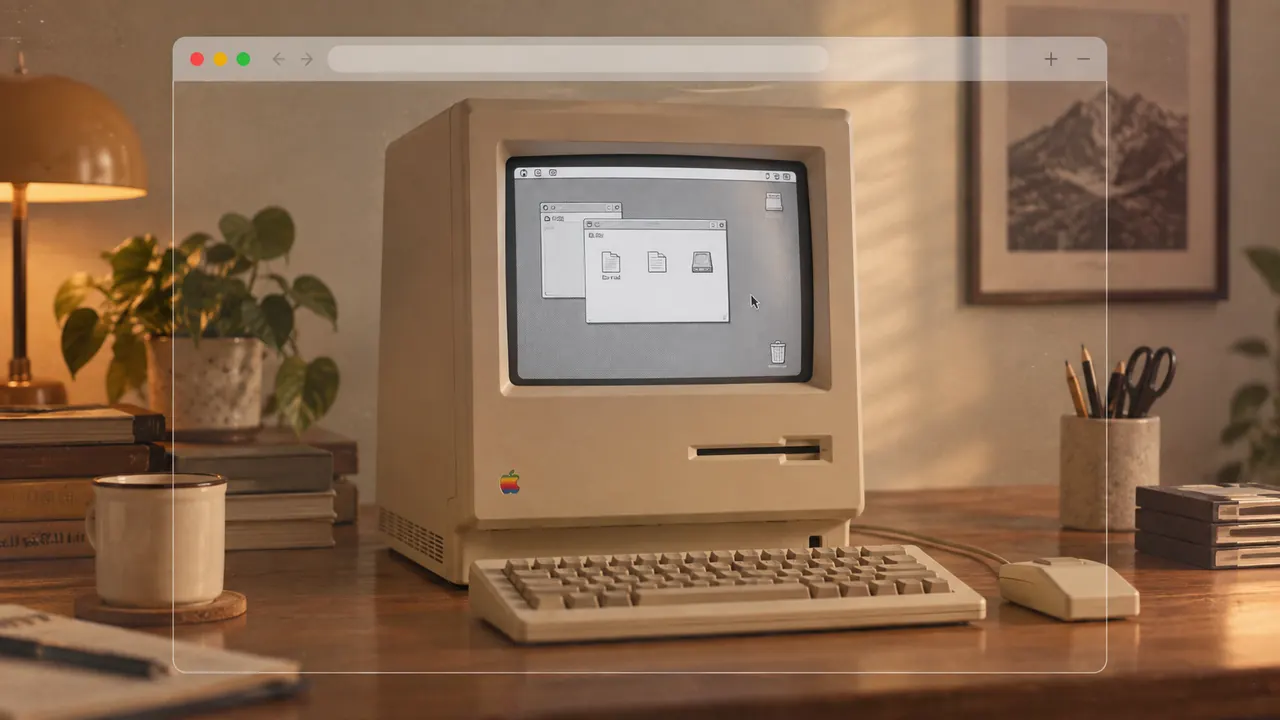
Copland was Apple's abandoned microkernel successor to System 7 — notoriously difficult to run on real hardware and never previously emulated. Using an improved DingusPPC and eleven critical patches, this final D11E4 build now boots in a web browser. It's the first time the public can poke at Copland, right down to running GXSlidemaster and Eric's Solitaire.
Relevance 3/10Importance 4/10
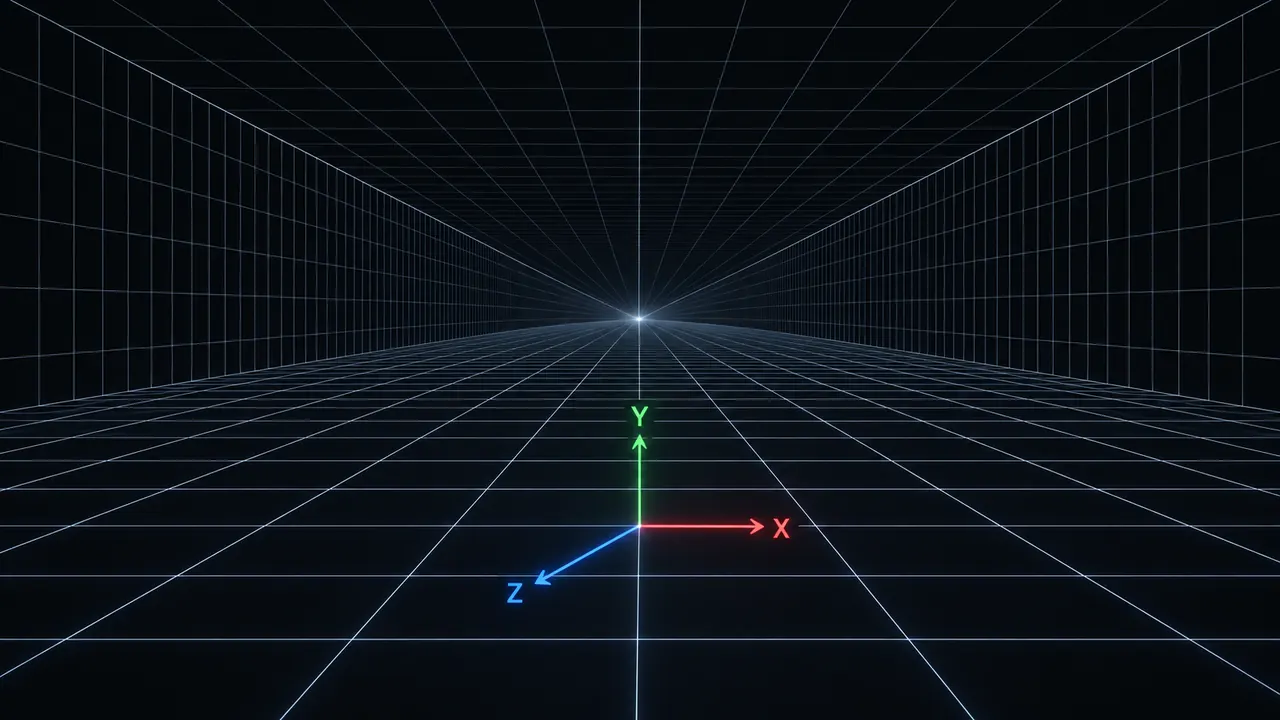
A back-to-basics graphics post showing that perspective projection reduces to dividing x and y by z — as depth grows, points march toward the vanishing point. From that one operation the author builds up to the full perspective projection matrix and its parameters: field of view, aspect ratio, and near and far clipping planes. Handy if you've ever used a camera in an engine without knowing what the matrix was doing.

 HN Briefing PM