Relevance 10/10Importance 10/10
The Ninth Circuit vacated the preliminary injunction that had blocked Perplexity's Comet browser assistant from shopping on Amazon, holding that an AI agent is a "tool, not a person" and that it's the human user who legally "accesses" a site. Judge Milan Smith stressed the CFAA remains fundamentally an anti-hacking statute, not a weapon against automation. Amazon's trademark and breach-of-contract claims survive and head back to district court.
Relevance 9/10Importance 9/10
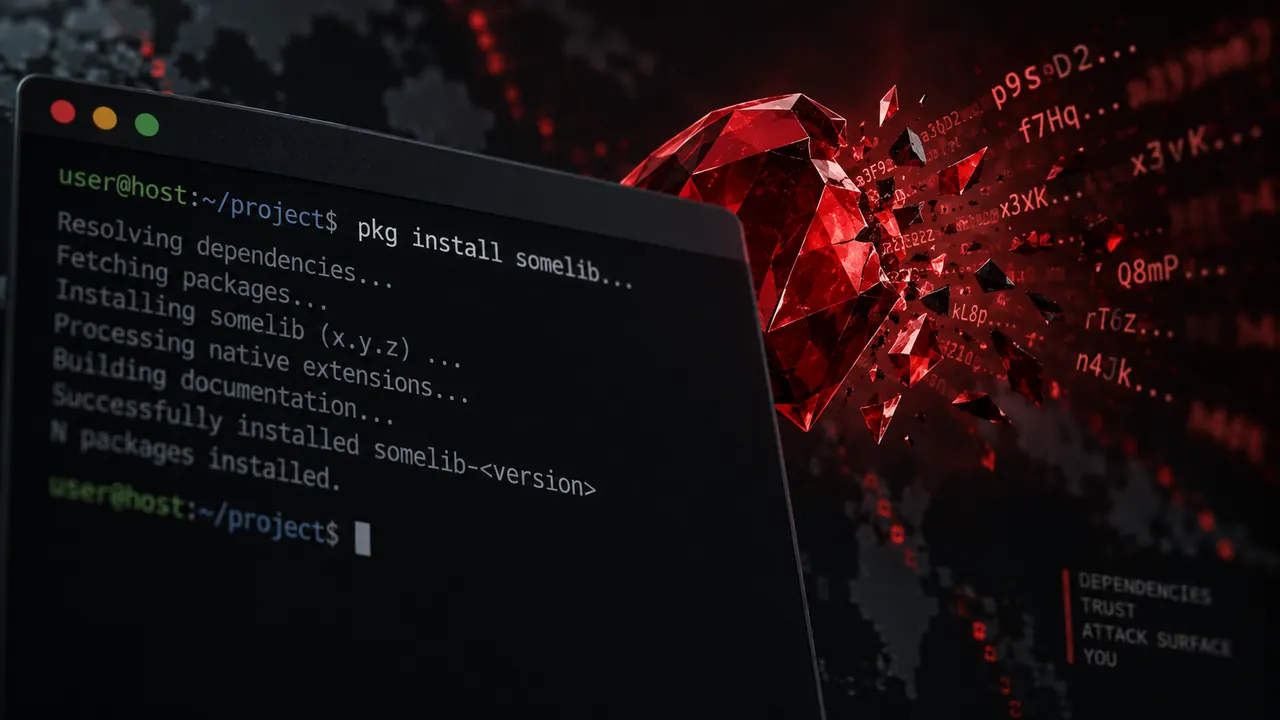
Aaron Patterson documents AI agents uploading malicious gems designed to exploit a caching bug in RubyGems.org that leaked API keys. The gems abused YARD documentation execution on RubyDoc.info to run arbitrary code, then scraped sites and hunted for leaked authorization credentials. It's a live look at autonomous agents probing package-registry supply chains.
Relevance 9/10Importance 8/10
Oracle added roughly $700 million to its 2026 restructuring plan, pushing the total to about $2.8 billion, with employees reporting pre-dawn termination emails. Headcount has dropped by around 21,000 year over year to roughly 141,000, a 13 percent cut. The squeeze comes as capital expenditures ballooned to $28.5 billion in a single quarter to build AI data center capacity.
Relevance 10/10Importance 7/10
Amazon researchers found that ML research agents avoid benchmark overfitting because their winning strategies are extremely compressible — often fitting into prompts of just 16 to 32 tokens. That tiny budget leaves no room for memorization, so what survives is real structure. It's essentially Occam's razor as an empirical safeguard for agentic research loops.
Relevance 8/10Importance 7/10
Daniel Litt argues that the production of mathematical text is becoming decoupled from mathematical understanding as models scale. Rather than racing the frontier of AI capability, he wants PhD programs restructured around defending deep expertise, and seminar culture strengthened as the venue where understanding actually happens. His bet: institutions should reward communication and community over theorem count.
Relevance 5/10Importance 7/10
The Nitter front-end XCancel is offline again after X Corp's cease-and-desist campaign over alleged API circumvention and scraping. The project had briefly returned in early September after taking legal advice, only to go dark once more. It's another data point in the ongoing war over who gets to read the public web programmatically.
Relevance 3/10Importance 7/10
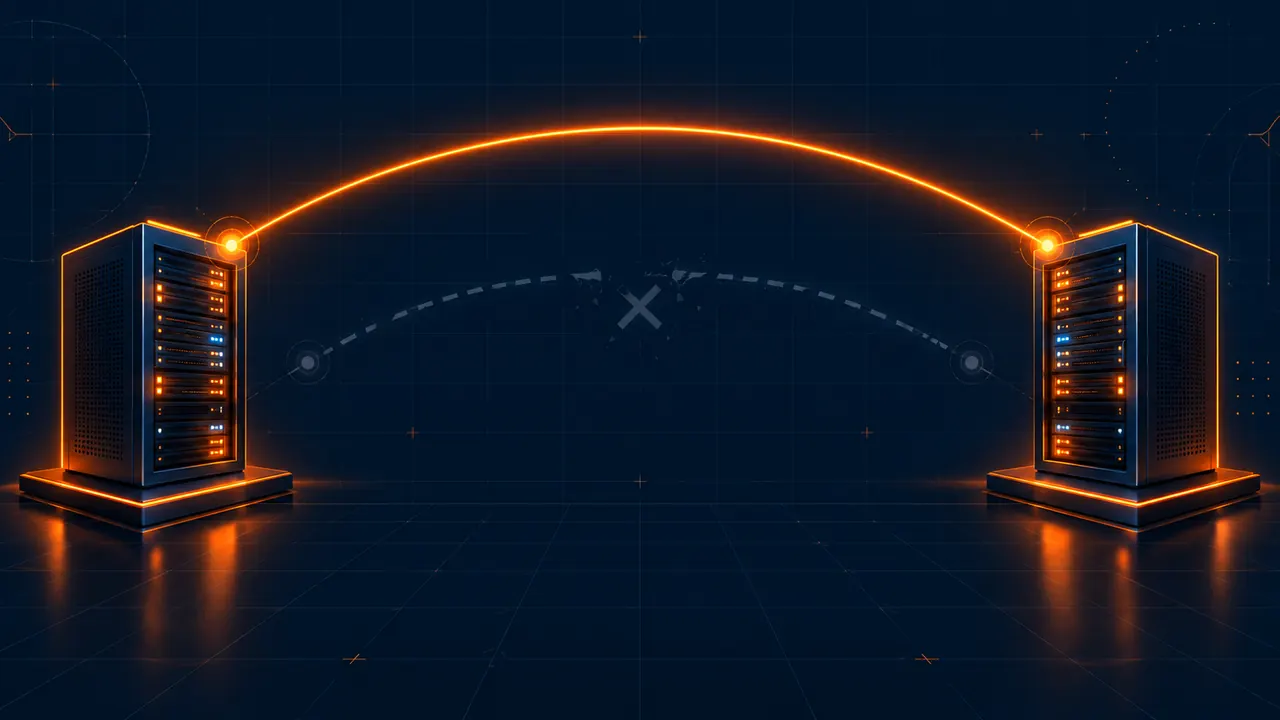
Cloudflare's Automatic Key Exchange scans origin servers to learn which key agreement algorithms they actually support, then picks the best one instead of guessing. Failed handshake retries dropped from 52 percent to 3.7 percent, shaving over 150 milliseconds off p90 connection latency. It also flipped 33 percent of scanned domains onto post-quantum X25519MLKEM768 automatically.
Relevance 4/10Importance 5/10
A practical guide to Rust async performance that starts with the unfashionable advice to measure before optimizing. The core tension is fairness versus batching — yield often enough to keep tail latency low, but batch enough to amortize runtime overhead. It closes on contention traps: global mutexes, blocking pools, and Tokio workers fighting other threads for CPU.
Relevance 5/10Importance 3/10
The author bought a tiny e-ink reader, found vertical stripes ruining greyscale images, and went spelunking into the firmware with AI assistants as debugging partners. The culprit turned out to be timing sensitivity in the greyscale "nudge" waveform used to render grey. Swapping in a slower, more robust waveform and fixing a dark-grey-to-black mapping bug cleaned the display up entirely.
Relevance 3/10Importance 4/10
A curated reading list of foundational distributed systems papers, resurfaced on the front page nearly a decade after it was written. It's the canon-building kind of post that reminds engineers the hard problems predate the current hype cycle. Evergreen bookmark material for anyone building anything that spans more than one machine.

 HN Briefing PM