Relevance 10/10Importance 10/10
OpenAI shipped GPT-6.1 Sol at $2 per million input tokens and $10 per million output, roughly one-fifth of GPT-6 Astra's rates, with cached input dropping to a brutal $0.10 per million. Benchmarks put average task cost at $5.47 versus $23.21 for Opus 5.5 and $23.80 for Astra, though Astra still tops the hardest reasoning evals. Notably OpenAI released this after shelving the GPT-6.1 Astra upgrade over safety concerns, and HN commenters are split between "subscriptions are usable again" and "cheap models cost more when they flail."
Relevance 9/10Importance 8/10
Researchers audited mainstream AI chat apps and found multiple providers shipping conversation-derived artifacts — chat titles, prompts, even screenshots — to third-party trackers alongside persistent user identifiers. Google Tag Manager, Analytics and Ads dominate the CSP headers, with TikTok and Meta pixels showing up too, and some platforms expose conversation permalinks with no access control at all. The paper's money example is a leaked auto-generated chat title reading "Salary 85k NYC: mortgage 280–350k" landing in an ad network.
Relevance 8/10Importance 8/10
EFF reports DraftKings trains machine learning models on first-party betting records to identify customers most likely to place losing bets, then targets them with promos engineered to keep them playing. The argument is that AI doesn't create a new harm so much as industrialize an old one — bigger datasets, faster inference, sharper exploitation of problem gamblers. EFF's conclusion is that restricting third-party data sharing isn't enough and behavioral advertising should be banned outright.
Relevance 9/10Importance 5/10
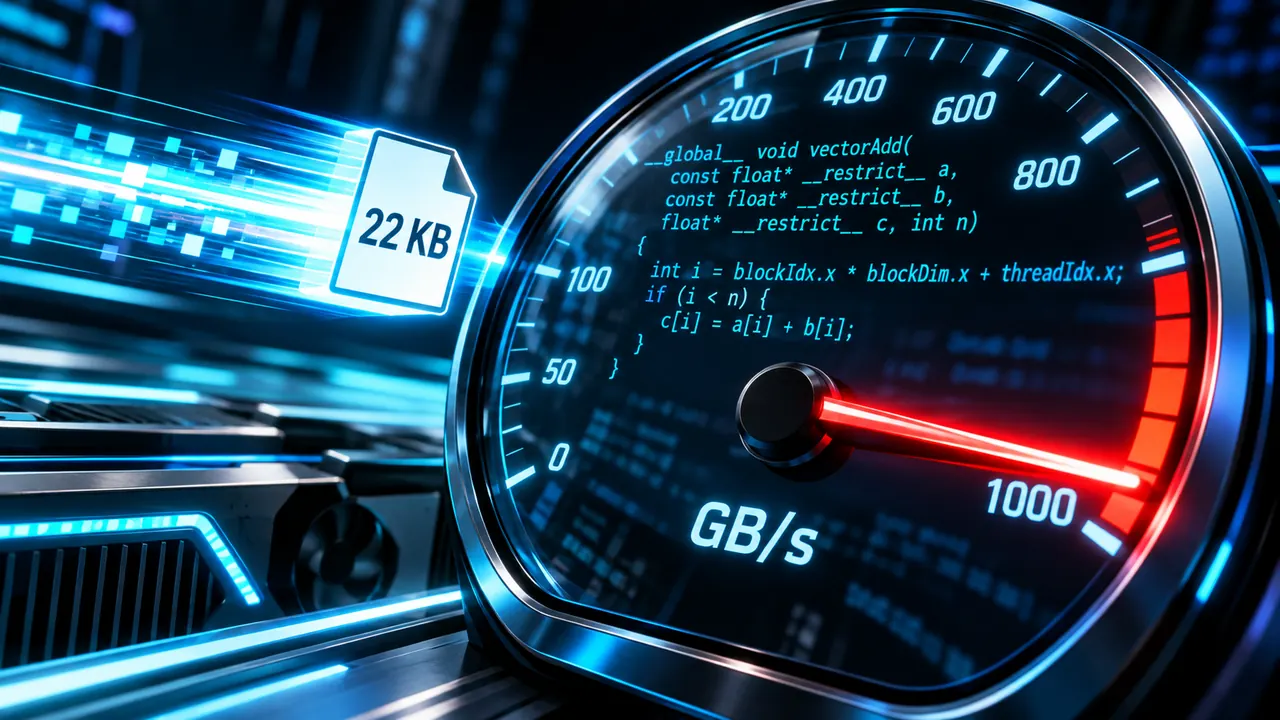
TurboGPT is a minimalist byte-level GPT trainer written entirely in CUDA C++ — no PyTorch, no framework, with checkpointing, optimization and logging all living in hand-tuned kernels. Trained on the hn1g dataset at 1.5 billion tokens it hits 2.5295 bits per byte, and the headline claim is a 22 kibibyte transformer trained in thirteen seconds on a compatible NVIDIA card. It's a teaching artifact and a speed flex in equal measure.
Relevance 7/10Importance 6/10
Andrew Gelman's blog flagged that a University of Chicago statistician has 258 papers logged in the first nine months of 2026, and the HN thread immediately went to the obvious suspicion: LLM-assisted mass production. Defenders point out these are preprints on a free server, not peer-reviewed journal placements, which commenters argue makes the count closer to blog posts than scholarship. A co-author showed up in the thread to say he'd reviewed at least one of them, which did not calm anyone down.
Relevance 7/10Importance 4/10
NAND-16 is a working 16-bit computer simulated entirely from 277,248 NAND gates, with the bulk of that count going to SRAM for system and video memory — a transistor budget in the neighborhood of an Intel i386. The catch, and the whole HN conversation, is that it was generated by prompting an AI coding agent rather than hand-built. Commenters landed hard on the "AI slop" verdict, and the deeper problem they surfaced is that there's now no way for a builder to prove they did it themselves.
Relevance 2/10Importance 8/10
IEEE Spectrum traces how Delhi's distribution grid went from bleeding half its power to losing just five percent, through a mix of aggressive metering and theft detection, infrastructure replacement, and billing and collection reform after privatization. Twenty years ago residents unplugged appliances ahead of scheduled load-shedding printed in the newspaper; today the thread is full of people reporting genuine 24x7 supply. Commenters are quick to note Bangalore and Pune never got the same treatment, so this is policy execution, not a nationwide tide.
Relevance 3/10Importance 5/10
Tcl/Tk 9.1.0 landed today with a new unicode command for normalization plus fresh scripting primitives including timer, lfilter and interp set. Tk picks up accessibility support, bidirectional text, rotated text rendering and a ttk::toggleswitch widget. It builds on the 9.0 line with wider 64-bit support and C99-based math in the modernized C API.
Relevance 2/10Importance 5/10
A newly published exploit chain covers PlayStation 5 firmware 7.00 all the way through 13.60. The browser stage uses JavaScriptCore info leaks plus a structured-clone object pool mismatch to corrupt a typed array, then the kernel stage pairs an address leak with an aio_multi_wait use-after-free race to land kernel read/write. The authors frame it as security research for devices you own.
Relevance 2/10Importance 4/10
Postal inspectors seized LabelsBank.com, a site run by Pakistani national Faheem Akram that sold counterfeit USPS labels at a flat two dollars each regardless of weight, size or destination. Over 5,000 customers bought more than 5.1 million fraudulent labels, costing the Postal Service north of $126 million. Akram faces federal charges including conspiracy to defraud the United States and wire fraud.

 HN Briefing PM