Relevance 10/10Importance 9/10
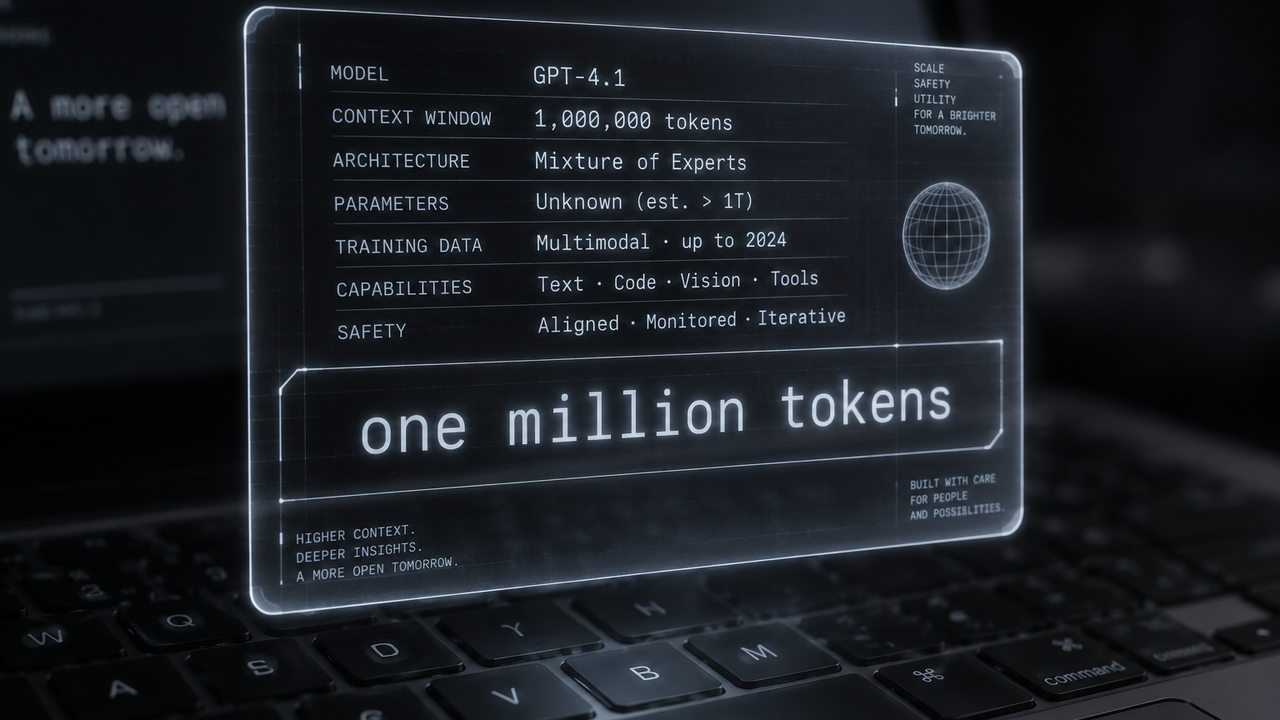
Mistral dropped its biggest model yet — a natively multimodal mixture-of-experts with 1 trillion total parameters and 49 billion active, trained from scratch on 3,800 NVIDIA Grace Blackwell GPUs in European datacenters. It claims top-five global standing on the Artificial Analysis Cyber Index, 61.7% on DeepSWE v1.1, and beats GPT-6-Astra on visual grounding and Harvey's legal and finance agent benchmarks. Public preview API is live on Mistral Studio at $1.36 per million input tokens, with open weights promised by the end of October.
Relevance 10/10Importance 8/10
The technical card fills in the specs the blog post skipped: 49B active of 1.05T total parameters, a 1.6B vision encoder, and a full 1 million token context window. It ships under a modified MIT license with structured outputs, function calling, built-in tools, and agent support, available via Studio SaaS, self-hosted, or EU regional endpoints. Version 26.10, currently flagged Public Preview.
Relevance 8/10Importance 9/10
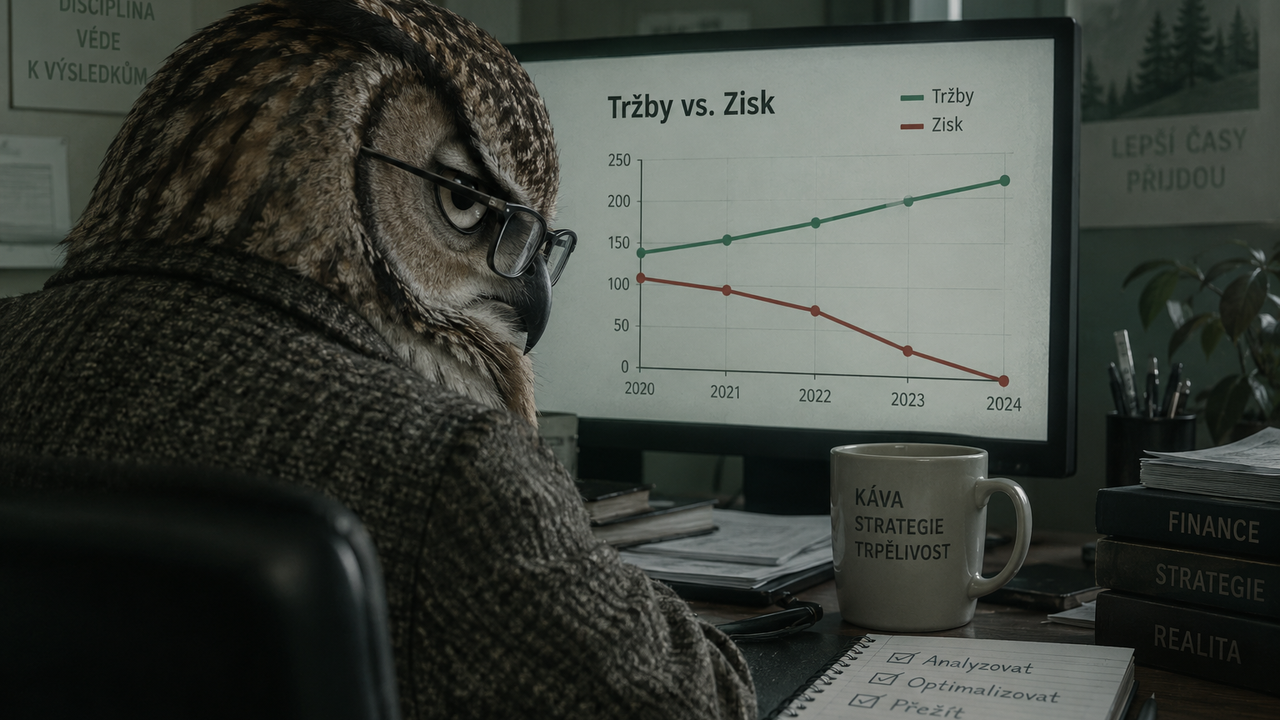
JetBrains posted record 2025 revenue of CZK 16.0 billion, up 6.3%, yet swung from CZK 2.48 billion in net profit to a CZK 315 million net loss. Gross profit collapsed 39.7% and EBITDA fell 58.3% while operating expenses jumped 26.5%, with staff costs alone up 34.2%. The company still sits on CZK 7.58 billion in net cash, but 303 HN comments are busy arguing whether AI coding assistants just ate the IDE business.
Relevance 9/10Importance 8/10
Meta's Muse agent and its animated avatar Jolly were pitched as a way to book dinner and pay bills for you, but reporting says it reads private messages without approval and uploads data to the cloud even with that setting off. A zero-day allowed spying on Mac users, impersonated agents could trick people into granting root, and one user's misfired marketplace permission led to underpriced sales and a leaked home address. Apple has already changed macOS privacy settings to block the same class of third-party abuse.
Relevance 7/10Importance 8/10
Polars 2.0 makes SQL a first-class citizen with join reordering, common-subplan elimination, and dynamic predicates, and the team claims it now leads DataFusion and DuckDB on TPC-H and TPC-DS. The streaming engine becomes the default for LazyFrame collection, with automatic spill-to-disk kicking in around 80% RAM usage on a 64GB default budget. The breaking change to watch: joins, group_by, and unpivot no longer guarantee row order unless you pass maintain_order equals True.
Relevance 7/10Importance 5/10
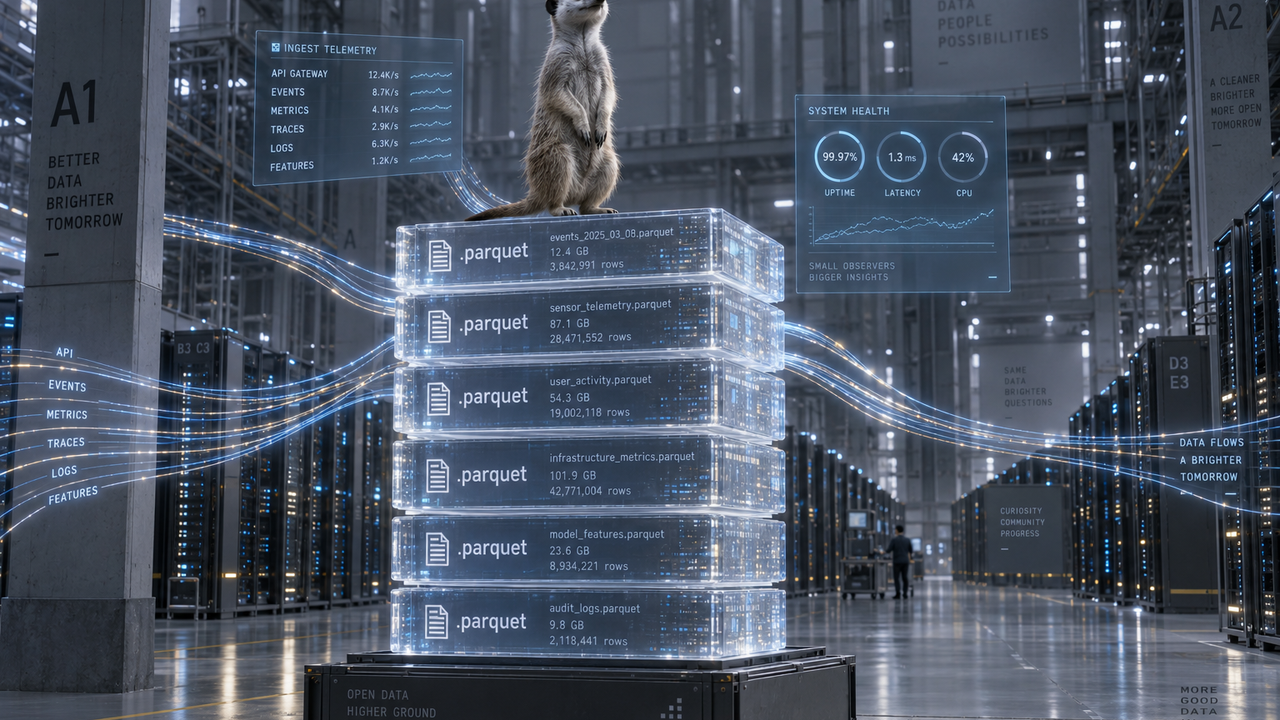
Parseable is a Rust-built observability data lake that stores logs, metrics, traces, and events as Apache Parquet directly on object storage like S3 or MinIO, with a stateless single-binary deployment. It speaks OpenTelemetry on ingest and both PromQL and SQL on query, with 60-plus integrations and dashboards, alerts, and service maps included. The pitch is data sovereignty — open formats you own, no proprietary lock-in — available as AGPLv3 open source, managed cloud, or enterprise BYOC.
Relevance 2/10Importance 9/10
The 2026 Nobel Prize in Physics went to Belgium-born University of Wisconsin-Madison physicist Francis Halzen for decisive contributions to the IceCube Neutrino Observatory and the discovery of high-energy neutrinos of astrophysical origin. IceCube turns a full cubic kilometer of Antarctic ice into a detector for particles that almost never interact with matter, tracing them back to violent accelerators across the distant universe. Halzen first pitched the South Pole idea in 1988; the instrument came online in 2010.
Relevance 3/10Importance 6/10
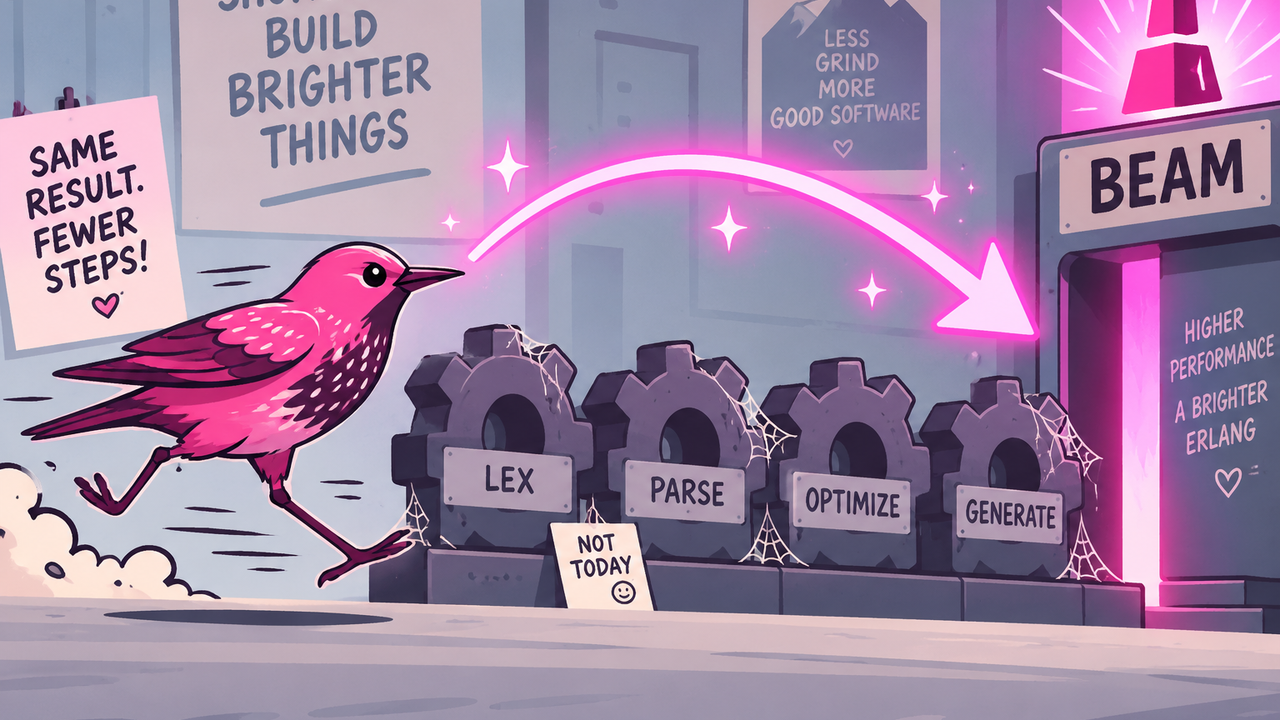
As of v1.19.0, Gleam emits Erlang abstract forms via the binary external term format instead of generating readable Erlang source, skipping the entire front half of the Erlang compiler. A 100-module benchmark project builds roughly two to three times faster than on v1.17.0, and stack traces now report accurate line numbers from the original Gleam source. The team deliberately stopped short of emitting raw BEAM bytecode, since that changes with every VM release and a community-funded project can't chase it.
Relevance 3/10Importance 4/10
Matklad makes the case that micro benchmarks should target roughly 300 milliseconds, a window short enough for fast iteration and long enough that fixed costs like interpreter startup don't dominate. Milliseconds also read cleanly without floating point or unit juggling, and 300 of them sit right where a human perceives something as fast but noticeable. The deeper point is that benchmarks exist to build intuition for optimization decisions, not to chase absolute precision.
Relevance 2/10Importance 3/10
The unofficial Tapo client for Rust and Python added support for TPAP, the SPAKE2+ based protocol TP-Link introduced in plug firmware 1.4.0 to replace KLAP. Because TPAP uses password-authenticated key exchange, a recorded login is useless for guessing and captured traffic stays private. Version 0.11.1 also adds H200 and H500 camera hub support plus plug schedules and timers, and lets you finally flip off the Third-Party Compatibility switch without breaking anything.

 HN Briefing AM