Relevance 10/10Importance 9/10
Researchers at Parameter chained three flaws — MathLive accepting unverified postMessage commands, HTML injection in keyboard layouts, and unsandboxed iframes inheriting the chatgpt.com origin — into full arbitrary JavaScript execution inside an authenticated ChatGPT session. The attack shipped as an innocuous shared conversation link, and they bypassed CSP by abusing YouTube's oEmbed JSONP callback. OpenAI rated it P1, patched across two frontend versions by October 26, and paid a $5,000 bounty.
Relevance 10/10Importance 8/10
Cathedral — a startup founded by four former DOGE staffers — says its AI agents found their way into Anthropic's internal systems in under twelve hours, reaching a limited set of sales, HR, and IT data including salaries, job offers, meeting transcripts, and Slack threads about frontier models. The entry point was vulnerabilities in third-party business software, not Anthropic's own code, which the team had reportedly failed to crack over several days. Anthropic confirmed the breach through its bug bounty program but pushed back on the disclosure, noting its monitoring flagged the activity before Cathedral reported it and access was cut the same day.
Relevance 9/10Importance 6/10
Chris Wellons argues a coding harness is fundamentally just curl glued to popen, and therefore has no business eating gigabytes of RAM — so he built one in C++ with a Dear ImGui frontend that claims two orders of magnitude less resource usage than the Electron-shaped competition. Prospero does the full agent loop: file reads, shell commands, vision-driven GUI control, subagents, Git worktrees, and MCP, with headless deployment. The design thesis is hard timeouts on every call and real process cleanup, so agents never hang forever or leave orphaned background jobs.
Relevance 5/10Importance 6/10
Vitalik Buterin makes the case for treating every digital interaction as a deliberate choice rather than something you fall into by default, and distinguishes that from mere physical minimalism. Rather than quitting X, he moved to Firefly, a multi-client aggregating X, BlueSky, Farcaster, and Lens — and credits much of the improvement to the simple absence of a recommendation algorithm. His core critique is the engagement feedback loop: one morbidly curious click teaches the system what you "like," and the toxicity escalates from there.
Relevance 5/10Importance 4/10
Aatish Bhatia and Cold Spring Harbor neuroscientist Arkarup Banerjee built an interactive playground where you wire up tiny creatures called sparks and watch behavior fall out of the circuit. With four neurons and two connections, flipping a crossing or swapping excitatory for inhibitory turns a light-avoider into a light-attacker or an attacker outright. Tuning connection strengths across otherwise identical sparks produces something that reads like individual preference — a direct descendant of Braitenberg's 1984 synthetic psychology thought experiments.
Relevance 4/10Importance 5/10
Marelleo is a screenless audio box for kids: drop an RFID-tagged figurine on top and the story plays. Under the hood it's an ESP32, an NFC reader, a lithium cell, SD storage, and a custom PCB in a 3D-printed shell, with firmware that handles MP3 and M4A, web streaming, and over-the-air updates. The author built it specifically to escape the Toniebox subscription model, taught himself electronics from breadboard to JLCPCB along the way, and published everything — enclosure, fab files, firmware — under MIT.
Relevance 3/10Importance 6/10
Molly, the popular degoogled Signal fork for Android with UnifiedPush support, hasn't shipped a release since July 31 — version 8.19.2-4 — leaving users exposed to an October audio/video call vulnerability that upstream Signal patched in 8.27. Commenters largely conceded the risk and pointed people toward Signal's official APK, which now handles notifications without Play Services, or Twinhelix's auto-updated Signal-FOSS. One maintainer-adjacent voice blamed F-Droid packaging friction for the abandonment.
Relevance 3/10Importance 5/10
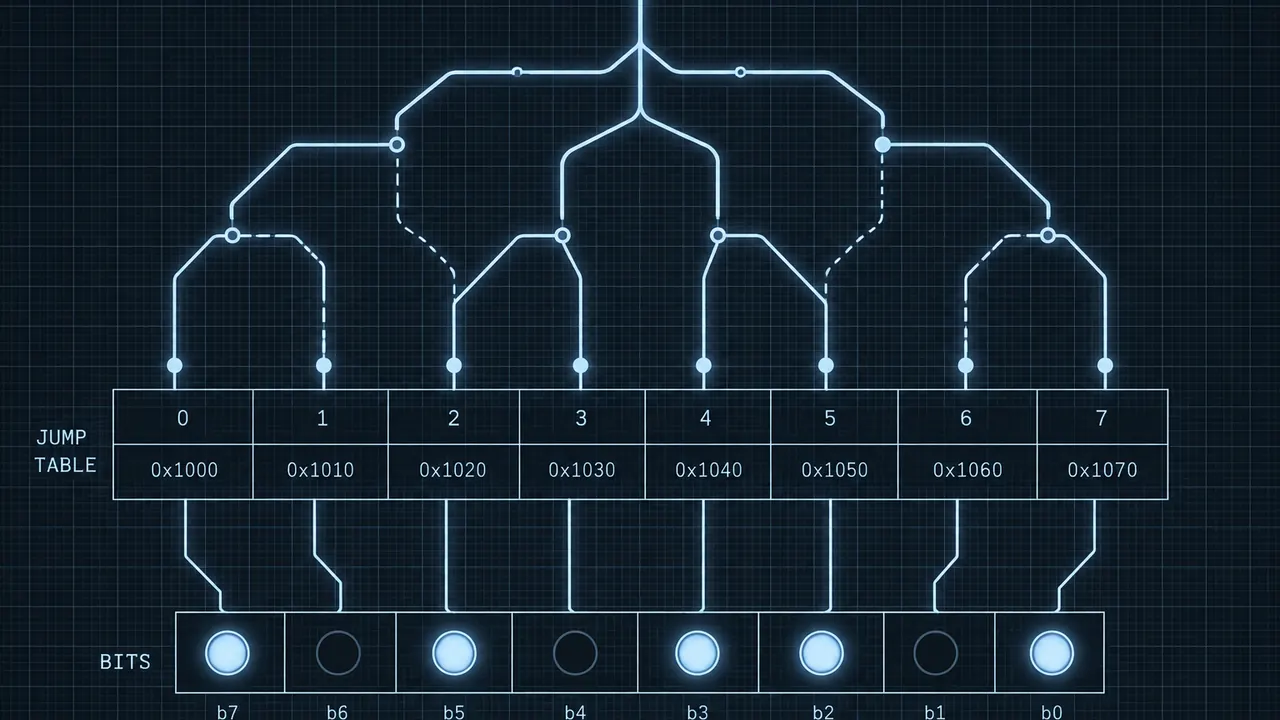
A deep dive into how GCC actually compiles a switch statement, walking through three strategies: jump tables when case values are dense enough to clear an 8-to-1 ratio heuristic for speed or 2-to-1 for size, bitset tests for sparse cases inside a 64-bit window with at most three unique outgoing edges, and balanced binary decision trees when neither fits. GCC runs dynamic programming over the case list to find the optimal decomposition, splitting ranges by probability so both halves are equally likely. The post dissects the real source in tree-switch-conversion.cc.
Relevance 3/10Importance 5/10
Meta suspended #LatinosConAngie, the Latino outreach Instagram account of Florida Democratic Senate candidate Angie Nixon, while she was live-posting from a get-out-the-vote rally in Osceola County. The account came back roughly an hour later with no explanation offered, despite Nixon publicly demanding one. The timing — final week before the midterms — revived longstanding questions about Meta's opaque enforcement during elections.
Relevance 2/10Importance 6/10
A student-led opposition movement called Student List — Students Are Winning took 141 of 250 seats in Serbia's National Assembly on October 25, and dozens of the winners come straight out of academia with more than half holding a Ph.D. The incoming class includes an astrophysicist studying galaxy evolution, an electrical engineer who designs robots, and an organic chemist who worked on Covid-19 antivirals. Serbian law lets MPs keep outside jobs absent a conflict of interest, so many may stay in the lab.

 HN Briefing AM