Relevance 10/10Importance 10/10
OpenAI says its internal models produced three proofs: the local smoothing conjecture in every spatial dimension (which would also settle Kakeya and Stein's restriction conjecture), a claim that the Exponential Time Hypothesis is false, and an existence proof for Yang-Mills theory. OpenAI is explicitly calling these manuscripts "raw research data" rather than finished results, and is partnering with academic communities to verify and interpret them. At 1,040 points it's the runaway top story on HN, and the comment thread is a mix of awe and demands for peer review.
Relevance 9/10Importance 7/10
The post asks whether Brooks's Law still holds when the extra "people" you're adding are agents. Onboarding cost goes to roughly zero, but new overhead shows up in orchestration, requirement clarity, and oversight. The author's updated formulation: adding agents to a project with unclear requirements just produces wrong results faster.
Relevance 9/10Importance 6/10
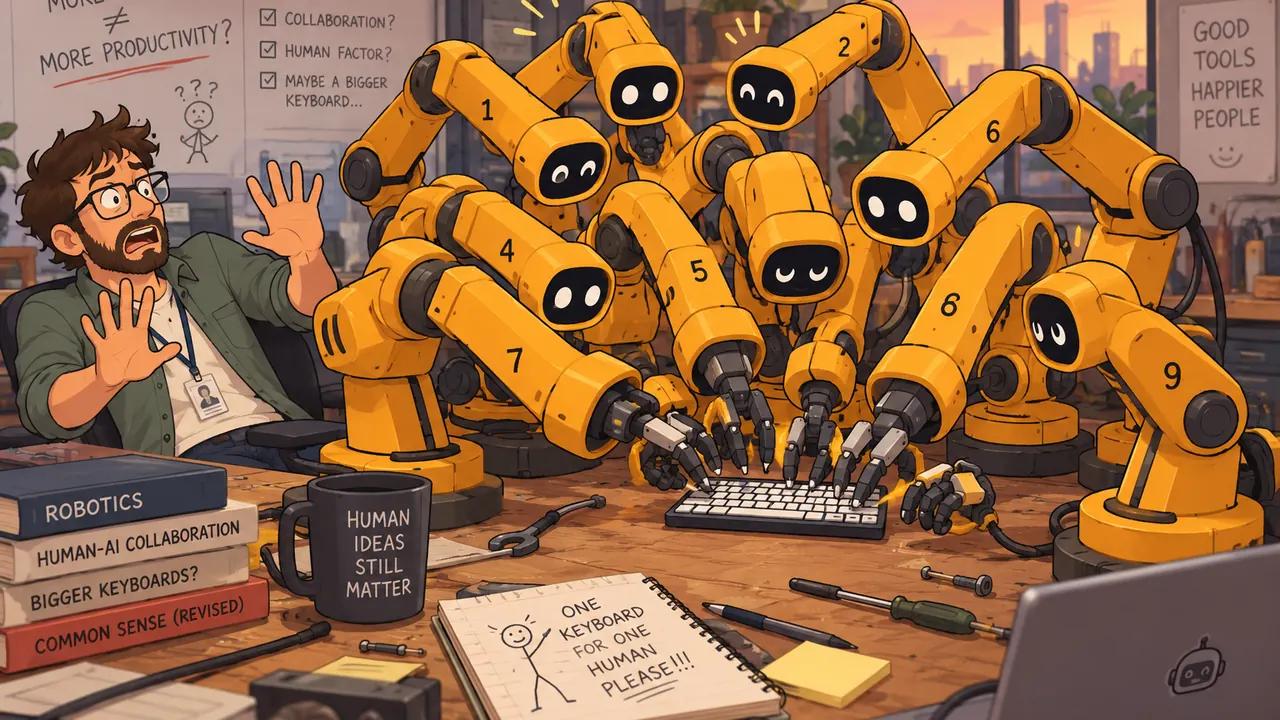
Orestis Ioannou found that cheaper, faster implementation didn't shrink his workload — it expanded his appetite for parallel projects, with constant context-switching and real mental fatigue as the bill. His own GitHub contribution graph shows him back at full-stack-IC intensity despite holding a leadership role. Even his "low" weeks now sit well above his pre-AI baseline.
Relevance 8/10Importance 7/10
IEEE Spectrum covers WikiProject AI Cleanup, the volunteer effort organized to find and remove machine-generated text that's seeped into the encyclopedia. The problem is big enough to justify a dedicated project, and editors lean on manual review plus pattern-spotting because detection tooling isn't reliable. The uncomfortable takeaway is that good AI-generated text is harder to flag than editors had hoped.
Relevance 9/10Importance 5/10
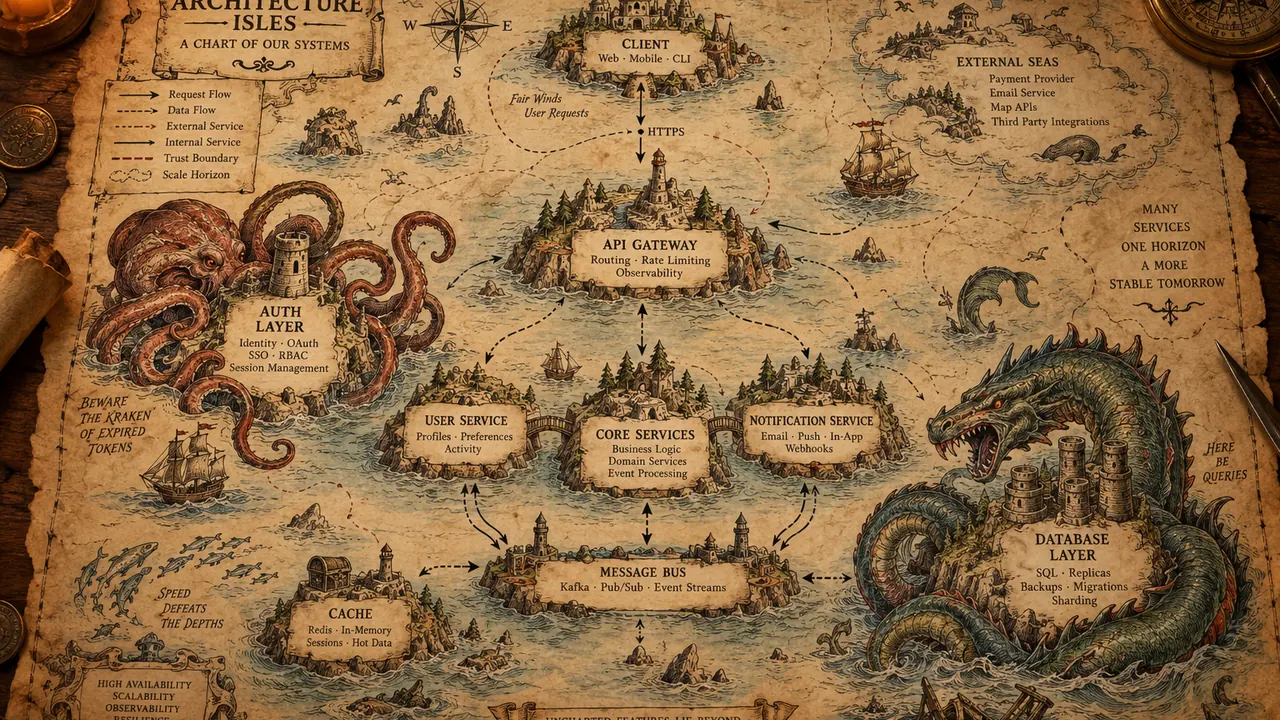
As agents write more of the code, the author argues ownership shifts from hands-on typing to understanding systems at the right abstraction level. He lays out three pillars: CS fundamentals, broad technical awareness, and the ability to dive deep into something unfamiliar on demand. The goal isn't reading every generated line or ignoring it — it's knowing where the monsters live and being able to fix what breaks.
Relevance 6/10Importance 7/10
Apple's new 24-inch iMac ships with the M6, a 4.5K Retina display at 500 nits, up to 32GB unified memory, and what Apple bills as the first-ever dual 16-core Neural Engine plus a neural accelerator in every GPU core. The headline claim is up to 5x faster on-device AI than the M4 iMac, and up to 18x faster than the most popular Intel model. Pre-orders open October 28, with availability November 6.
Relevance 4/10Importance 7/10
The Python steering council required a standards-track PEP covering maintenance burden, compatibility, and success metrics before the experimental JIT could stay. The authors withdrew PEP 836, citing insufficient bandwidth to clear that bar, so the JIT is slated for removal from the main branch. LWN's writeup is notably light on benchmark numbers — the decision was about sustainability, not speed.
Relevance 3/10Importance 7/10
Wiz tracks the aftermath of two critical PHP vulnerabilities disclosed October 21. Exploitation attempts in the wild have been limited and largely unsuccessful, with no public proof-of-concept achieving general end-to-end exploitation against arbitrary targets. Roughly 53% of initially affected organizations remediated within the first week via patching, upgrades, or access restrictions.
Relevance 2/10Importance 8/10
Senators Wyden and Schiff say the administration is illegally withholding a FISA Court opinion signed March 17, 2026, that was legally required to be public by September 13. The court had objected to search filters letting analysts pull Americans' communications from intercepted data without the required approvals, justifications, or records — then reauthorized the surveillance anyway. Release is tangled up with the Section 702 reauthorization fight, with current collection authority running through March.
Relevance 4/10Importance 5/10
A direct shot at software nostalgia: the author argues the 1990s and 2000s were defined by constant crashes, data loss, gaping security holes, and brutal hardware limits. Today's bloat and complexity are real problems, but online updates, process isolation, and higher-level languages are genuine, measurable wins. The "things used to be better" instinct, he says, mostly reflects selective memory.

 HN Briefing AM