Relevance 10/10Importance 9/10
A blogger makes a compelling case that open-weight AI is hitting the same inflection point Kubernetes hit years ago — where ecosystem maturity, tooling, and community support reach critical mass and start genuinely threatening incumbent proprietary offerings. Just as Kubernetes didn't win on day one but won because the surrounding infrastructure caught up, the author argues the same is now happening for self-hosted models. The HN post drew nearly 200 comments, suggesting the analogy landed with real force.
Relevance 5/10Importance 7/10
Google is reportedly considering restricting ADB loopback connections — the capability that lets the ADB client and server both run on the same Android device — which would break tools like Shizuku that power accessibility apps, call recording, and developer workflows without needing a second machine. The author challenges the security rationale since enabling ADB already requires deliberate multi-step user action. The real impact falls on the ecosystem of power-user and accessibility tools that depend on this underpublicized capability.
Relevance 5/10Importance 6/10
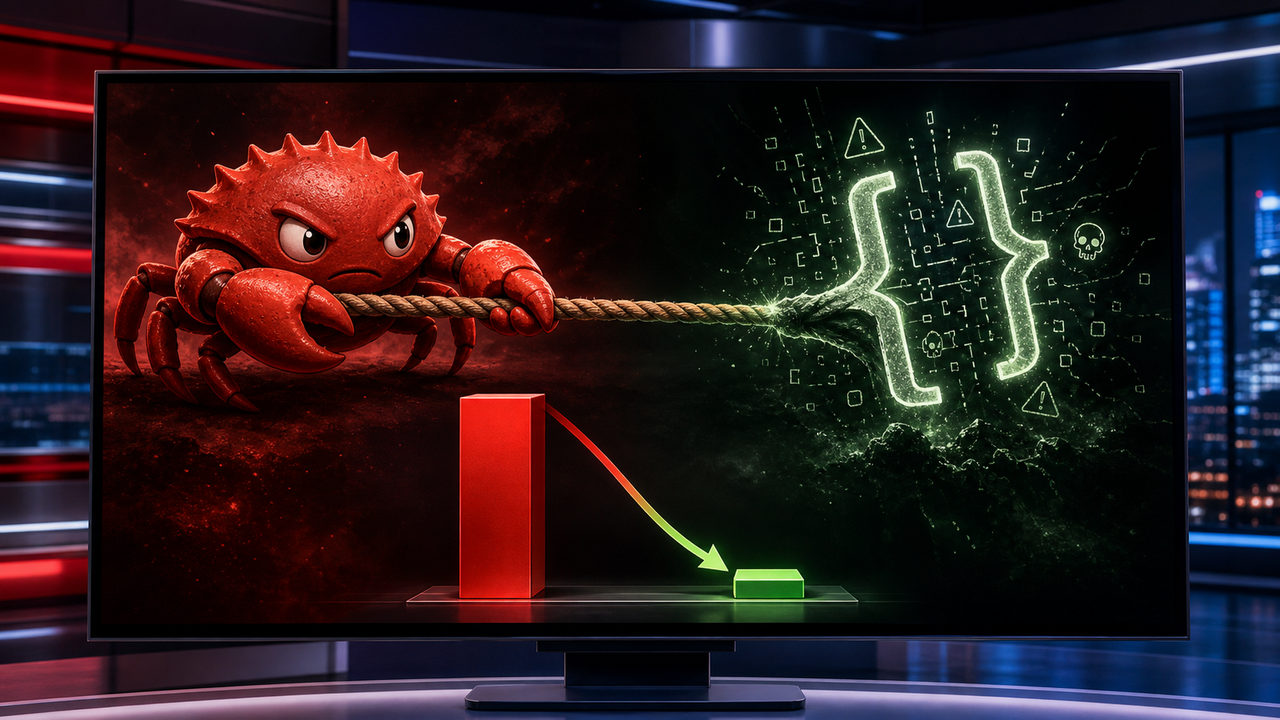
A rebuttal to critics who dismiss Rust because its unsafe keyword means it isn't theoretically perfect — the author cites empirical data showing Rust reduces memory safety vulnerabilities by more than 1,000x compared to C/C++. Demanding perfection while ignoring a thousand-fold practical improvement isn't a principled engineering stance, it's ideological. Trade-offs and measured outcomes matter more than doctrinal purity in language choice.
Relevance 5/10Importance 5/10
Bitchat — the Bluetooth mesh P2P chat app — has migrated its source code to Radicle, the decentralized censorship-resistant Git forge, creating a philosophically satisfying alignment: a P2P messaging app now lives on a P2P code platform. Radicle uses cryptographic repository IDs and peer replication rather than a central host. The HN thread (111 comments) wrestled with the real tension: decentralized infrastructure versus GitHub's overwhelming network effects.
Relevance 3/10Importance 6/10
A facility at the University of Minnesota's West Central Research and Outreach Center has gone operational producing low-carbon ammonia from wind power, dynamically adjusting output to match renewable energy availability and targeting one ton per day. The project is a collaboration between UMN, RTI International, and Casale aimed at stabilizing fertilizer supply chains and keeping agricultural dollars local. It demonstrates a scalable pathway for farmer cooperative-owned renewable ammonia hubs that could also produce urea domestically.
Relevance 1/10Importance 6/10
Brazil's Projeto Reconecta installed rope canopy bridges over Amazon highways for arboreal animals to cross without descending to road level — and 15 months of camera trap monitoring recorded 15,000 safe crossings and zero roadkill. Spider monkeys, howler monkeys, capuchins, and marmosets are among the documented users. Brazil's national transport authority has now designated the multilayered rope design the official national standard for reducing highway wildlife mortality.
Relevance 3/10Importance 3/10
A developer built a semiconductor simulator and used it to produce detailed, pedagogically clear animations of how transistors work — showing charge carrier behavior with visual realism. A companion desktop application goes deeper, modeling electric fields and less-common devices like IGBTs and SCRs. It's a follow-up to a prior HN submission aimed at making semiconductor physics genuinely intuitive rather than textbook-abstract.
Relevance 2/10Importance 3/10
Brolly is a minimalist ASCII weather site built after the UK Met Office's redesign made its interface harder to scan at a glance — it delivers 7-day forecasts, hourly rain and wind data, UV index, air quality, and pollen type breakdowns entirely in plain text. Built in Go with PocketBase and open-meteo's free API, every page state is URL-encoded so any view is bookmarkable and shareable by design. It's a clean, opinionated tool that does one thing without noise.
Relevance 2/10Importance 3/10
A technical walkthrough of using ImageMagick to simulate AM halftone printing on digital images — converting to CMYK, applying Gaussian-filtered dot patterns at different channel angles (0, 15, 45, and 75 degrees), and recombining into a final image with an offset-printing aesthetic. The technique is purely aesthetic rather than functional, producing a tactile printed vibe that evokes physical media. It's a satisfying niche pipeline with clear before-and-after results.
Relevance 2/10Importance 2/10
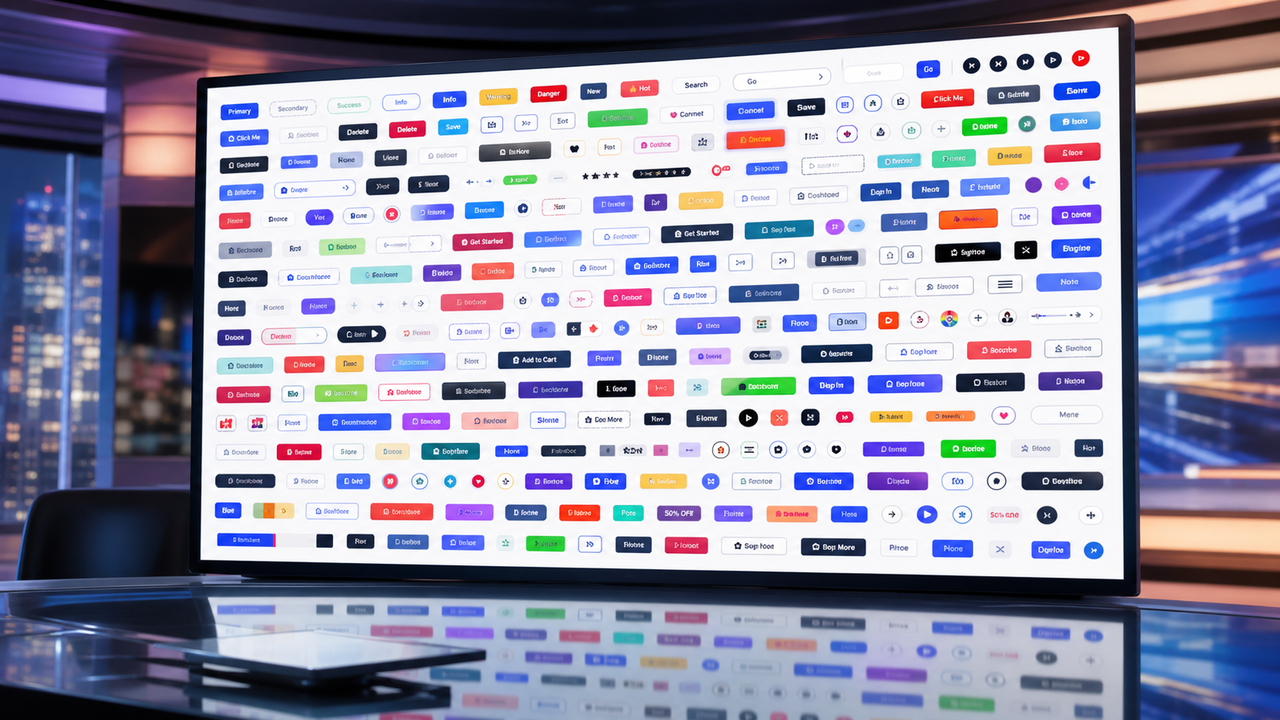
A web art project by Anatoly Zenkov that collects button UI elements harvested from websites across the internet, assembling them into a visual archive that functions as both a design curiosity and a quiet critique. Hundreds of buttons stripped of context become their own aesthetic statement — revealing simultaneously how monotonous the web has become and how much individual personality still sneaks through. It's uncomfortable how many of them look familiar.

 HN Briefing PM