Relevance 9/10Importance 9/10
Stephen Bochinski argues that Chinese open-source models like Kimi K3 now match or exceed closed American alternatives in quality at a fraction of the cost, making U.S. export restrictions on domestic AI models self-defeating. The core contention is that "the only people the gates constrain are American customers," while unrestricted foreign models remain freely accessible worldwide. This piece frames a geopolitical inflection point: pay more for domestically-controlled AI, or watch American competitiveness quietly erode.
Relevance 9/10Importance 8/10
Google DeepMind and Isomorphic Labs have jointly published a biosecurity strategy that applies AI on three fronts: blocking bad actors from misusing models, accelerating pathogen detection via optimized DNA sequencing algorithms, and giving trusted researchers priority access to AI tools for vaccine and therapeutic development. The collaboration has already inked 15-plus partnerships with governments and biosecurity organizations. It's a rare case of a frontier lab publishing a concrete dual-use AI safety framework rather than just a policy statement.
Relevance 9/10Importance 7/10
This step-by-step guide walks you through transforming a spare Mac into a dedicated machine that Claude Code can fully control via computer use — accessible from your phone or main computer over SSH while keeping sensitive data isolated. Key steps include creating a fresh user account, enabling remote access, setting up passwordless sudo, and optionally wiring in Tailscale for VPN-secured remote reach. It's a practical blueprint for offloading long-running agentic tasks to a physically separate machine.
Relevance 8/10Importance 7/10
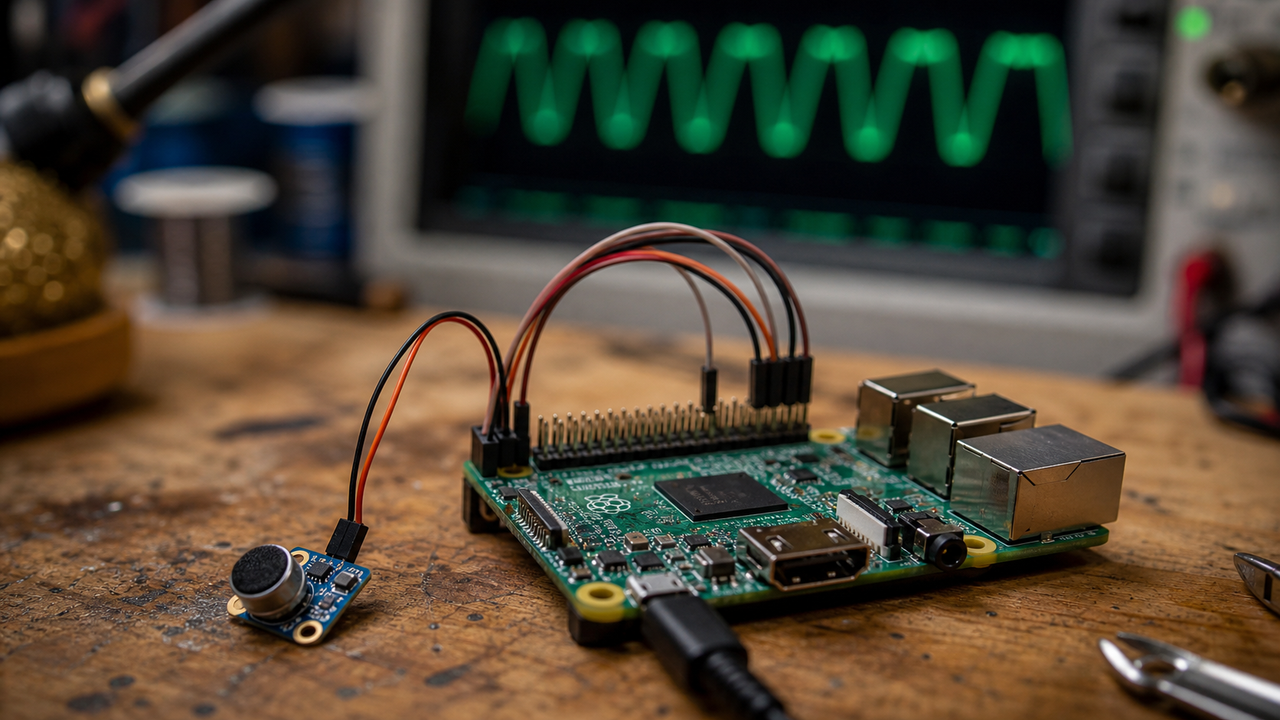
Moonshine Micro is an MIT-licensed, open-source AI toolkit that squeezes voice-activity detection, speech-to-text, and neural text-to-speech onto microcontrollers — including the 80-cent Raspberry Pi RP2350 — using roughly 3.6 MB of flash and 470 KB of RAM. The components (VAD, STT, TTS) can be used independently or together via TensorFlow Lite Micro, and the repo ships a complete end-to-end WiFi connectivity example. Getting a full voice interface pipeline onto a chip that costs less than a cup of coffee is a genuinely big deal for embedded AI.
Relevance 4/10Importance 5/10
Ben Landau-Taylor makes the case that there's far more demand for social events and community than there is supply — and that the fastest way to become a central figure in any community is simply to start organizing things yourself. He ties modern social alienation to the habit of consuming community without ever contributing to its creation. It's a short, punchy essay that resonated hard with the HN crowd, drawing 56 comments.
Relevance 3/10Importance 5/10
This ACM Queue farewell piece — its title riffing on Douglas Adams — reflects on a career spent in technical communities where Parkinson's Law of Triviality (spending the most time debating the least important things) was a constant companion. With 149 points and 150 HN comments, it clearly struck a nerve with practitioners who've survived their own bikeshed marathons. The piece landed on the front page without a flashy hook, which says something about how deeply the phenomenon resonates.
Relevance 3/10Importance 4/10
Gleam, the type-safe functional language built on the BEAM, has migrated its official presence to Tangled — a decentralized code hosting platform that uses distributed identifiers instead of centralized repositories. The move aligns with Gleam's explicit positioning as a language "not owned by a corporation," and signals growing developer interest in decentralized infrastructure alternatives to GitHub. Tangled is an early-stage platform, but having a high-profile language project adopt it is meaningful traction.
Relevance 2/10Importance 3/10
HaxxorWPM is a typing speed test that swaps prose for actual terminal commands — think grep, systemctl, docker — so you're measuring real command-line fluency rather than generic WPM. It tracks accuracy, commands completed, and raw speed. A fun, niche tool that's exactly the kind of Show HN that earns its front page.
Relevance 2/10Importance 3/10
The official Elixir programming language website launched a fresh redesign, drawing 83 comments and 129 points from the HN community. The new site highlights Elixir's use cases across web, embedded, and data workloads, and features an updated community and open-source stewardship section. Language community redesigns don't usually move markets, but the HN discussion reflects genuine affection for the ecosystem.
Relevance 1/10Importance 2/10
Strandfall is a three-hour outdoor LARP set in an Edinburgh park where 30 players use custom-built "spatial computers" — not smartphones — to investigate mysterious storms in a solarpunk near-future setting. The game blends real physical navigation with functional prop technology, creating a uniquely analog-meets-handmade experience. It's the most charmingly off-beat thing on the front page today.

 HN Briefing PM