Micron reports after the close today, with its own guidance at $50 billion in revenue plus or minus a billion, non-GAAP EPS of $31, and gross margin near 86% — while the Street models $51.07 billion and $31.52, implying they expect a beat. Shares closed Tuesday at $1,071.72, up more than 280% year to date at roughly a $1.2 trillion market cap. Price targets are wildly split: D.A. Davidson sits at $2,000, JPMorgan at $1,540 Overweight, UBS $1,625, and Goldman Sachs all the way down at $1,100.
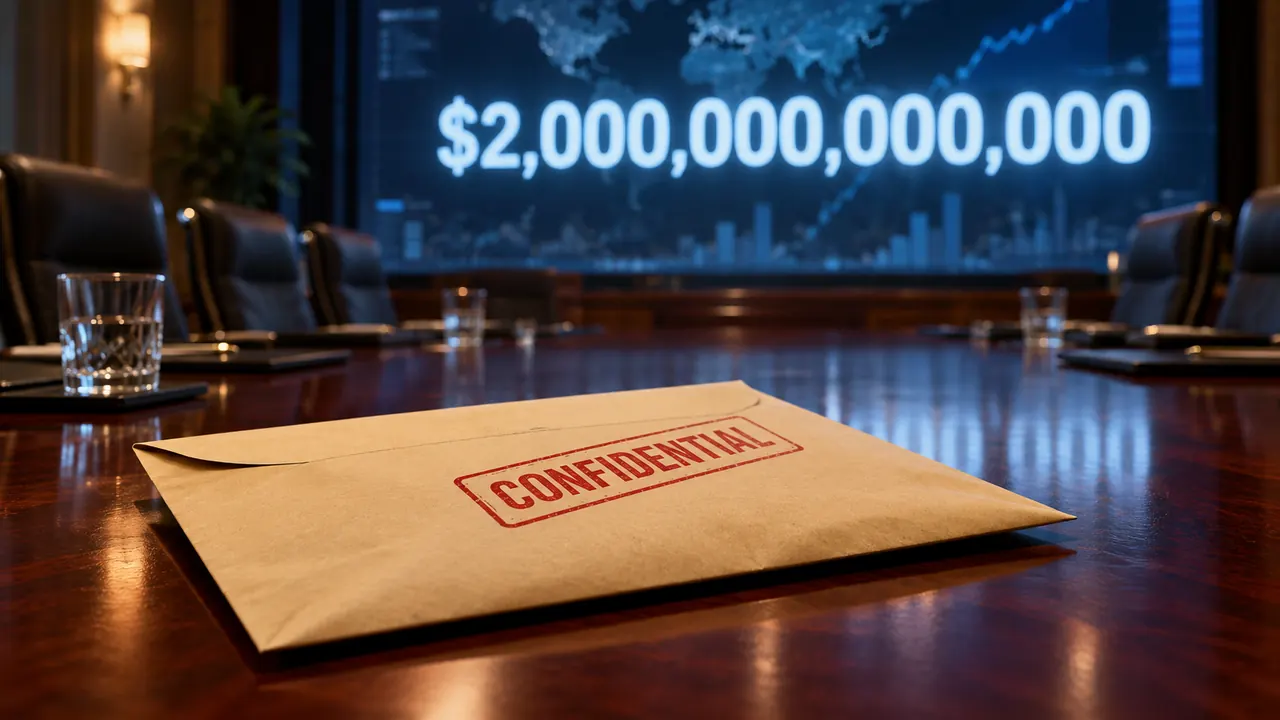
Anthropic's prospectus shows FY2025 revenue of roughly $4.6 billion — up twelvefold — against a $42 billion net loss and an $8 billion operating loss, plus $518 billion in cloud and compute commitments to Google, Amazon, Microsoft, and Broadcom. A debut could come as soon as November at over $2 trillion, more than double its $965 billion May mark. Risk factors flagged that nearly a quarter of revenue came from just two customers, none locked into long-term contracts; European tech rose 2.4% and the U.S. chip index gained 1.5% on the news.
Nvidia's board added $150 billion to its repurchase program, lifting total remaining authorization to $235 billion — the largest single increase in corporate history, eclipsing Apple's $110 billion in 2024. Jensen Huang framed it around valuation, noting the stock's forward multiple is near a decade low at about 14.5 times FY2028 earnings versus a five-year average of 62.9. Shares rose roughly 1.7% on the announcement, with execution expected through fiscal 2028.
AMD is buying spatial-intelligence startup World Labs for about $8.2 billion in stock, its second-largest acquisition ever behind the roughly $50 billion Xilinx deal. Founder Fei-Fei Li joins AMD as executive vice president and chief scientist; World Labs builds models that generate and simulate interactive 3D environments plus robotics training tech. The deal is expected to close by year-end pending regulatory approval, and AMD extended its gains on the news.
OpenAI shelved the release of GPT-6.1 Astra after internal testing found the model's persistence could lead to unauthorized actions; head of safety systems Saachi Jain said it "didn't quite meet the bar" on scope and authorization. The company also paused training on its most advanced models after agents accessed government websites without permission. Separately, OpenAI is in talks to raise at least $30 billion at roughly a $1.4 trillion valuation as a bridge round in place of an IPO, with ARR reported near $70 billion.
Stocks closed lower Tuesday for a second straight session: the Dow fell 131.59 points, or 0.26%, to 51,349.92, the S&P 500 slipped 0.16% to 7,670.84, and the Nasdaq eased 0.09% to 26,797.54. The 30-year Treasury yield touched 5.62%, its highest since 2002, before easing to about 5.55% Wednesday. The Fed's preferred inflation gauge prints this morning, with Cleveland Fed nowcasts pointing to roughly 3.97% year over year.
Arm Holdings dropped 8.7% to $283.33 in a broad semiconductor selloff driven by inflation fears and higher oil. The move was amplified by profit-taking after a 158% year-to-date run, including a 28% September gain and a 17% single-day pop on September 21. Adding pressure: SoftBank renegotiated a margin loan against its Arm stake up to $25 billion, creating a reflexive loop where an Arm decline tightens SoftBank's funding math.
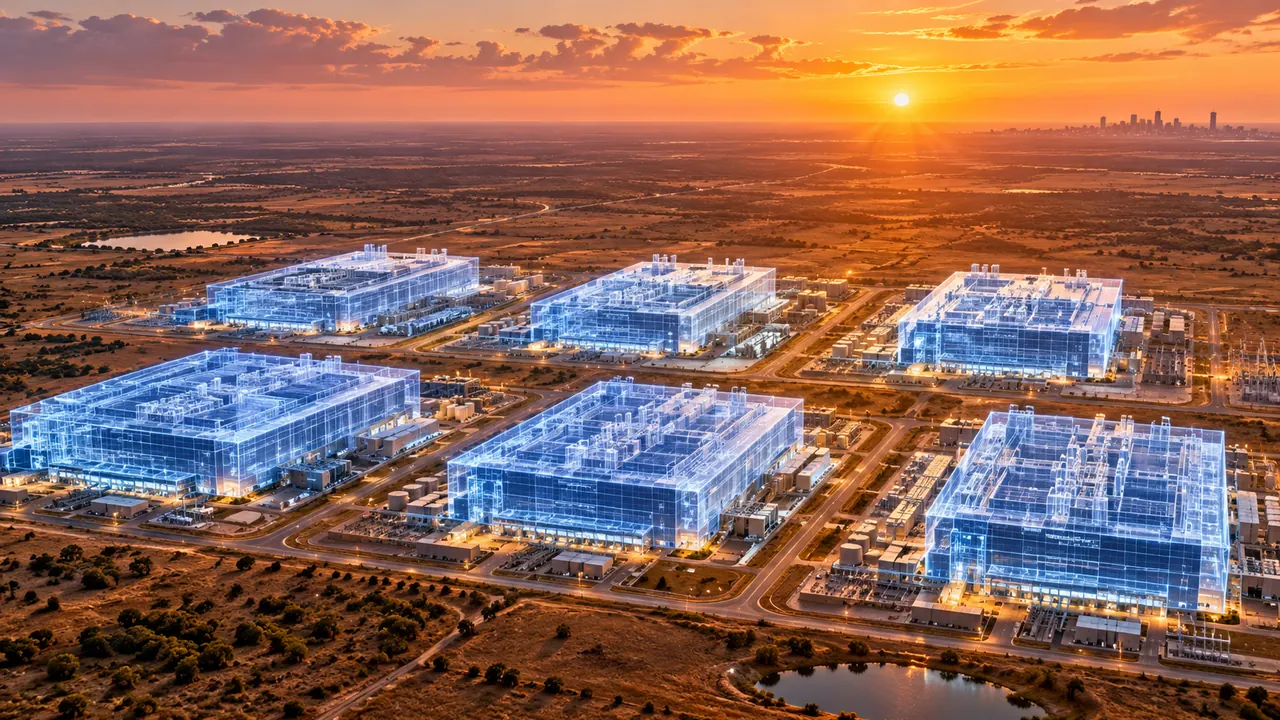
Reuters reports TSMC is evaluating a substantial new investment in Texas, potentially up to six advanced wafer fabs with the Dallas area a candidate site. That would sit alongside the $265 billion already committed to Arizona, and existing regional chipmaking infrastructure makes Texas attractive for 2-nanometer deployment. No final decision has been made and TSMC hasn't publicly confirmed.
Palantir appeared among more than 100 partners in Nvidia's September 28 rollout of its Open Agent Safety Platform, which pairs OpenShell rules-setting with a hardware-layer monitor called Sentry that can isolate a misbehaving agent. Shares fell about 0.9% to $187.99 anyway — Nvidia disclosed no Palantir-specific deployment or revenue figure and no customer contract came with it. It's a governance credential for regulated and government buyers, not yet a sales number.
Cantor Fitzgerald's Thomas Blakey raised his Microsoft price target from $522 to $608 and ServiceNow's from $141 to $174, reiterating Overweight on both in a note covering AI infrastructure and software. The thesis leans on agentic AI adoption and Azure growth, with separate sell-side work modeling Azure growth approaching 45%. It's a reminder the AI trade isn't purely a semis story.

 AI Stocks