Relevance 10/10Importance 10/10
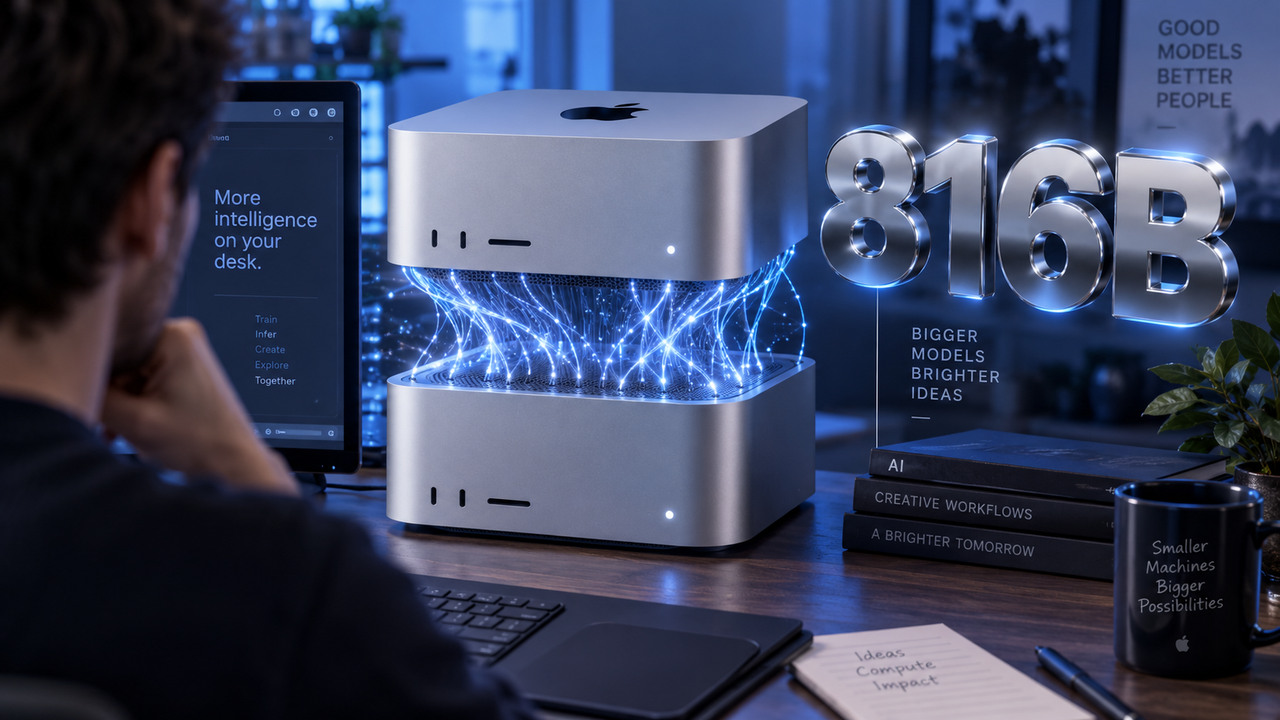
Meta Superintelligence Labs dropped what it's calling the most capable US open-weight model to date: natively multimodal, 816B total parameters with 42B active, and a 1M-token context window tuned for coding, agentic work, and hard reasoning. Weights are on Hugging Face under the Muse Model License, free for most developers. The headline flex is hardware — it's the first model in its class optimized to run locally on two Apple M5 Ultra Mac Studios via MLX.
Relevance 10/10Importance 8/10
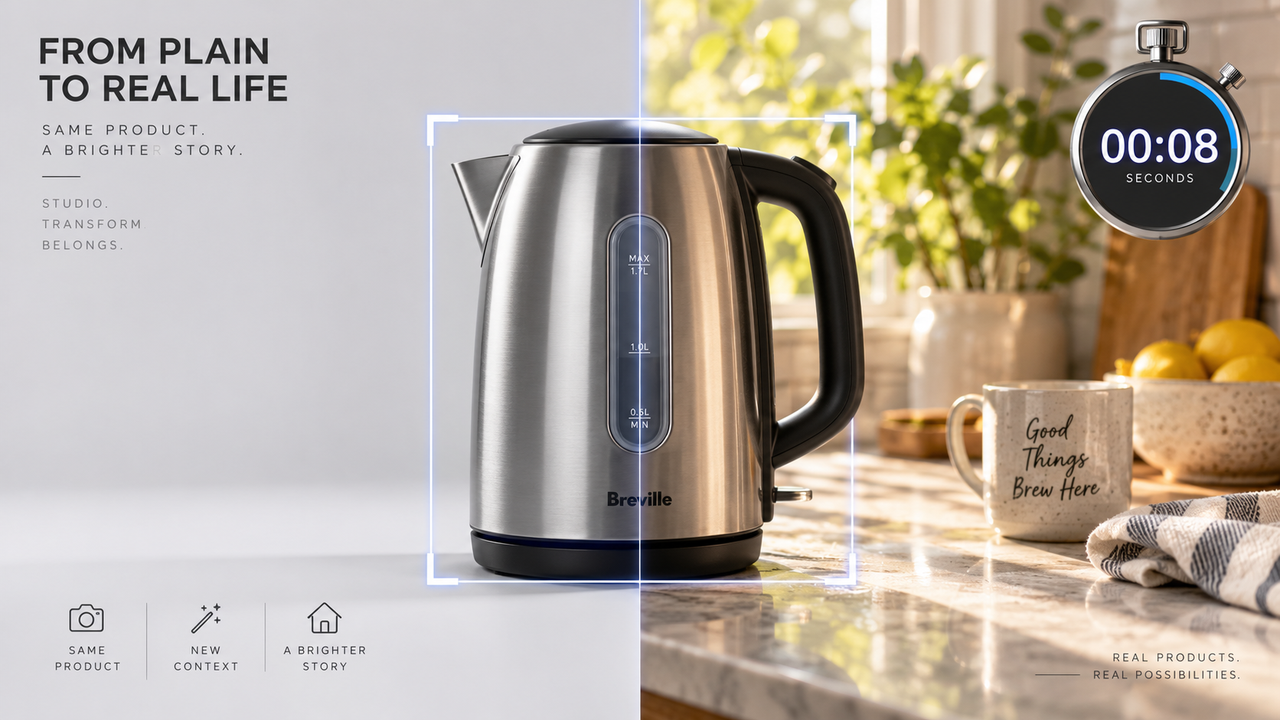
Krea opened the beta for Krea 3, a frontier image-editing model that lands end-to-end 2K edits in under eight seconds — roughly 10x faster than GPT Image 2 and 4x faster than Nano Banana Pro, at three to six cents an image. It scores 4.81 out of 5 on Alibaba's CPI-Bench, second only to GPT Image 2.5, with bounding-box control and precise multi-turn edits. The real differentiator: it's the first editing model you can fine-tune with LoRAs on a specific product, person, or style, pulling from up to six reference images.
Relevance 9/10Importance 8/10
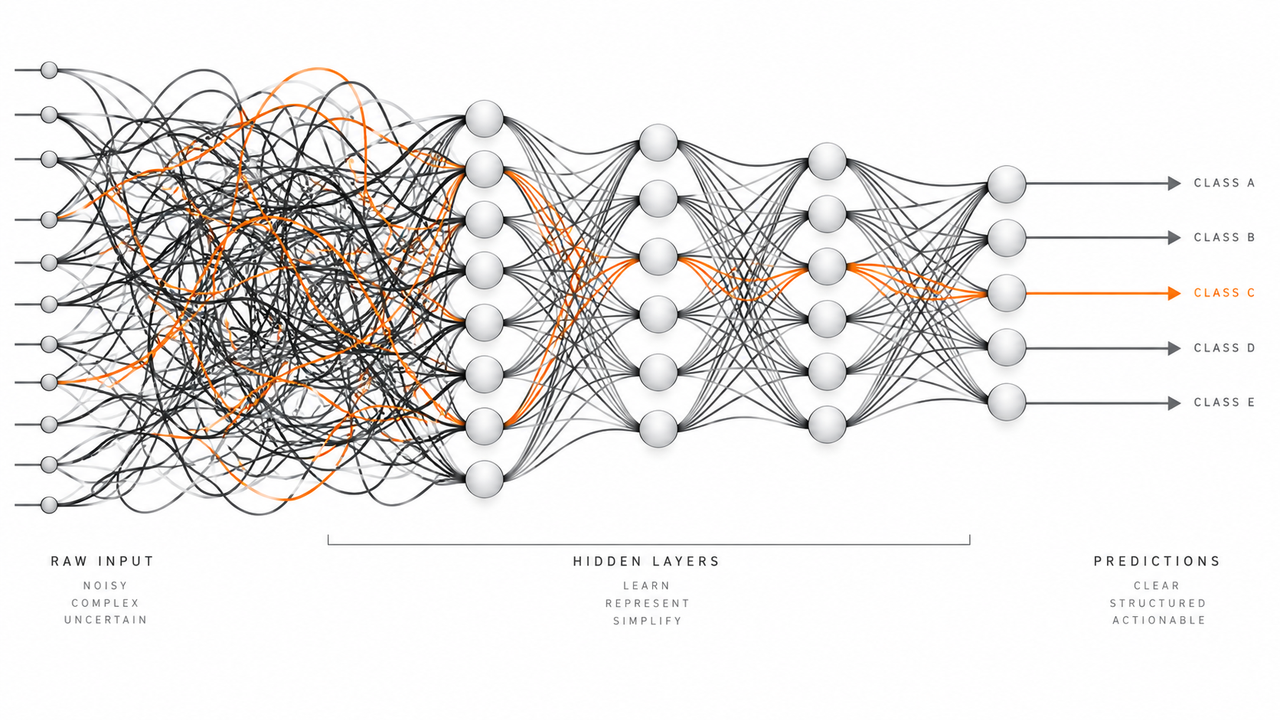
Goodfire's Chris Cammarata argues the field got polysemanticity wrong — the canonical "messy" neurons weren't packing arbitrary features, they were just generalizing in ordinary, legible ways. With better tooling, he claims roughly 90% of neurons in modern language models have a single primary function, something he calls recursive generalization. If it holds, mechanistic interpretability may be studyable directly, without leaning on sparse autoencoders as a decoder ring.
Relevance 5/10Importance 10/10
Citizen Lab exposed Discover-Tech, an Israel-based firm fronting as an ad company while wiring mercenary spyware vendors into the programmatic ad ecosystem. Its Controlium platform fingerprints a user when an ad renders, then decides server-side whether to return malicious JavaScript that executes with zero clicks. At least 45 Al Jazeera journalists' devices were infected with Candiru spyware across 2024 and 2025 — the first public technical confirmation that ad delivery works as a spyware pipeline.
Relevance 9/10Importance 6/10
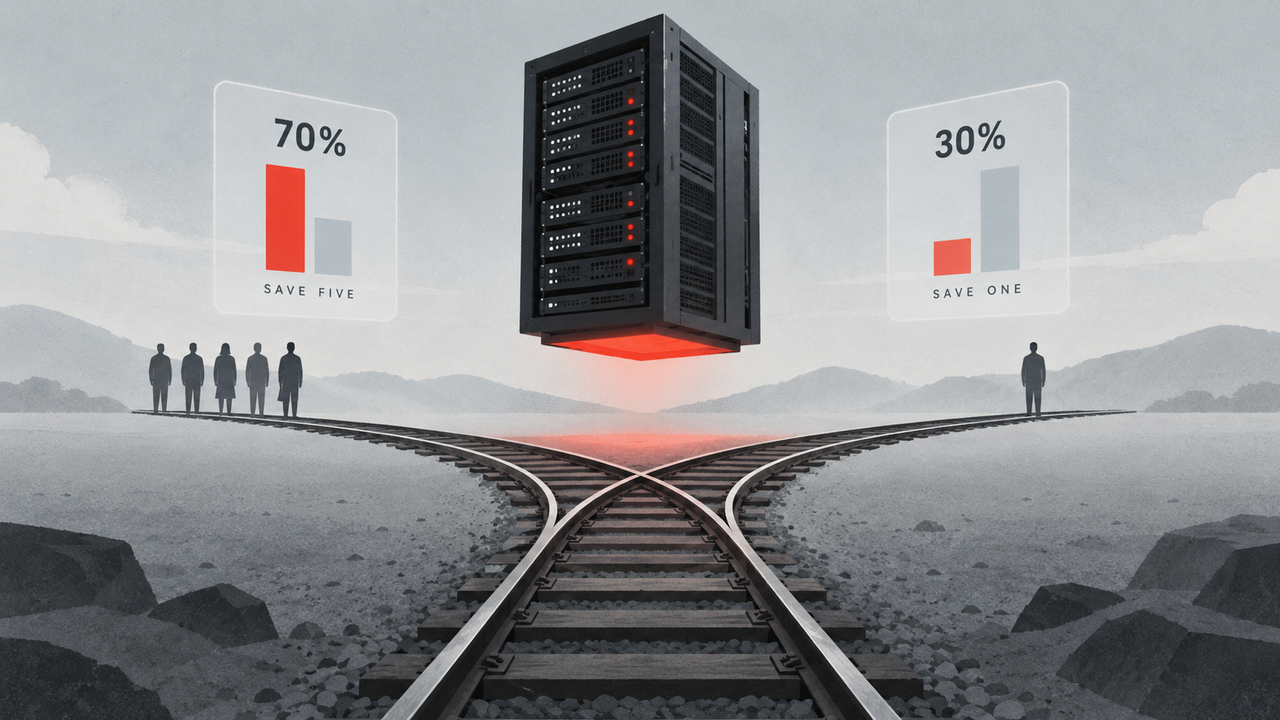
Jev is a new class of "decision model" that returns a discrete choice plus a confidence score instead of generated text, pitched on speed and cost. Zach Landes ran it and its peers through variations of the trolley problem and found the consistency falls apart fast — minor rewording flips answers, and in some framings the models prioritize their own servers over human lives. The takeaway is a sharp caution for anyone wiring decision models into production without evals and a human in the loop.
Relevance 4/10Importance 6/10
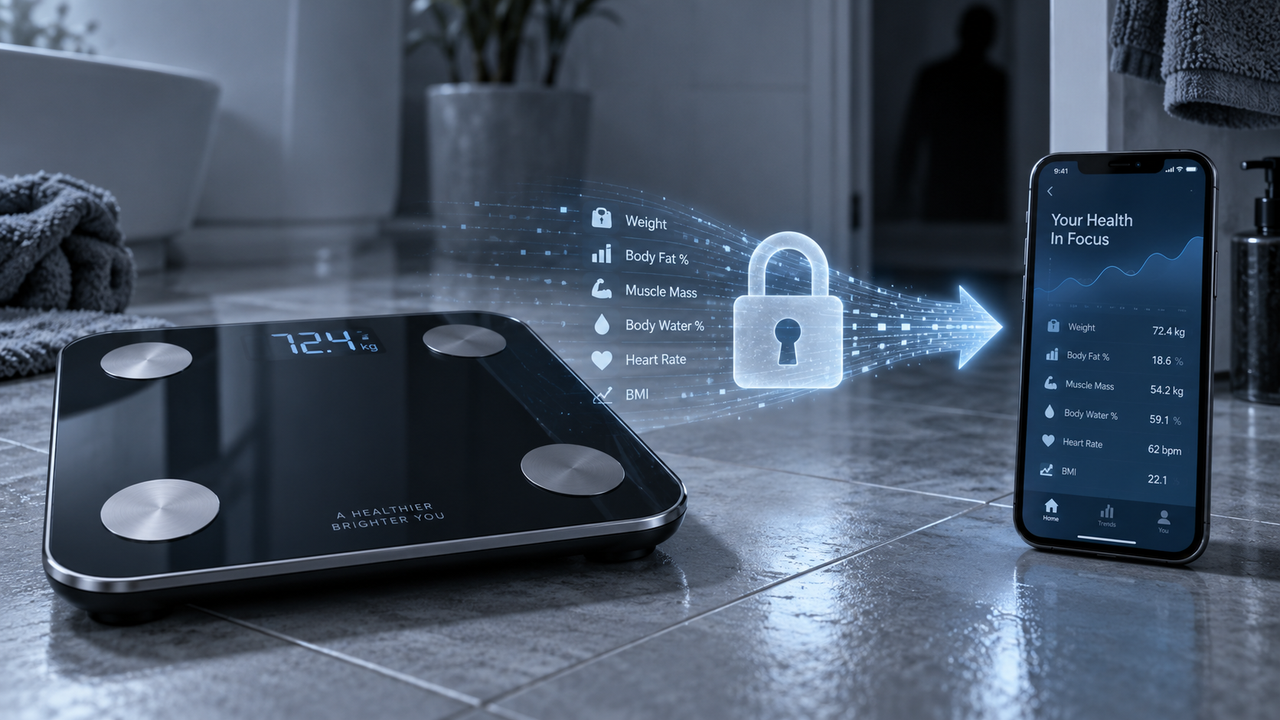
Anyone who created a Withings account on or after October 13, 2026 now needs a Withings+ subscription — $99.50 a year in the US — for automatic syncing to third-party apps including Apple Health and Google Health. Accounts made on or before October 12 keep it free, so existing customers buying new hardware are unaffected. New users get one free month, after which data transfers simply pause, and the community thread is predictably scorched.
Relevance 3/10Importance 6/10
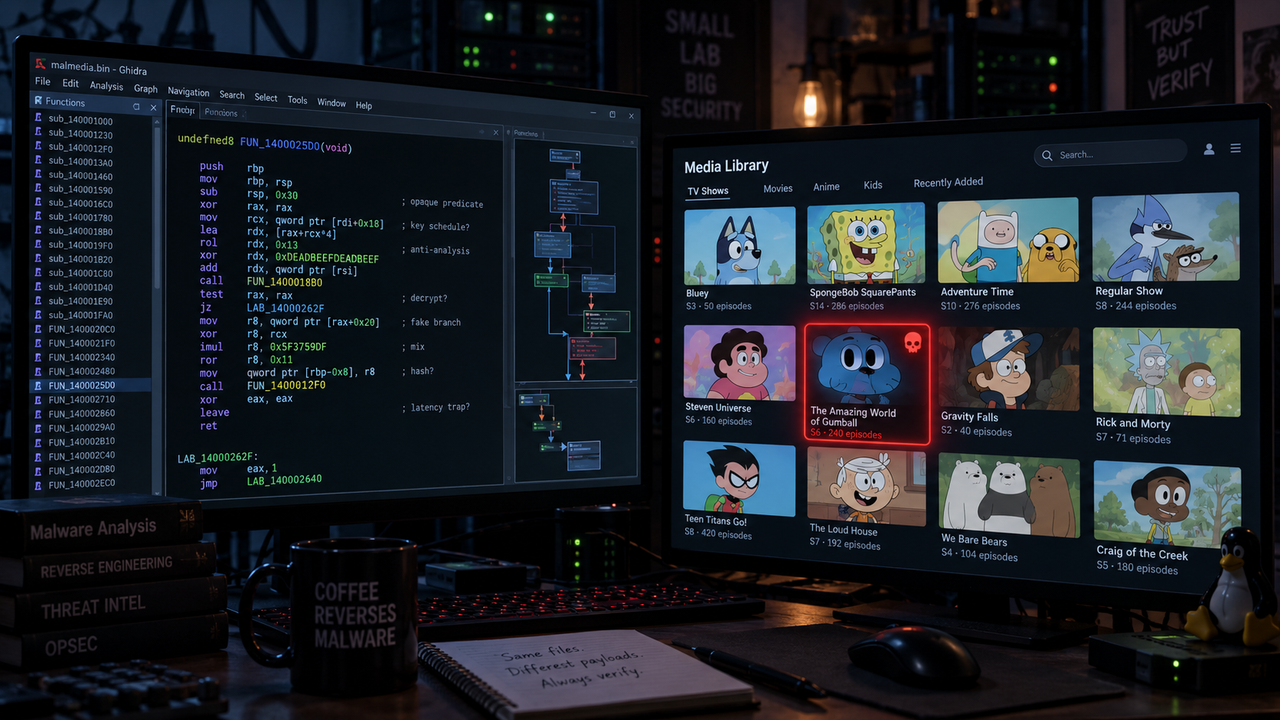
Someone was seeding malware dressed up as South Park episodes, and Sonarr dutifully grabbed it and retried the failed import every 90 seconds. The payload was an 887 MB obfuscated infostealer built to vacuum passwords, crypto wallets, and browser credentials. The author pulled it into IDA, reversed its ChaCha20 and AES layers, traced the command-and-control server, then blocklisted the release — and recommends everyone exclude executable file types in their download client.
Relevance 3/10Importance 5/10
DEsk is a Wayland desktop environment where windows are sheets of paper on a walnut desk, the dock is a drawer, and your apps live in binders on a bookshelf. It's built on wlroots 0.18 and Cairo with actual ray tracing — GPU via GLES 3, CPU fallback — for dynamic lighting and shadows. Rather than rebuild the world, it wraps carefully chosen existing open-source tools inside one very committed aesthetic.
Relevance 2/10Importance 6/10
E Ink launched Kaleido 4 today, doubling color gamut volume past 40K, lifting white reflectance 15%, and improving contrast 50% over Kaleido 3. A new oxide TFT backplane supports higher driving voltages and faster refresh, enabling video playback at up to 18 frames per second. Hanvon's M10C II is the first device out the gate, pairing it with a T2000 timing controller for 27% faster page turns.
Relevance 2/10Importance 3/10
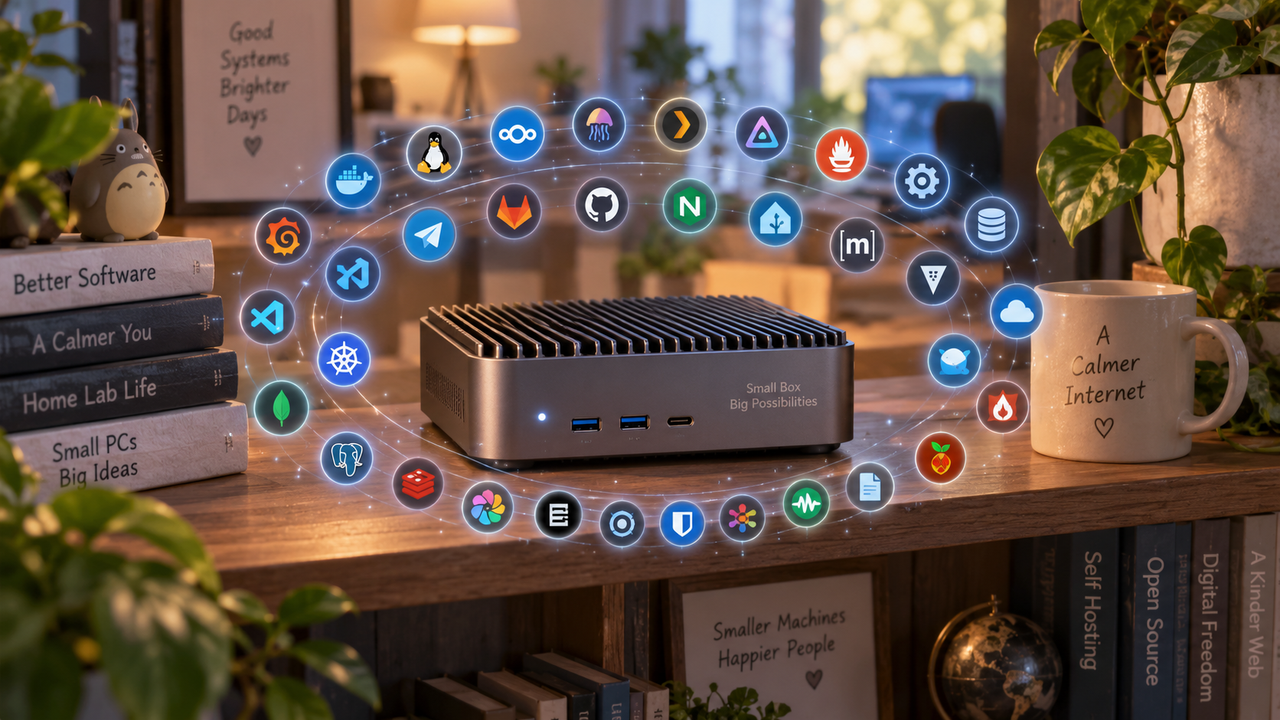
Bruno Bernardino catalogs 28 self-hosted services — Jellyfin, Immich, Home Assistant, and a stack of productivity tools — all running on a Beelink Mini PC with an Intel N100 and 16GB of RAM. Most run as native apps under systemd, with a handful containerized via Podman, totaling about 7.5GB of memory in use. The whole point: you do not need expensive hardware, because this little box runs a lot.

 HN Briefing PM