Taiwan Semiconductor reported Q3 revenue of $46.72 billion, up 41.2% year over year and ahead of the $45.62 billion consensus, with EPS of $4.60 per ADR versus $4.45 expected. Net income jumped 68.7% to a record, and high-performance computing was 68% of revenue. Q4 guidance of $52.3 to $54.3 billion implies roughly 58% growth at the midpoint; CEO C.C. Wei said AI chip demand is "still far above our capability today to supply."
CoreWeave fell about 16% Wednesday as its 9.625% notes due 2032 yielded north of 15.4% and traded near 78 cents on the dollar. The company carries roughly $50 billion of debt, and Gartner's call that 80% of neoclouds may not exist by 2030 put $3.5 trillion of AI infrastructure spend under the microscope. Shares rebounded 5.94% Thursday; BNP Paribas still carries a $169 target, and Cathie Wood publicly defended the name.
Nvidia closed Thursday down 1.84% at $217.23 but firmed about 0.27% in premarket as CEO Jensen Huang said Nvidia "did not need to backstop CoreWeave financially," defusing contagion worries. Separately, Nvidia and Mercedes-Benz expanded their partnership, pairing MB.OS with Nvidia Hyperion, the Alpamayo stack and Halos safety layer for Level 2++ today and a path to Level 4.
Anthropic told investors Q3 revenue reached $16.8 billion, up 45% from $11.6 billion in Q2, and that it was profitable on an adjusted basis. IPO marketing is expected to begin in early November with chatter of a valuation up to $2 trillion. OpenAI, meanwhile, pushed its IPO to 2027 and now guides to roughly $50 billion of 2026 revenue versus earlier $70 billion talk, while seeking $30 billion at a $1.2 to $1.5 trillion valuation. Neither is publicly traded.
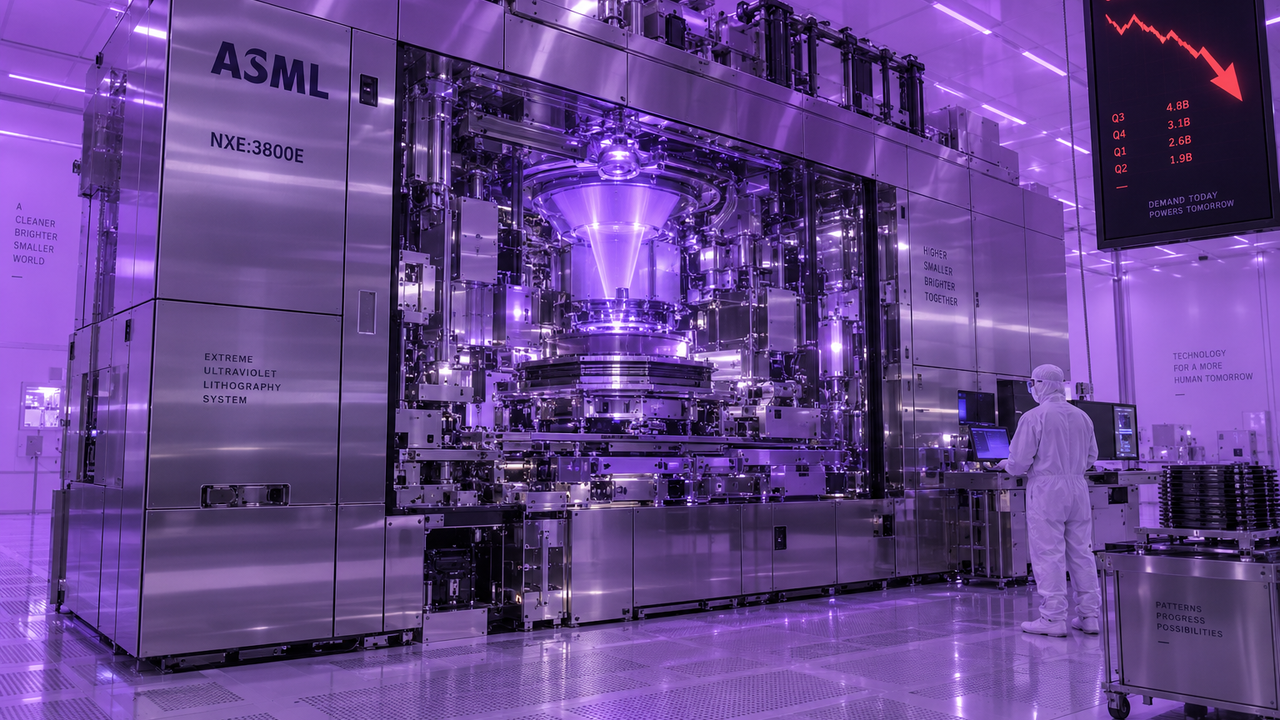
ASML posted record Q3 net sales of €11.7 billion, up about 55% year over year, with net income of €5.0 billion and a 57.5% gross margin. Full-year guidance was lifted to €43 to €45 billion from €36 to €40 billion in April. The wrinkle: net bookings fell to €2.63 billion, a steep sequential drop CEO Christophe Fouquet attributed largely to softer China demand, though EUV orders alone were €3.6 billion.
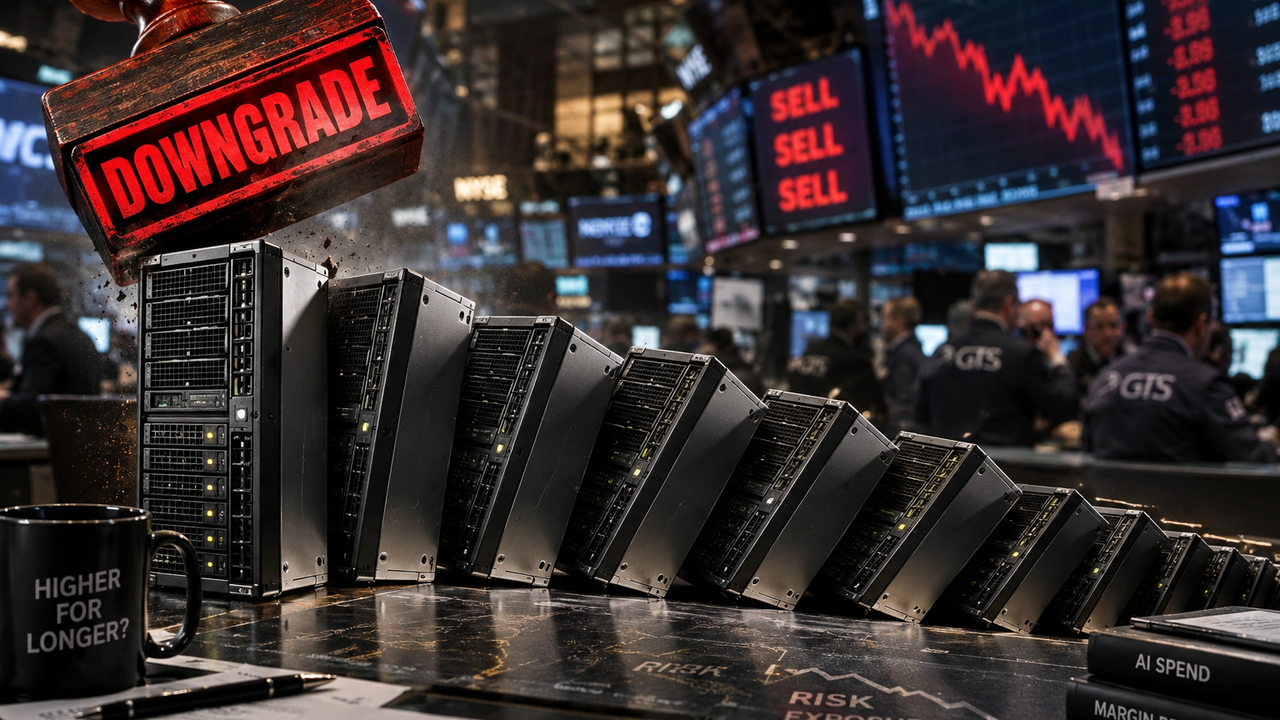
Barclays cut Dell to Equal Weight from Overweight and sent the stock down as much as 11%, with analyst Tim Long arguing that surging AI server revenue partly reflects higher memory and component prices rather than real enterprise AI acceleration. Super Micro slid 5% to 7% and Hewlett Packard Enterprise dropped about 4%. Dell still reported a record $95 billion AI server backlog and 89% infrastructure revenue growth last quarter, with AI server margins near 5%.
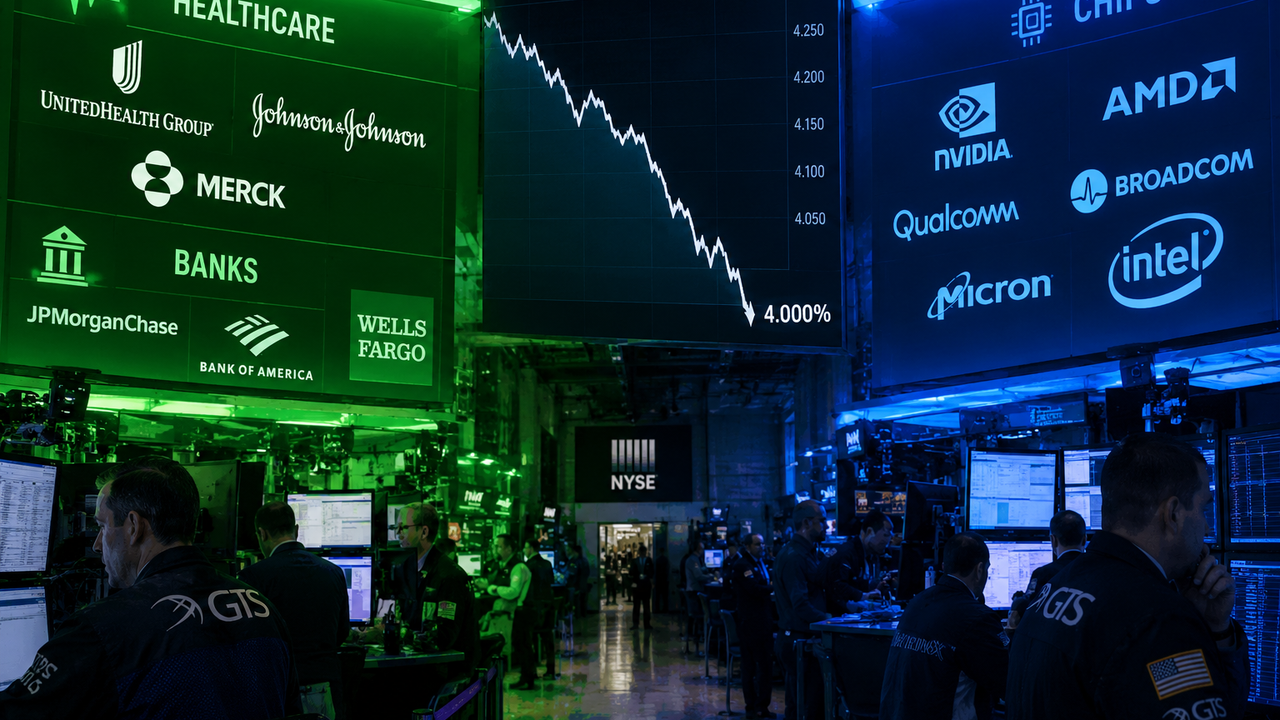
Stocks closed higher Thursday despite hotter-than-expected wholesale inflation, as a safe-haven bid pushed the 10-year yield to 5.086%, its lowest since September 22. The Dow rose 556.21 points, or 1.08%, to 52,177.69, the S&P 500 added 0.33% to 7,744.06, and the Nasdaq eked out 0.08%. Money rotated into healthcare, up 1.86%, financials up 1.38% and retail up 3.68%, while Nvidia, AMD and Tesla all finished lower. Barclays strategist Emmanuel Cau warned "the best of the AI trade may be over."
Broadcom fell 3.1% to $346.25 and slipped another 0.55% in premarket after CEO Hock Tan said access to capital, not chip supply, is the real constraint on AI buildouts. Broadcom is reportedly negotiating over $50 billion in debt tied to OpenAI's custom accelerator purchases and committing up to $42 billion toward Anthropic infrastructure. Street consensus still carries a Strong Buy with the sector's highest implied upside near 51%.
Attorneys general in Arizona, Arkansas, Idaho, Iowa, Kansas, Montana, Nebraska and West Virginia filed coordinated state-court suits alleging OpenAI marketed ChatGPT as safe while concealing risks to minors and vulnerable users. Seven of the eight AGs are Republicans, a notable break from the administration's light-touch AI posture. The claims run under state consumer protection statutes, which raises the regulatory overhang for the whole generative AI cohort ahead of an expected 2027 IPO.
IonQ jumped 9.33% to $34.35 Thursday, recovering from a 5.2% drop tied to a $2.0 billion equity offering priced earlier in the week. The company also announced an all-stock acquisition of cybersecurity firm Elisity valued at up to $1.3 billion, including up to $150 million in performance earnouts. It's a reminder that in this tape, dilution gets punished one day and forgiven the next.

 AI Stocks