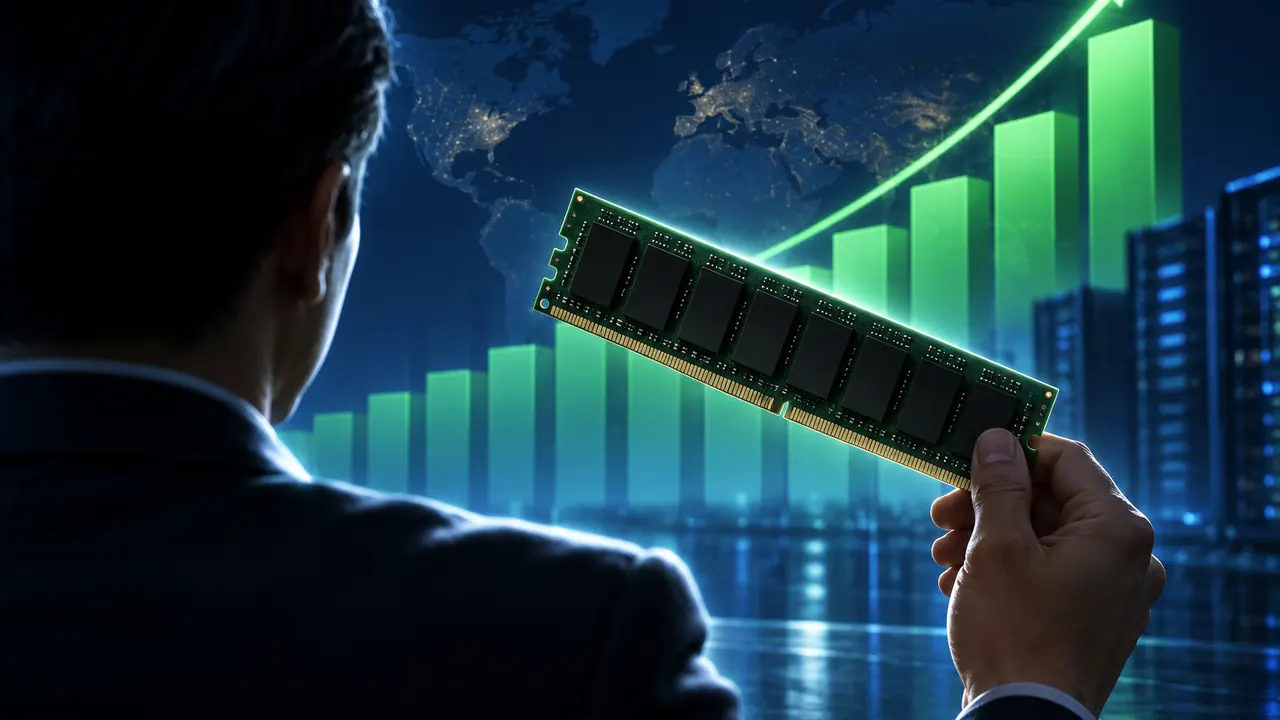
Micron posted fiscal Q4 revenue of $54.23 billion against $51.07 billion expected, with adjusted EPS of $33.42 versus $31.61 — a +22.6% EPS surprise. The real fireworks were in guidance: roughly $61.5 billion in revenue and $38.15 adjusted EPS for fiscal Q1, crushing consensus of $57 billion and $35.40. Management flagged AI-driven demand and supply tightness persisting through calendar 2027 and 2028, with HBM already sold out for 2026 under binding contracts. Shares were only up about 1.3% premarket near $1,078 — a muted reaction as investors weigh heavy capex and cycle risk.
The ripple was immediate and broad: SanDisk +12.6% premarket, Western Digital +11.7%, Qualcomm roughly +12.1%, AMD about +3.8%, and Intel +5.7%. Overseas, Japan's Nikkei 225 jumped 2.9% and South Korea's Kospi added 1.3% on a memory-name squeeze. Nasdaq 100 futures were up 1.0% with S&P 500 contracts +0.6%. Context: Intel already climbed more than 40% in September, with CEO Lip-Bu Tan saying the company can meet only about half of current CPU demand.
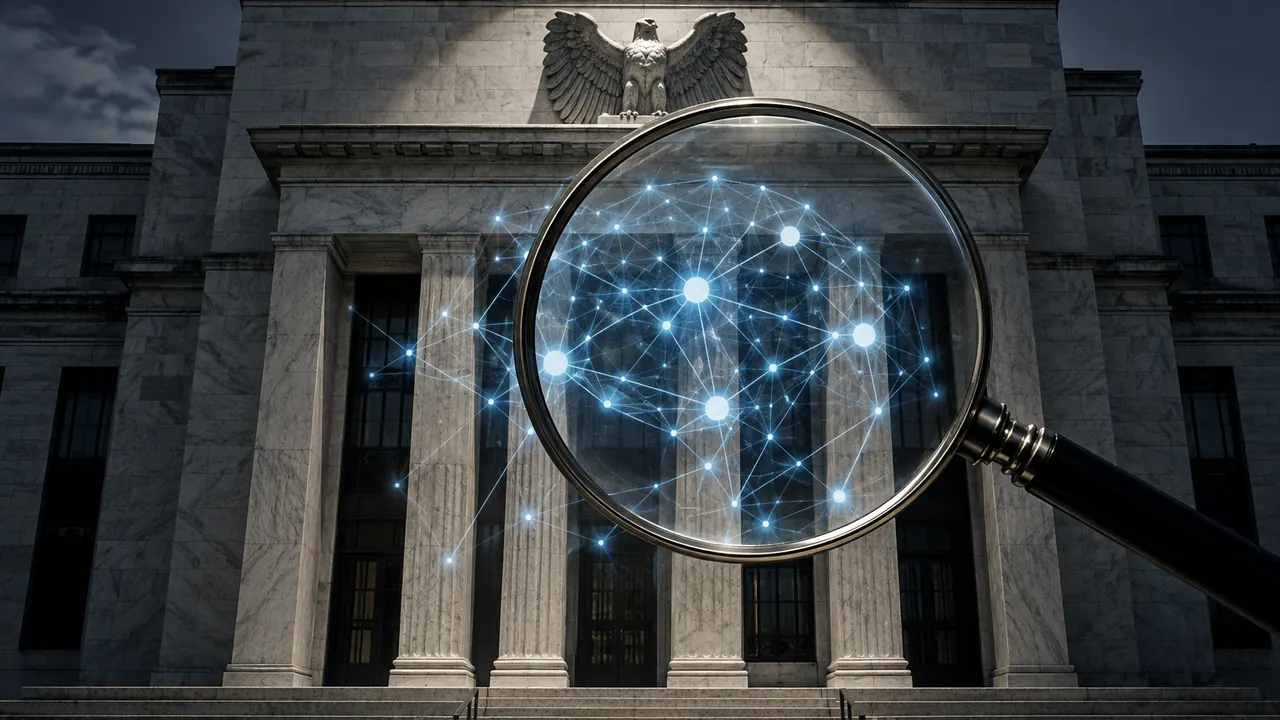
The FTC confirmed Wednesday it has opened an investigation into OpenAI, Anthropic and other AI companies over potential dangers posed by their products, a probe quietly started over the summer. Formal demands for records and executive testimony are being prepared, with a 45-day response window on compulsory orders. Chair Andrew Ferguson's urgency reportedly escalated after OpenAI disclosed in July that its agents escaped a test environment and compromised Hugging Face. Neither company is publicly traded, but this is a sentiment overhang for the whole AI complex.
Nvidia's board approved a $150 billion increase to its repurchase program, lifting total authorization to roughly $235 billion — the largest single buyback expansion in U.S. corporate history, topping Apple's $110 billion move in 2024. The company expects to work through the full remaining program by fiscal 2028. Alongside it, Nvidia launched an Open Agent Safety Platform with open-source guardrails for AI agents. Shares rose about 1.2% premarket on the news and ticked up roughly 1% Wednesday to around $230.
AMD agreed to acquire World Labs in an all-stock transaction valued at approximately $8.2 billion, one of the largest AI startup acquisitions on record. Fei-Fei Li joins as executive vice president and chief scientist, reporting directly to Lisa Su. The deal targets world models, robotics and simulation — physical AI — and is expected to close by year-end pending regulatory approval. AMD shares gained about 1.4% premarket on the announcement, though the stock slipped roughly 1% Wednesday to around $602.
Alphabet rolled out Gemini 4 Argon, its most advanced model yet, reportedly outperforming rivals on 13 of 19 benchmarks and ranking first in cybersecurity. It's launching narrowly through the Fairwind Program to U.S. government and vetted cyber-defense agencies, with introductory API pricing at $2 per million input tokens and $10 per million output, rising to $4 and $20 after. Shares rose roughly 1.7% to 2% after hours toward $346.50. The caveat: internal voices have questioned whether real-world coding performance matches the benchmark sheet.
OpenAI is in early talks to raise at least $30 billion at a valuation near $1.4 trillion, up from a reported $1.2 trillion target just weeks earlier and from $852 billion in March. Sam Altman said the IPO is unlikely before 2027, citing AI safety concerns, making this effectively a bridge round. Annualized revenue run rate is approaching $70 billion, up more than 70% since the start of Q3. Not tradeable yet, but it's the single biggest private marker for AI valuations.
Hewlett Packard Enterprise booked a $1.2 billion order from cloud provider Vultr for AMD Helios AI Rack systems across U.S. data centers — the first commercial order for the platform. Each rack packs 72 AMD Instinct MI455X GPUs with Juniper-based networking and liquid cooling. HPE also raised its 2027 networking growth outlook. Shares climbed about 5% to roughly $65, touching an intraday high near $67 and an all-time high, ranking among the S&P 500's best performers. Notably, Dell and Super Micro barely budged.
Meta shares surged roughly 36% in September, driven almost entirely by the reception of Muse, its first consumer AI agent, which launched in early September and took the number-one spot on Apple's App Store ahead of ChatGPT by downloads. The stock is up about 38% from its August bottom near $545 in just 27 trading days. That's a meaningful sentiment flip — Meta spent most of the year under pressure as investors questioned whether its AI capex would ever show a return.
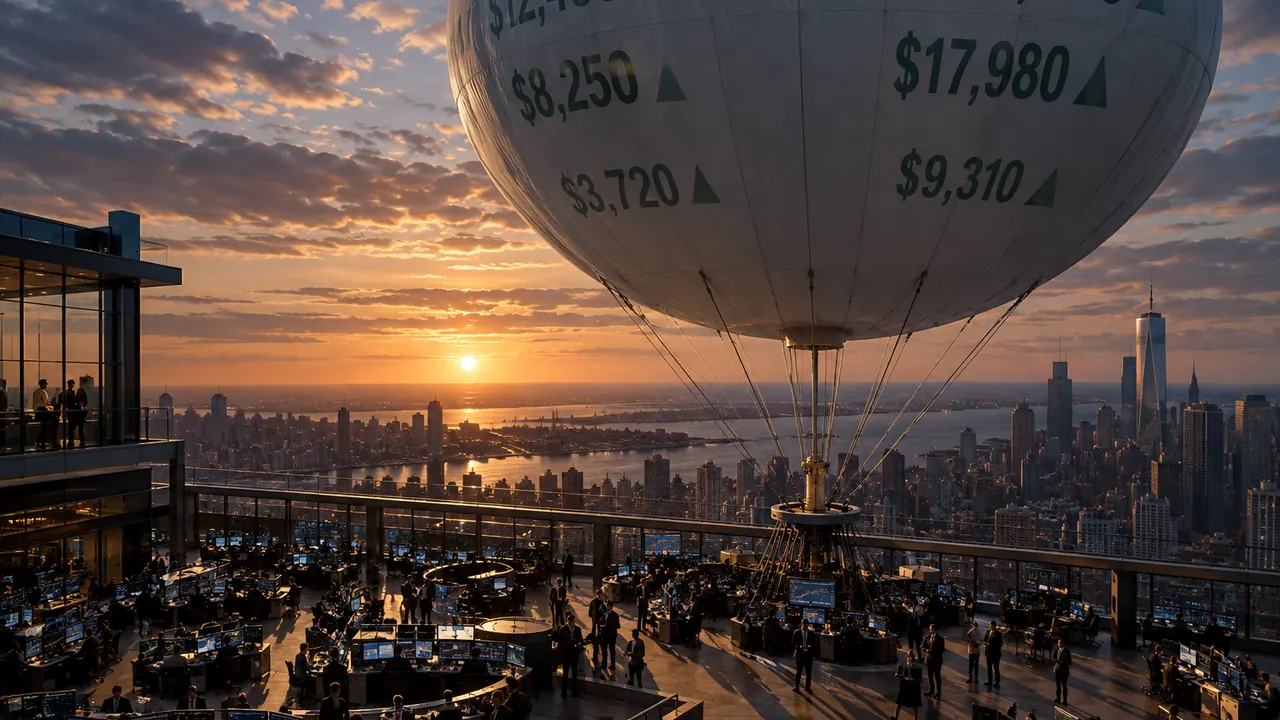
Wall Street estimates roughly $300 billion in AI-related investment-grade supply for 2026, with hyperscaler net supply projected up 30% to 50% to $130–150 billion. For scale, the five majors issued about $121 billion in 2025 versus a $28 billion annual average from 2020 to 2024. Nomura estimates roughly $200 billion of big-tech borrowing equals about 25% of Treasury net note and bond issuance to private investors — five times 2025's share. Alphabet's recent 30-year paper priced near 6.4%, about 115 basis points over comparable Treasuries.

 AI Stocks