Relevance 10/10Importance 9/10
Anthropic has explicitly stated it has never advocated for banning open-weights AI models and opposes blanket restrictions. Instead, the company recommends three targeted policy measures: restricting AI chip sales to authoritarian nations, cracking down on industrial-scale model distillation theft, and requiring mandatory safety testing for all sufficiently capable models regardless of open or closed status. The post frames national security concerns as best addressed through supply-chain controls, not access restrictions on open models.
Relevance 10/10Importance 8/10
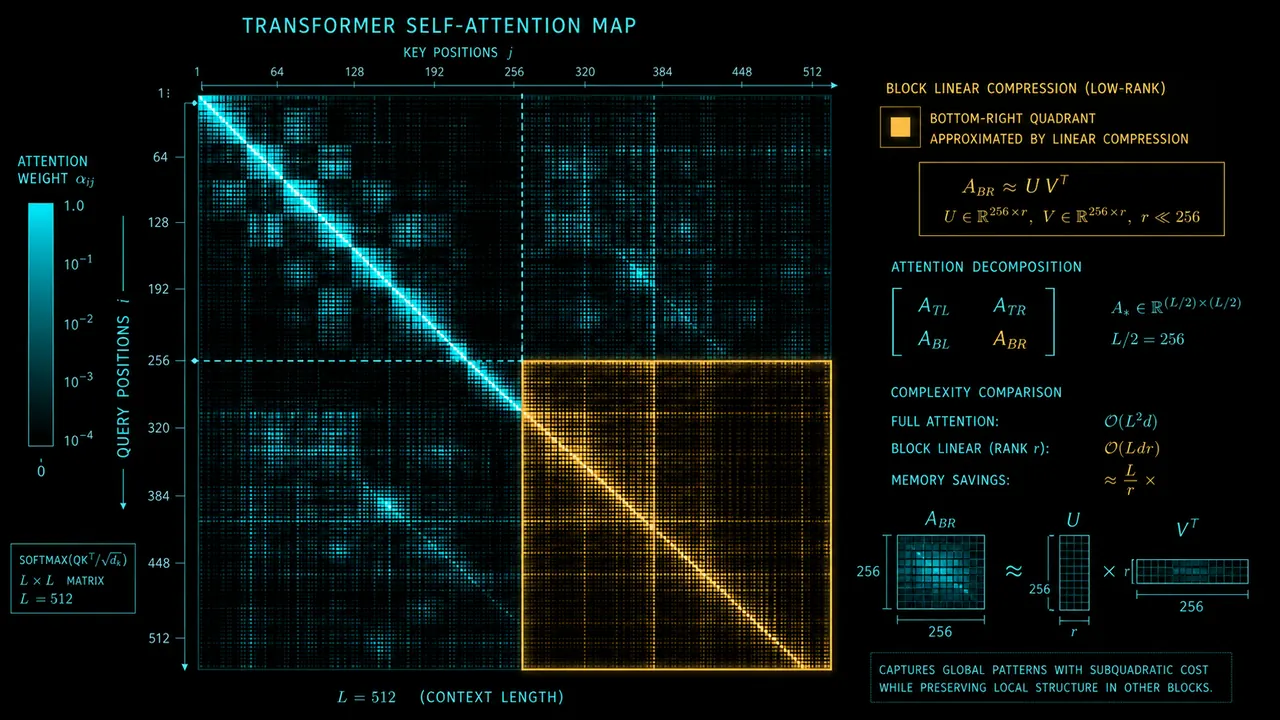
Moonshot AI introduces Kimi Delta Attention, a hybrid attention mechanism combining fine-grained gating with specialized transition matrices that outperforms full attention under fair benchmarks while cutting memory requirements by up to 75%. The architecture directly attacks the compute and memory bottleneck at the core of large-scale LLM inference, enabling faster decoding and better long-context handling. This is a significant architectural contribution from China's Moonshot AI team challenging the transformer attention status quo.
Relevance 8/10Importance 7/10
Google's ACM paper describes "Beyond Zero," an evolution of its BeyondCorp zero-trust model extended to address threats introduced by AI systems in enterprise environments. The framework adapts zero-trust principles to cover AI agents, model pipelines, and inference infrastructure as first-class attack surfaces. It's shaping up to be the most comprehensive published framework yet for enterprise AI security architecture.
Relevance 7/10Importance 6/10
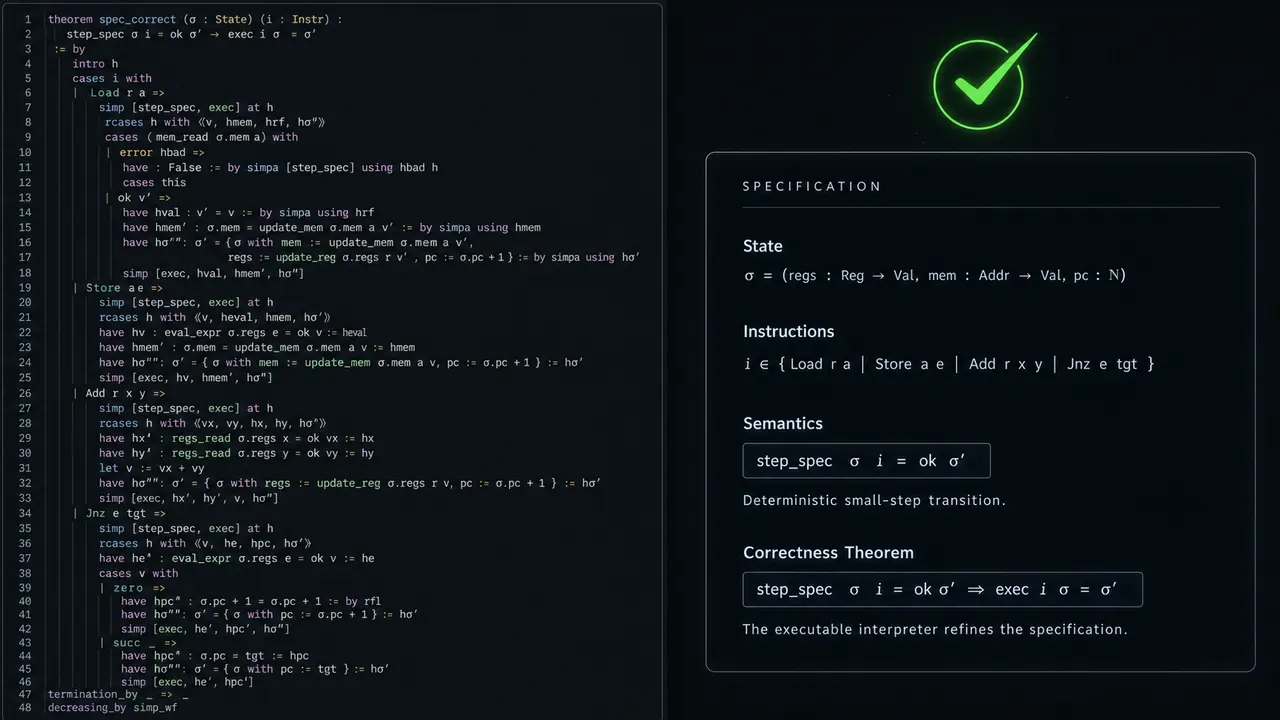
This project implements a formally verified 3D mesh intersection algorithm in Lean 4, where AI agents autonomously wrote over 1,000 lines of implementation and 60,000-plus lines of proofs that humans never need to audit directly. Reviewers only need to trust the 93-line formal specification; the Lean type checker verifies everything else automatically. A parallel AI-generated C++ implementation of the same algorithm contained at least three bugs that formal verification caught and that conventional testing would have missed entirely.
Relevance 8/10Importance 5/10
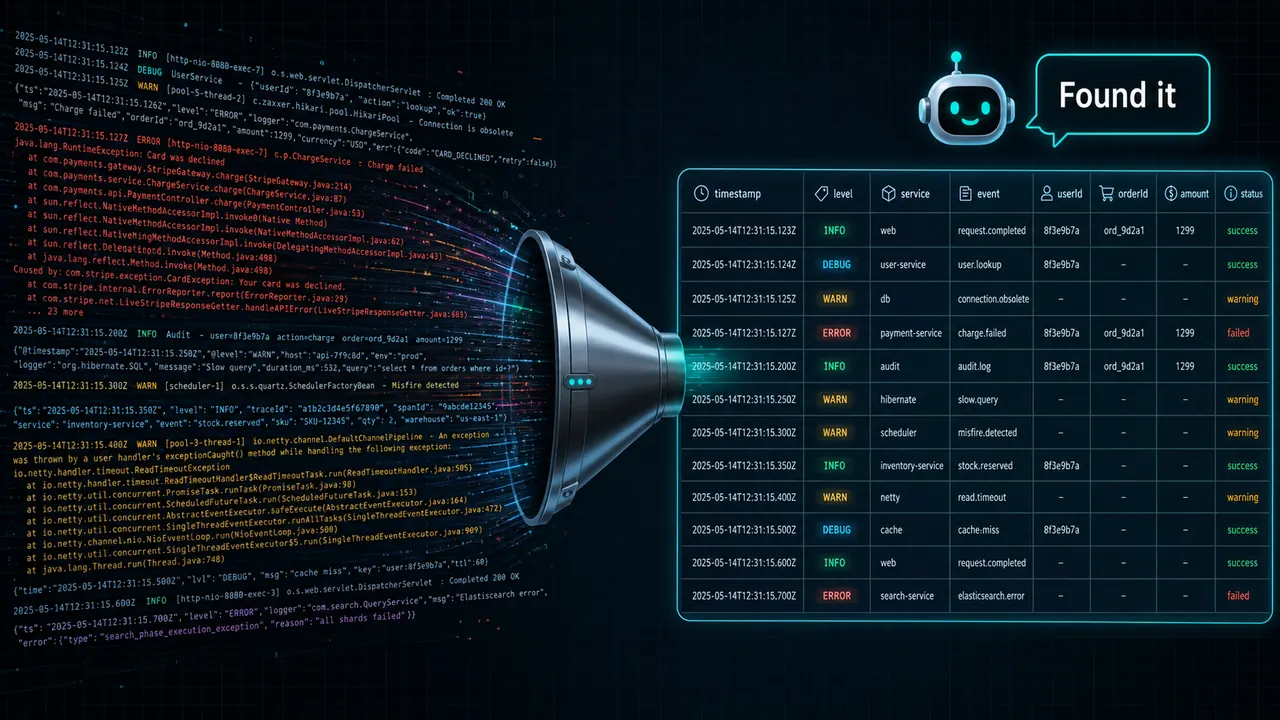
Ctrlb-decompose is a two-stage log compression pipeline: CLP encoding normalizes variable tokens into typed placeholders, then Drain3 clustering groups structurally similar log lines into wildcard templates, achieving up to 99.9% reduction in log volume. The output replaces millions of raw log lines with compact typed metadata, quantile statistics, and anomaly signals that LLMs can actually reason over without hitting context limits. It makes log-based root cause analysis with LLMs practical at production scale.
Relevance 2/10Importance 9/10
Scientists at La Jolla Institute for Immunology and Scripps Research developed an HIV vaccine using germline targeting — a priming shot followed by boosters that guides naive B cells to produce broadly neutralizing antibodies capable of recognizing HIV despite its constant mutations. In rhesus macaque trials, roughly 44% of animals developed broadly neutralizing antibodies, described as the best HIV-fighting antibody response ever seen in primates. Human trials are now underway.
Relevance 1/10Importance 8/10
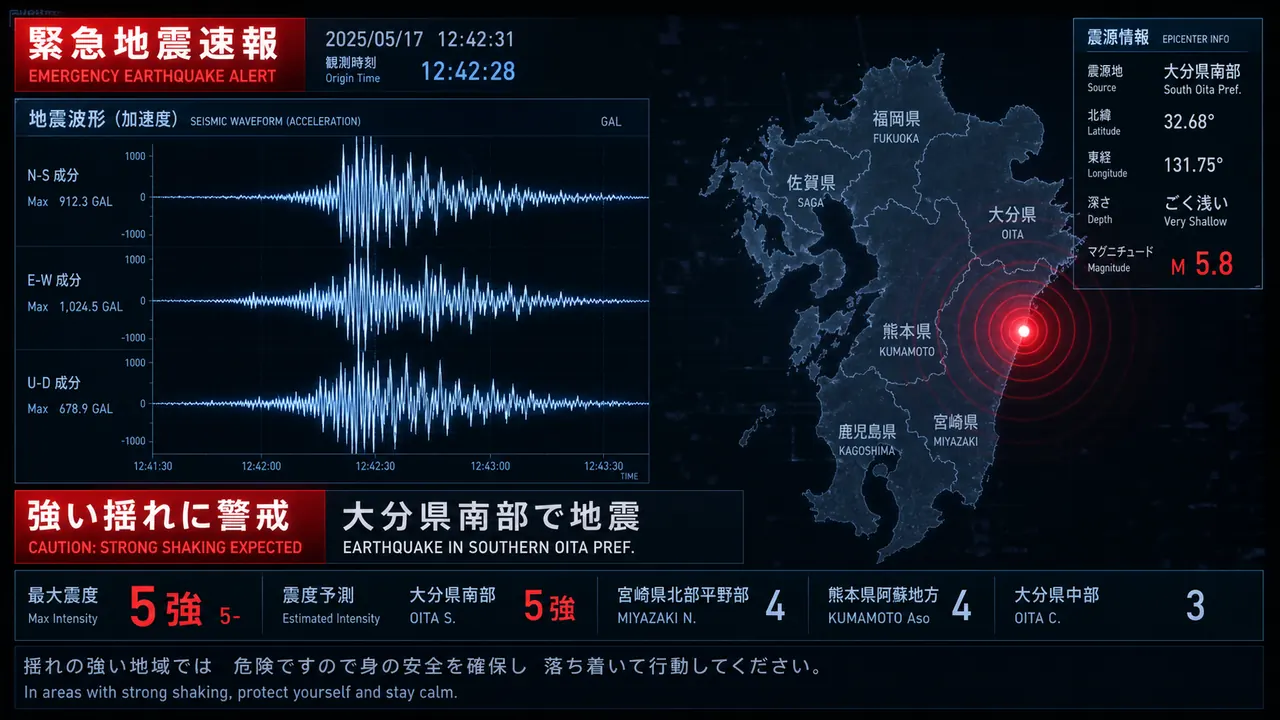
A magnitude 7.1 earthquake struck near Uto, Japan at a shallow depth of just 10 kilometers. USGS flagged the event with a red alert status indicating substantial impact potential. The Japan Meteorological Agency is actively tracking the situation as damage reports come in.
Relevance 4/10Importance 3/10
Tale.fyi is a new platform dedicated entirely to fiction, hosting curated public domain books that users can read or listen to from a single shareable link with automatic progress saving and friend-sharing for notes. Writers retain full ownership of their content and audience when publishing original stories, distinguishing it from non-fiction-dominated reading platforms. The pitch: fiction deserves a purpose-built home rather than being a second-class citizen on general content platforms.
Relevance 2/10Importance 5/10
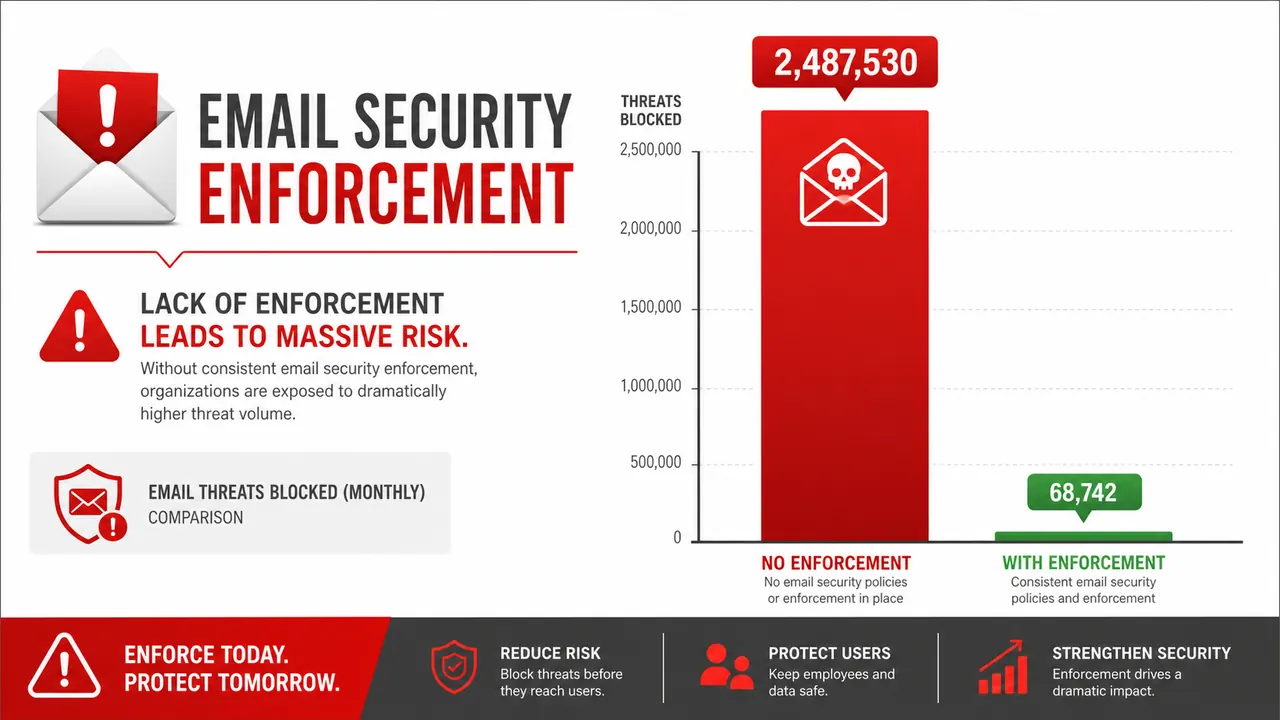
An analysis of 67,336 domains found that 68.4% either have no DMARC record at all or sit at p=none, the monitoring-only mode that enforces nothing. The main bottleneck is not initial adoption but progression — 42.5% of domains with records never advance past p=none because RUA report fragmentation across multiple vendors turns enforcement into an ongoing research project rather than a configuration change. The piece argues the gap is primarily organizational friction, not a technical problem.
Relevance 1/10Importance 5/10
This PBS NOVA profile revisits Andrew Wiles and his seven-year secret quest to prove Fermat's Last Theorem, a problem that went unsolved for 300 years. After a 1986 breakthrough linking the theorem to the Taniyama-Shimura conjecture, Wiles worked in isolation, announced a proof in 1993, found an error, and spent another year correcting it. His 150-page proof relies entirely on 20th-century mathematics, meaning Fermat almost certainly never possessed the valid proof he claimed.

 HN Briefing AM