Relevance 10/10Importance 9/10
Ben Thompson argues that fear over Chinese open-weight AI models is mostly misdirected — the real threat isn't that they're better, it's that they're good enough to commoditize the model layer entirely, which is precisely what China wants. Value in AI is shifting toward compute and whoever owns the user relationship, and Thompson proposes two concrete US policy fixes: fair use protection for training data, and making distillation bans in terms of service unenforceable for American developers.
Relevance 10/10Importance 8/10
Alibaba released Qwen-Image-3.0, the third generation of its image-generation model, featuring a 4,500-token instruction window — 4.5x longer than before — enabling single-pass composition of multi-layered scenes like nested UIs, posters, and web interfaces, with native support for 12 languages and live internet data ingestion. Notably, the release ships without benchmarks, downloadable weights, or a technical report, a significant departure from Alibaba's previous open-weight Qwen releases.
Relevance 9/10Importance 8/10
Colossus profiles Sarah Guo, who left Greylock in 2022 to launch Conviction — an AI-focused early-stage VC fund — one month before ChatGPT made AI's potential obvious to everyone. Her wager that frontier labs can't build everything is paying off: her portfolio includes Harvey at an $11B valuation, OpenEvidence at $12B, and Sierra at $15B, and she debuted on the Midas List this year with Conviction approaching $1B under management.
Relevance 5/10Importance 7/10
Python 3.15 introduces "dual dispatch," a profiling technique that achieves only 4.5x slowdown compared to 900x–1000x in competing systems like PyPy. Instead of adding per-instruction conditional branches, the system simply swaps the entire instruction dispatch table at runtime between a normal execution table and a profiling table, collecting data without any branch overhead in the hot path.
Relevance 3/10Importance 7/10
A federal court ruled that Section 230 immunity shields Apple from liability for not implementing CSAM detection in iCloud, dismissing the plaintiffs' complaint. The judge found for Apple but was vocally displeased, writing that the law leaves child abuse victims as "collateral damage" and explicitly calling on Congress to legislatively mandate CSAM safeguards rather than rely on voluntary corporate action.
Relevance 4/10Importance 6/10
Jane Street's Incremental is an OCaml library for building reactive, self-updating computations — think spreadsheet logic where only the affected parts recompute when an input changes, inspired by academic work on self-adjusting computation. It's designed for high-performance applications like GUI views and derived datasets that need to stay synchronized with continuously changing source data.
Relevance 3/10Importance 5/10
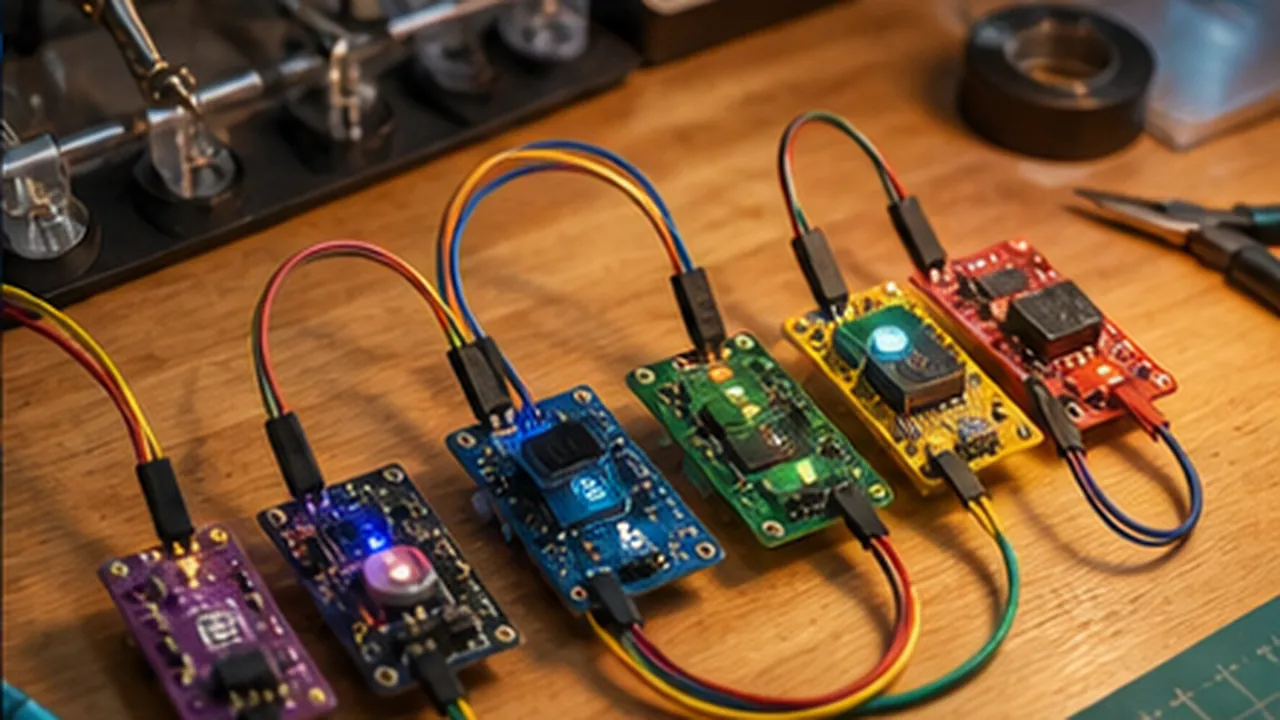
Arduino expanded its Modulino ecosystem with three new plug-and-play boards: a Hub for scaling I2C sensor networks, an Extender for reliable communication over long cable runs (solving a common I2C signal degradation problem), and a Motors module for high-current motor driving. All connect via Qwiic cables, daisy-chain freely, and support both Arduino C++ and MicroPython, bringing the Modulino lineup to 15 options.
Relevance 2/10Importance 5/10
Armaan Gomes and his team designed a CPU from scratch, implemented cache memory, fought through months of hardware and software debugging, and got Doom running at 15–20 FPS. They posted a 9-second clip of it working and watched it accumulate roughly 2 million Instagram views — a detailed write-up covers the full journey from first logic gates to unexpected viral fame.
Relevance 1/10Importance 6/10
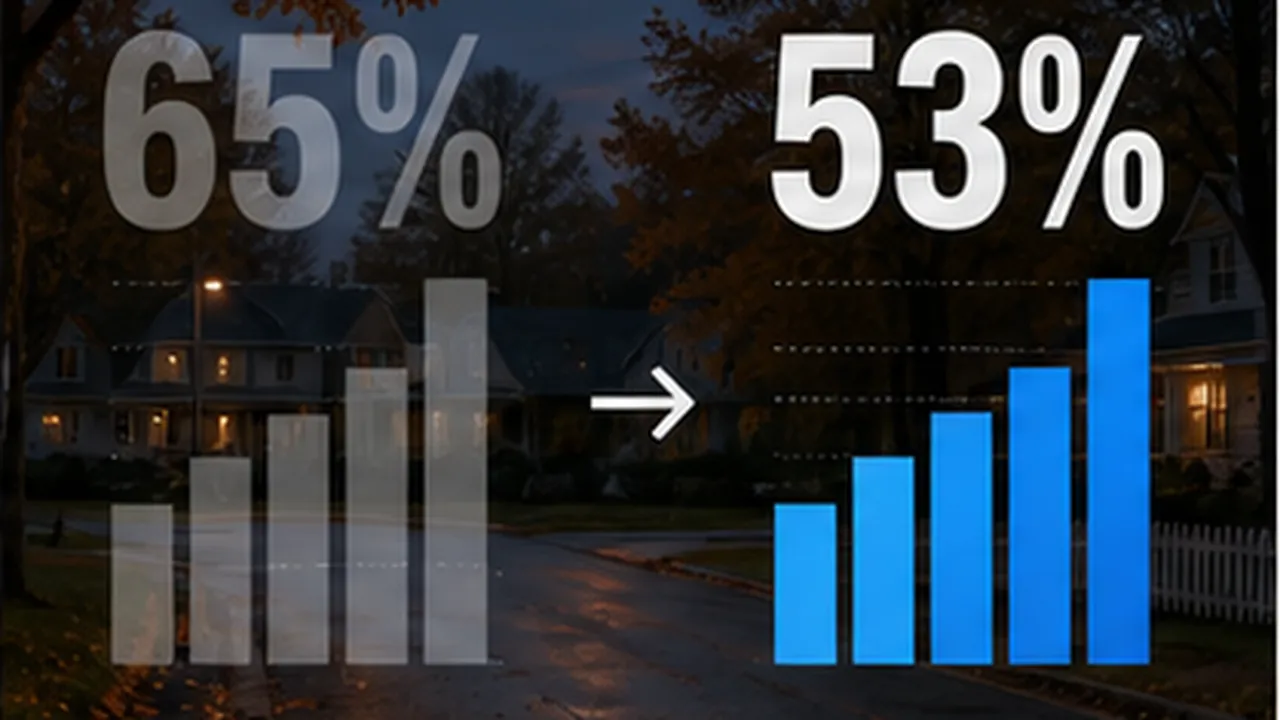
The Minneapolis Fed proposes a new metric — the homeowners-to-population ratio (HPOP) — that puts the true US homeownership rate at 53%, not the commonly cited 65%. The gap exists because the traditional figure measures owner-occupied housing units, not individual adults, missing millions of people who live in a household but are not the titleholder.
Relevance 1/10Importance 4/10
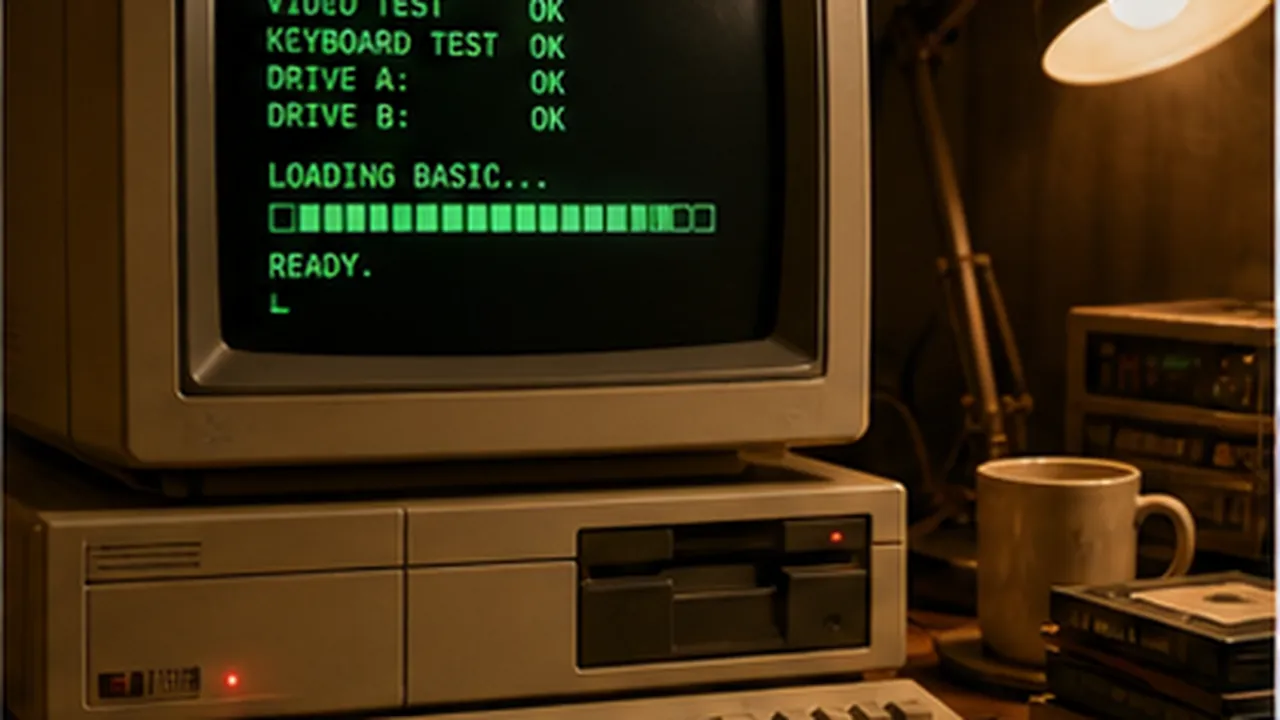
PCjs Machines is a long-running web-based emulation project that lets you run vintage computers — original IBM PCs, minicomputers, calculators, terminals, and arcade games from the 1970s through 1990s — directly in your browser via JavaScript emulators, no install required. It surfaced on HN's front page today, which happens periodically because it's genuinely that good.

 HN Briefing AM