Relevance 10/10Importance 9/10
Moonshot AI dropped open weights for Kimi K3, a 2.8-trillion-parameter model and the largest open-weight release from any AI lab to date, featuring Kimi Delta Attention for up to 6.3x faster decoding in million-token contexts and native agentic capabilities. Self-reported benchmarks place it above Claude Opus 4.8 and GPT-5.5, priced at $3/M input and $15/M output — matching Sonnet tier pricing. The main caveat flagged by Simon Willison: currently only one reasoning effort level (max) exists, and agentic tool-calling reliability still has gaps.
Relevance 9/10Importance 8/10
A viral thread claims AI companies are buying rare pre-2022 books, destructively scanning them with spine-cutting machines, and shredding the originals — with a federal fair-use ruling allegedly enabling the practice because "only one copy exists at a time." A service called ISBNdb is alleged to be facilitating operations under NDA, and Anthropic is specifically named as running "Project Panama," hired through Google Books' former partnerships lead, aimed at scaling destructive scanning globally. HN commenters drew comparisons to historical book burning, with irreversibility of primary sources as the core concern.
Relevance 8/10Importance 7/10
Tom Lockwood's investigative piece scrutinizes Jarred Sumner's claim that Claude rewrote the Bun JavaScript runtime in Rust in 11 days for $165,000 in API fees — noting that six weeks post-merge there is still no release tag, unprecedented for Bun's monthly cadence, and the automated PR queue nearly doubled in 18 days. Lockwood estimates actual costs approach $800K including infrastructure and Anthropic engineering time, and draws parallels to other high-profile AI coding projects that went dormant after the press cycle. His conclusion: the narrative significantly overstates AI autonomy and understates the human coordination required.
Relevance 4/10Importance 5/10
The Misago forum project (Django-based) documented its migration from React to HTMX, driven by a "double render" problem where Django generated complete HTML, then React discarded it and rebuilt from scratch — meaning every feature had to be implemented twice. Switching to HTMX server-rendered fragments eliminated duplicate implementations, cut the JS bundle from roughly 1.3MB down significantly over incremental migrations, and simplified plugin development. A practical anti-complexity case study gaining traction in startup developer circles.
Relevance 3/10Importance 6/10
PGSimCity is a browser-based WebGL2 visualization of PostgreSQL's internal engine rendered as an explorable 3D city, turning query execution, indexing, transactions, and storage structures into navigable spaces rather than static docs. It's an early prototype with acknowledged inaccuracies, but it posted the highest HN score of today's top 10 at 777, signaling strong community appetite for better PostgreSQL pedagogy. The creators are actively inviting corrections via GitHub.
Relevance 2/10Importance 5/10
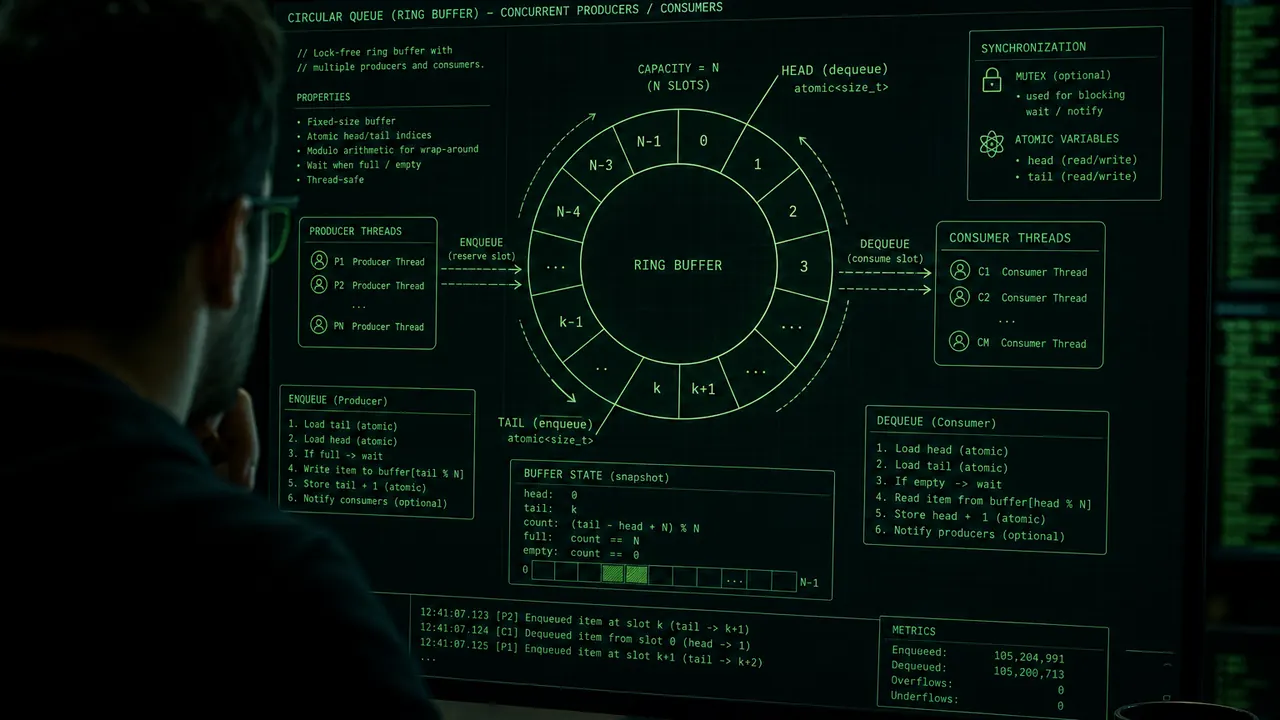
A deep-dive tutorial on building a Multi-Producer Multi-Consumer lock-free queue from scratch in C++20, covering hazard pointers for safe memory reclamation and cache-line padding to prevent false sharing — the two issues that typically sabotage lock-free implementations in practice. The approach avoids OS scheduler contention at scale, making it relevant for AI inference pipelines and any high-throughput real-time infrastructure. Solid systems-level resource for engineers building performance-critical foundations.
Relevance 3/10Importance 4/10
The Colossus computer, built at Bletchley Park to break the Nazi Lorenz cipher, has received an IEEE Milestone designation — formally placing it alongside computing history's pivotal landmarks. Operated by women technicians and predating ENIAC, Colossus used vacuum tubes to rapidly cycle through encryption key configurations at strategically decisive speed. IEEE scholar B. Jack Copeland frames it as the clearest historical example of necessity driving computing innovation, with a lineage that runs directly to modern AI.
Relevance 2/10Importance 4/10
libsm64 extracts Super Mario 64's legendary movement physics from the SM64 decompilation project and packages it as a clean C library, requiring only the original ROM for asset extraction at runtime. Engine bindings exist for Rust and Odin; plugins exist for Unity, Blender, Godot, and Game Maker — meaning Mario's famously tuned ground movement and physics can be dropped into virtually any engine. A remarkable piece of software archaeology delivering genuinely reusable engineering value from 25-year-old code.
Relevance 1/10Importance 3/10
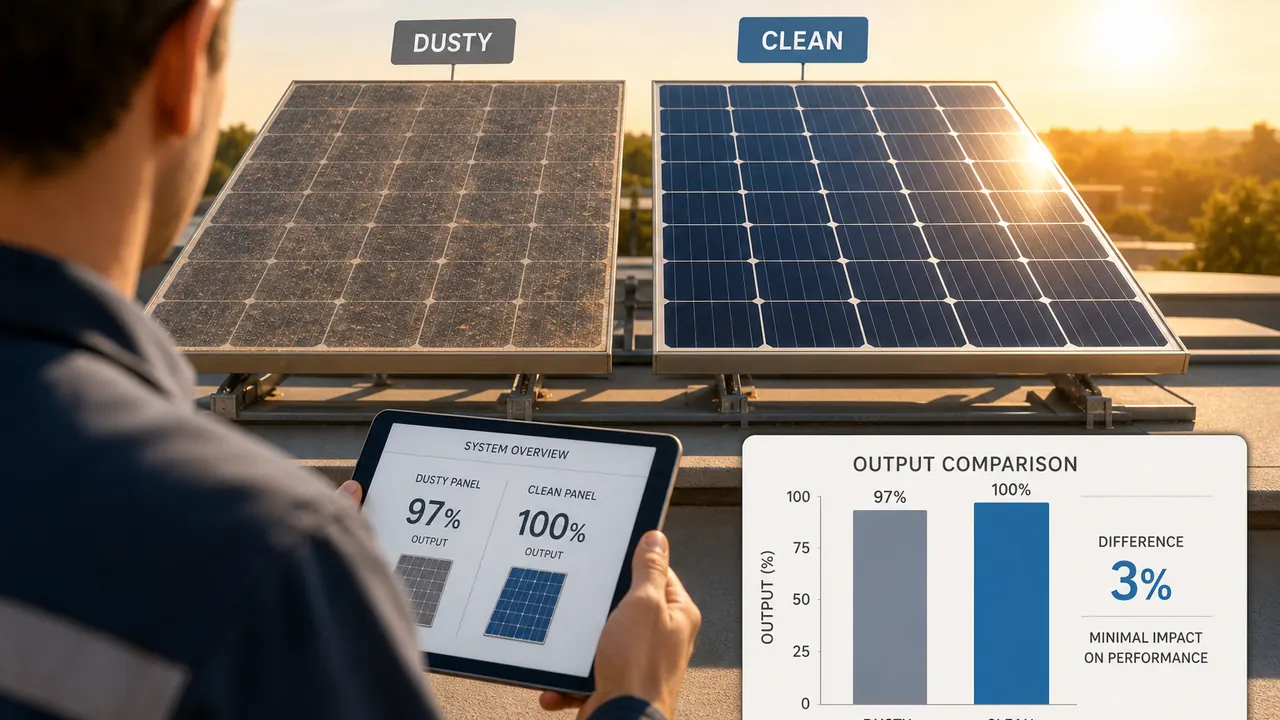
James Stanley ran a controlled experiment on his 16-panel array, measuring the power ratio between a washed and unwashed bank of 8 panels to isolate cleaning effect from weather variance — pure experimental design. After two-plus years of dust accumulation, cleaning delivered a 2 to 5 percent improvement, roughly 60 to 150 pounds sterling per year in recovered value: barely worth it but slightly net positive. Safety note: wet panels have enough capacitive leakage to produce a noticeable tingle; he recommends cleaning at night.
Relevance 1/10Importance 3/10
Magnolias are over 100 million years old — predating bees entirely — and their relationship with beetle pollinators has never changed because it never needed to. The flower's whole architecture is adapted for beetles: large bowl shape as a landing platform, thick leathery petals that survive clumsy movement, muted colors (beetles navigate by scent), and a strong fermented-fruit smell to attract insects that forage on decaying matter. Pollination is entirely accidental — beetles blunder through, pollen sticks, and 100 million years of evolution has found no reason to improve the arrangement.

 HN Briefing AM