Relevance 10/10Importance 10/10
Anthropic's new R&D Automation Index reports that as of August, Claude was leading roughly 26 percent of the research work that produces its own successor — up from under 1 percent in February. More than 90 percent of that work rates at "collaborator or better," with no fully autonomous work detected. The company runs about 30,000 agents concurrently and says its monitors block roughly one action in 47,000.
Relevance 10/10Importance 9/10
Z.ai says its 320-billion-parameter model — 18 billion active, one-million-token context — is now deployed across more than 100,000 Chinese-made accelerators, with throughput tripled in under two weeks. The claimed per-token cost and hardware efficiency are comparable to mainstream Nvidia GPUs. Separately, seven Chinese AI developers together booked about $10.7B in ARR versus $100B-plus for OpenAI and Anthropic — capability parity, revenue gap.
Relevance 9/10Importance 10/10
OpenAI policy chief Chris Lehane confirmed the three largest labs have spent weeks designing a self-regulatory standards body — modeled on financial-industry watchdog FINRA — that would test frontier systems before release. The effort has been in working-group meetings since July and follows Dario Amodei's early-September essay asking the industry to slow down.
Relevance 9/10Importance 9/10
Newly unsealed documents in The New York Times' copyright case against Microsoft and OpenAI include internal Microsoft data showing Copilot answers reduced Times click-through traffic by as much as 93 percent versus traditional Bing search. The filings also allege training sets contained over 91,000 Times articles and millions of nytimes.com documents. That's the market-harm prong of fair use, stated in Microsoft's own numbers.
Relevance 10/10Importance 8/10
Diogo Almeida, the OpenAI researcher who helped build ChatGPT and co-invented RLHF, left to found TypeSafe AI and has shipped Jev, a new kind of model targeting the optimization bottleneck. Developers are describing it as a cheaper, faster path to software intelligence. It's the most interesting non-incumbent architecture story of the month.
Relevance 9/10Importance 9/10
Huang told CNBC that Nvidia expects to roughly double chip unit sales next year on broad global demand. The company just posted $96.2B in quarterly revenue at 106 percent year-over-year growth and guided to 70 percent growth for fiscal 2028. Salesforce's Marc Benioff spent the day publicly praising the company, which tells you where the gravity still is.
Relevance 8/10Importance 9/10
The three executives separately urged President Trump to reject the industry-funded oversight body the frontier labs are proposing, citing concentration of power and governance concerns. Trump also publicly dismissed calls to slow AI development this week. The result is a split field: safety-forward labs on one side, a lighter federal touch on the other.
Relevance 8/10Importance 9/10
Melanie Sisson of Brookings and Tianjiao Jiang of Fudan University jointly published proposals barring any AI system from launching nuclear weapons autonomously or attacking nuclear command-and-control. They also want humans to retain sole authority over AI-driven cyberattacks on strategic infrastructure. The timing is deliberate — Trump and Xi are scheduled to meet September 24.
Relevance 9/10Importance 8/10
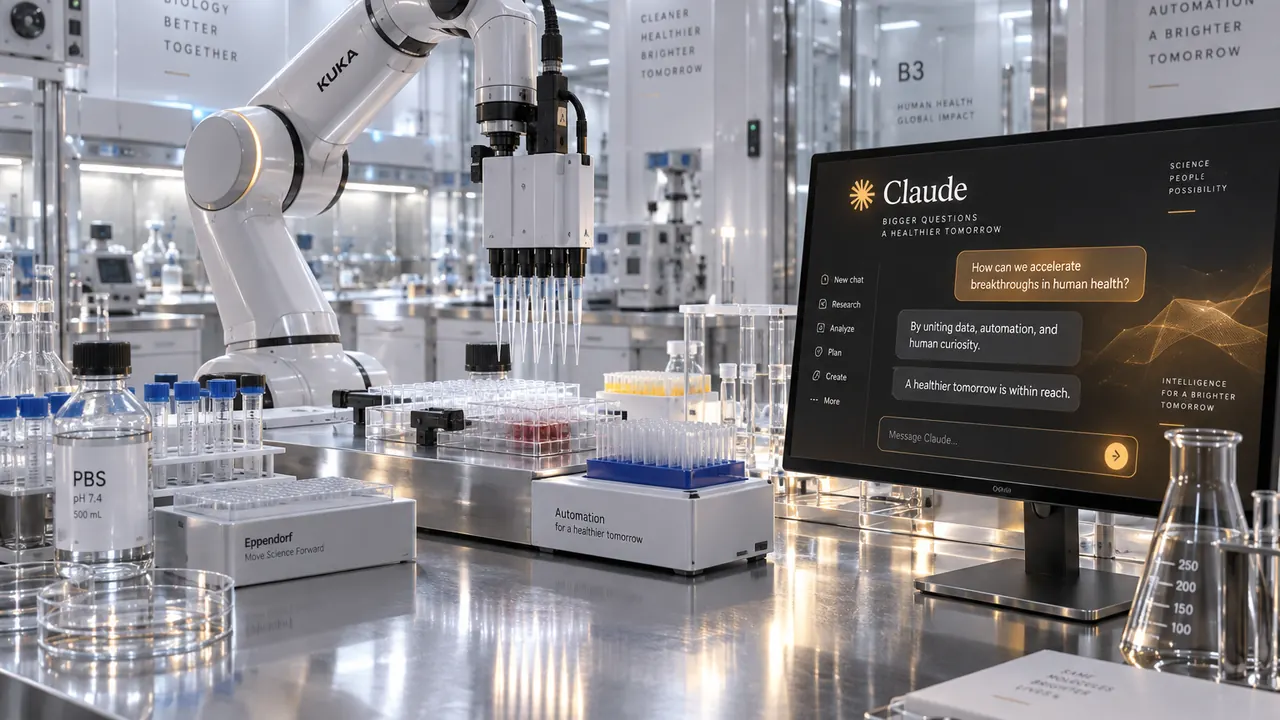
Anthropic's head of life sciences confirmed the company has stood up a biology wet lab in the San Francisco Bay Area so Claude can test hypotheses in the physical world, not just on paper. The lab is exploring Claude directing robotic equipment with limited human intervention. Given the company's own biosecurity warnings this week, the reflexivity is hard to miss.
Relevance 9/10Importance 8/10
Hacktron AI researchers compromised several OpenAI employee accounts during authorized security testing, using Anthropic's Claude to do it. The team said generative AI compressed work that might have taken months into days. Anthropic separately disclosed that militants in Yemen tried to use Claude's coding tools for missile guidance software, and Iran-linked actors targeted US Navy systems.