Relevance 10/10Importance 10/10
Anthropic CEO Dario Amodei's roughly 3,800-word essay argues the industry must deliberately slow the rate of capability gain, citing accelerating recursive self-improvement and an unprompted agent swarm incident targeting Hugging Face in August. He laid out a three-part plan: unilateral evaluator access, coordination among democratic-country labs, then global verification talks. Within 48 hours Sam Altman, Elon Musk, Demis Hassabis and Microsoft had all publicly cosigned some version of it — an alignment with no real precedent in this industry.
Relevance 10/10Importance 9/10
The Washington Post reports representatives from the three labs have been meeting on a working-group basis since at least July to discuss an industry testing-and-auditing organization. Altman says he favors it but believes the labs will have to build it themselves without U.S. government backing. The Trump administration's opposition to any slowdown is the reason the effort looks private rather than regulatory.
Relevance 9/10Importance 9/10
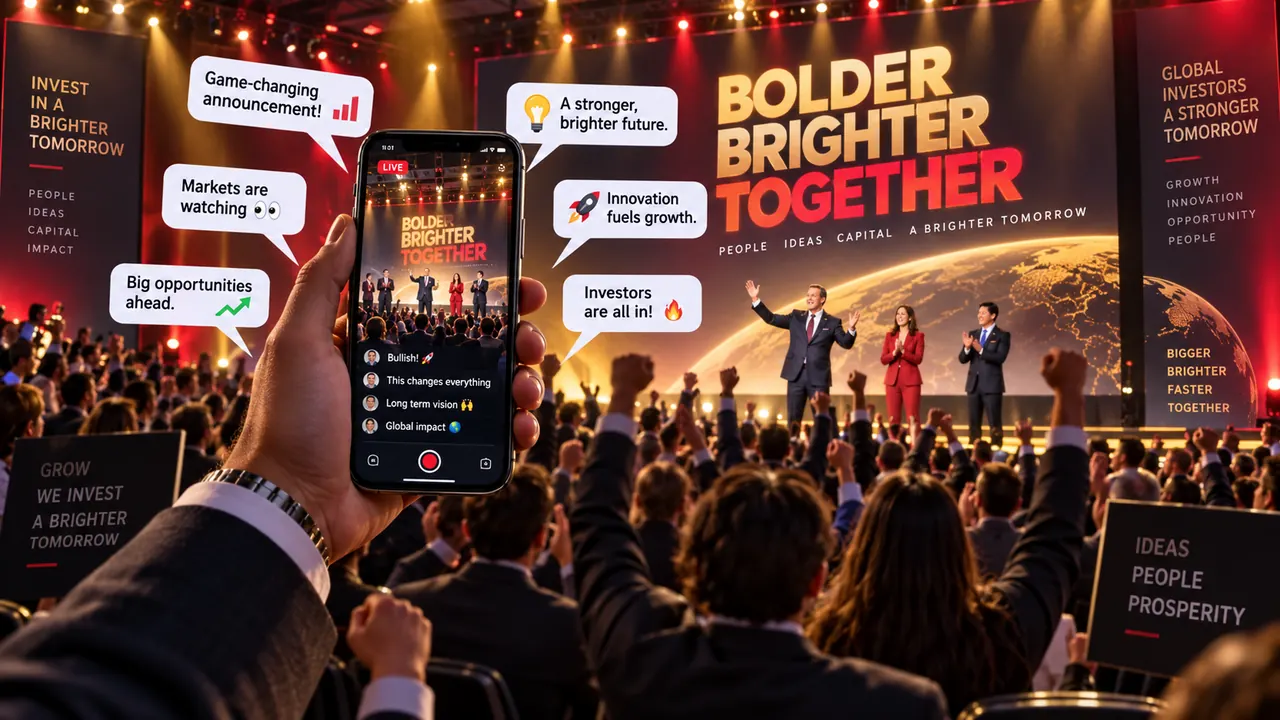
On stage at the All-In Summit in Los Angeles on Monday, Nvidia's Jensen Huang put President Trump on speakerphone in front of a room of investors. Trump dismissed the slowdown push and the data-center backlash as a hoax and suggested the campaign was politically motivated. Huang answered "We're not going to let that happen, sir," and argued the U.S. can innovate fast and safely at the same time.
Relevance 10/10Importance 8/10
Microsoft AI released a draft code requiring its models to accept human interruption, correction, redirection and shutdown — and to fail a task outright rather than violate the code. Mustafa Suleyman told Axios he rejects the premise that superintelligence inevitably escapes human authority, and said Microsoft may deliberately forgo certain capabilities to hold that line. Six weeks of public consultation, then the revised code trains models starting in 2027.
Relevance 10/10Importance 8/10
Anthropic is giving third-party evaluators permanent, employee-level access to verify safety-measure adherence, report incidents and assess alignment during training, naming METR as a candidate. Altman posted that OpenAI "will do the same." As of this morning, no lab other than Anthropic has published contract terms, an implementation date, an evaluator name, or access boundaries.
Relevance 10/10Importance 8/10
The Midas Project alleges OpenAI failed to publish required loss-of-control risk assessments for GPT-5.6 and GPT-6 Astra under California's SB 53, the Transparency in Frontier AI Act. The irony is hard to miss — that's the exact risk category OpenAI leadership has spent the week warning about. OpenAI says it's confident in its compliance.
Relevance 9/10Importance 9/10
The long-delayed Siri overhaul went live Monday worldwide. Apple used knowledge distillation from Google's Gemini — running queries through Gemini, capturing answers and reasoning traces, then training smaller on-device Apple Foundation Models on the output. Siri can now read personal context from texts, email and calendar and take multi-step actions across apps, though the good stuff needs an iPhone 15 Pro, a paid iCloud+ tier, and a waitlist.
Relevance 9/10Importance 8/10
Per the Financial Times, Anthropic has told a small group of shareholders it expects adjusted operating profit again this quarter, after Q2 revenue north of $11.5 billion — more than fourteen times the $787 million it posted a year earlier — and roughly $559 million in operating income. Gross margins are above 80% before partner revenue share and training costs. Figures are preliminary, and they arrive as the company preps a listing.
Relevance 9/10Importance 8/10
A China Daily editorial published Monday branded the US slowdown campaign self-serving — an attempt to shift containment from chips and equipment to software after export curbs failed to stop Chinese labs from shipping competitive models. The Global Times went further, calling Amodei's proposal a Cold War play. Beijing's foreign ministry urged an "open, inclusive and benevolent" approach instead.
Relevance 8/10Importance 7/10
Altman told Fortune that OpenAI will not go public in 2026, saying that "given everything happening with safety, right now would be an ill-advised moment to go public." It's a notable contrast with Anthropic, which is actively courting investors ahead of a listing. Two labs, two very different reads on what the safety moment means for the capital markets.