IBM shares collapsed 25% Tuesday after management preannounced Q2 results well below consensus — revenue of $17.2 billion missed the $17.86 billion estimate, with EPS of $2.93 falling short of the $3.01 expected. CEO Arvind Krishna acknowledged the company "did not adapt and move quickly enough" as enterprise customers shifted capital away from IBM software and mainframes toward AI servers, storage, and memory. Full Q2 results are due July 22.
June CPI came in at 3.5% year-over-year, a full 30 basis points below the 3.8% consensus, as easing energy prices cooled inflation. The softer print triggered a broad relief rally across semiconductor and AI names, pushing Nasdaq-100 futures up 1.3% and serving as the primary macro catalyst for Tuesday's sector-wide move. NVDA gained 4.06%, MU rose 4.92%, AMD added 2.57%, and AVGO climbed 1.32%.
CrowdStrike posted fiscal Q1 FY2027 revenue of $1.39 billion, beating consensus across every major metric with a record quarter for net new annual recurring revenue and raised full-year guidance for revenue, EPS, and net new ARR. Benchmark lifted its price target to $230 from $195; UBS raised to $235 from $198. Ironically, IBM's warning that enterprise clients were redirecting spend toward AI infrastructure and cybersecurity read as a direct bullish catalyst for CrowdStrike.
Nvidia closed up 4.06% at $211.80 as two catalysts landed simultaneously: Morgan Stanley reiterated overweight in morning research, and a U.S. Commerce official confirmed H200 AI chips are now shipping to approved Chinese buyers including Tencent and ByteDance — though volumes were described as "trivial." Chinese firms ordered over 2 million H200s against a total Nvidia inventory of roughly 700,000 units, meaning supply constraints remain, but the regulatory overhang is cleared.
Micron surged nearly 5% Tuesday, capping an 8.5% five-day gain, following a blowout Q3 revenue print of $41.46 billion (vs. $35.69 billion estimate) and Q4 guidance of $50 billion — well above the $43.24 billion consensus — driven by surging AI memory demand. The company also pledged $250 billion in U.S. chipmaking investment through 2035, targeting 40% of DRAM production domestically. Citi reiterated Buy with a $1,400 price target.
Oracle's remaining performance obligations have ballooned to $638 billion — roughly eight years of revenue — anchored by a reported $300 billion-plus OpenAI contract, yet the stock trades near an 18-month low as investors focus on execution risk. FY2026 capex was $55.7 billion against $32 billion in operating cash flow, yielding negative free cash flow of $23.7 billion. S&P recently downgraded Oracle to BBB-, adding credit pressure to an already strained balance sheet.
Palantir gained 4.02% on July 14, building momentum following a DA Davidson upgrade to Buy from Neutral on July 2 with a $175 price target. Analyst Gil Luria cited accelerating earnings growth narrowing the valuation gap — analysts project Q2 EPS of $0.28, up 115% year-over-year. Key catalysts include the U.S. Army's selection of Palantir for the Next Generation Command and Control program and an expanded Nvidia partnership to build sovereign AI models for government agencies.
AMD, up roughly 114% year-to-date, has a defining event on the calendar: its Advancing AI 2026 conference July 22-23, where it's expected to disclose MI450 performance benchmarks and deployment timelines. The company's landmark 6-gigawatt GPU supply deal with OpenAI has the first 1GW MI450 deployment starting in the second half of 2026, and Oracle has committed to 50,000 AMD AI chips in its cloud infrastructure. The conference could be a major catalyst in either direction.
Both Anthropic and OpenAI filed confidentially for IPOs in June 2026, but their timelines are diverging. Anthropic, valued at $965 billion after its May funding round and holding a 31.4% global LLM revenue share lead over OpenAI's 29%, appears on track for a late-2026 listing. OpenAI, valued at $852 billion as of March, is reportedly weighing a delay into 2027 after turbulence in SpaceX's post-IPO trading spooked the mega-cap tech IPO environment. Neither is publicly traded.
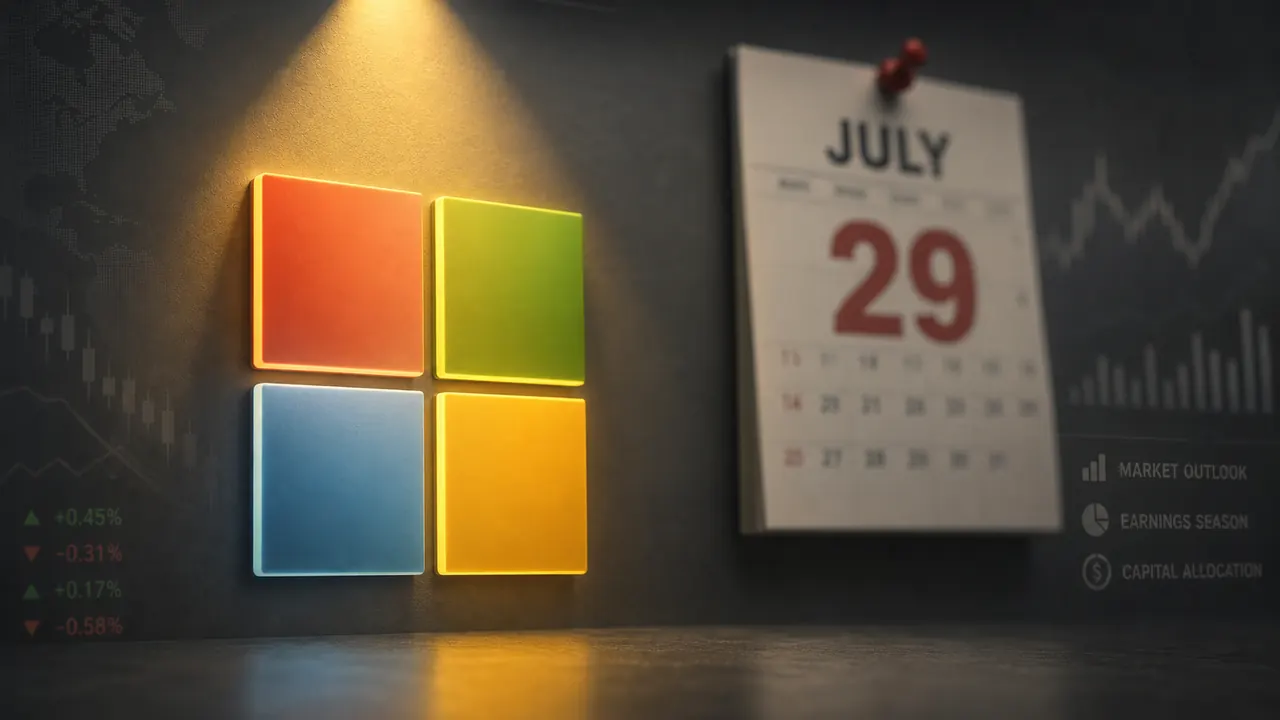
Microsoft edged lower in premarket trading as investors sit with an ongoing question: can Azure AI revenue growth justify $190 billion in planned 2026 capex, up 61% from 2025? The company's fiscal Q4 report is due July 29 after the bell, with consensus EPS at $4.21. Hyperscalers collectively are projected to spend roughly 90% of operating cash flow on capex in 2026, and Microsoft's print will be a key read on whether those returns are materializing.

 AI Stocks