Relevance 10/10Importance 9/10
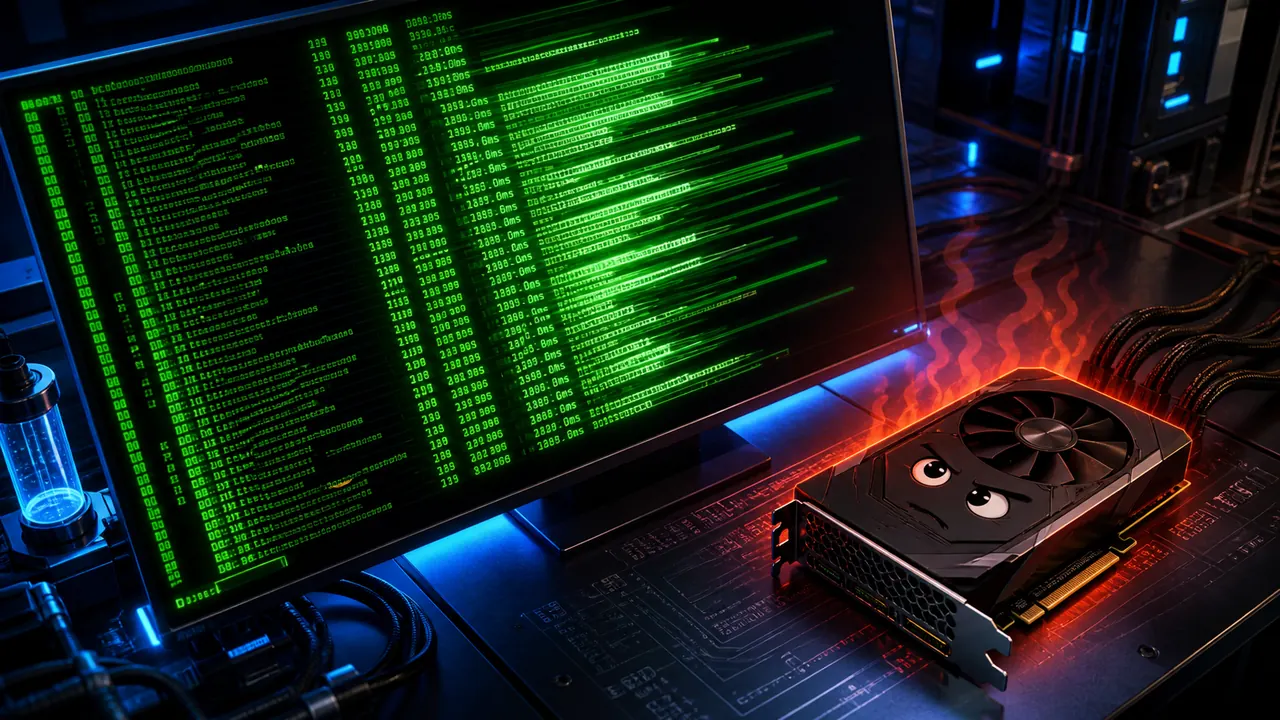
A developer used an AI-driven auto-research loop — over 1,500 automated submissions — to iteratively optimize a QR decomposition kernel, dropping runtime from 108.8ms to 1.8ms. The approach combined blocked Householder QR with WY representation to make work GEMM-shaped for tensor cores, plus CUDA graph replay and fused assembly operations. This is one of the clearest demonstrations yet of what AI-assisted performance engineering looks like at its ceiling.
Relevance 9/10Importance 8/10
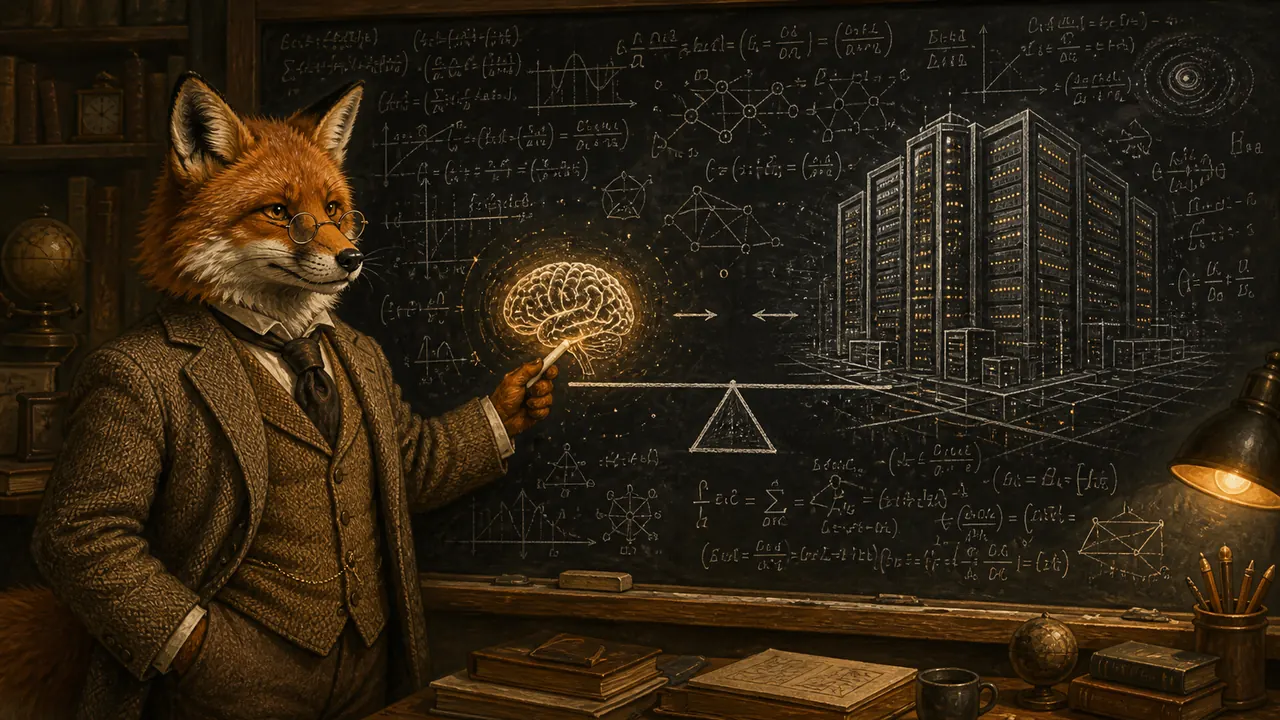
Davide Piffer argues AI's edge in mathematics comes not from superior reasoning but from vastly expanded working memory — AI can hold entire problem statements, hundreds of equations, and multiple solution strategies in context simultaneously. Because mathematics relies on explicit symbolic precision, nearly everything relevant can be written down and preserved, making this architectural advantage decisive. Piffer's framing: AI resembles a machine-speed von Neumann, not an Einstein-style conceptual innovator.
Relevance 7/10Importance 7/10
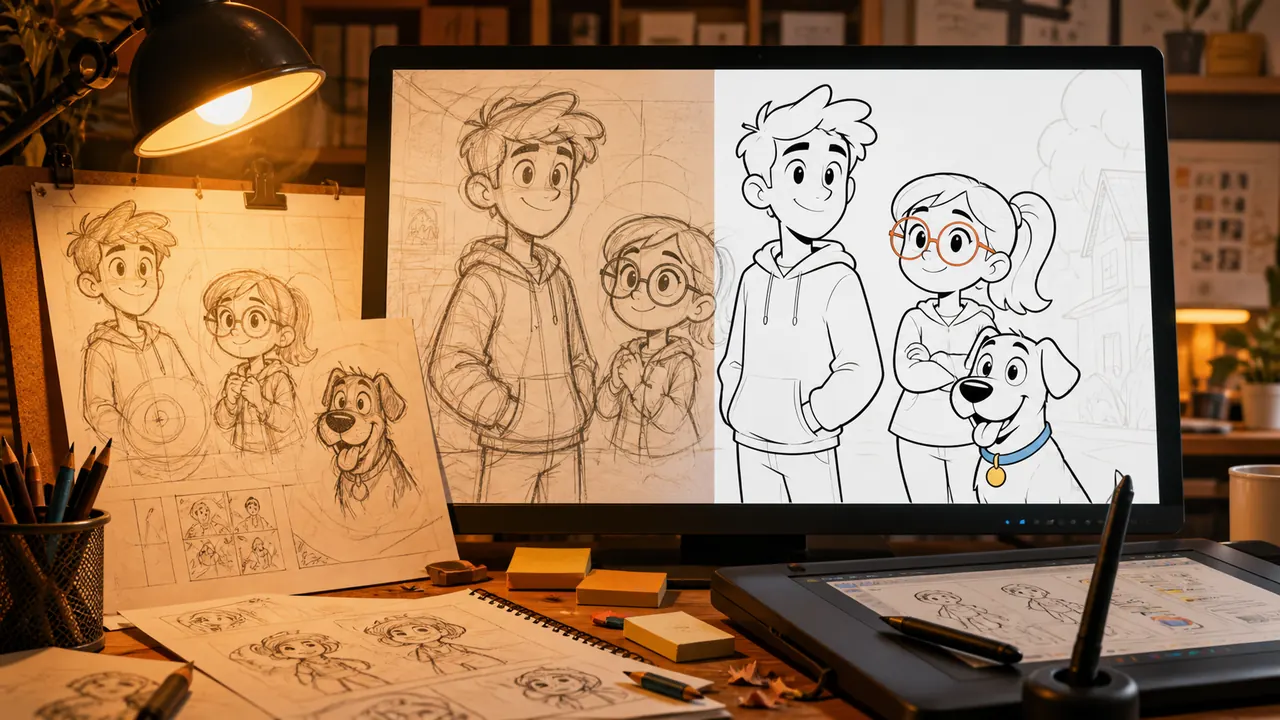
Disney Research published a technique that applies 2D Gaussian splatting — the method that took 3D scene reconstruction by storm — to the problem of converting raster line art into clean Bézier spline vector representations. This directly targets a real pipeline bottleneck in animation production: turning scanned hand-drawn artwork into scalable vectors. The cross-pollination of the Gaussian splatting approach from 3D reconstruction to 2D vectorization is the clever bit here.
Relevance 5/10Importance 7/10
Dmitry GR delivers a detailed technical takedown of RISC-V's architecture, arguing excessive optionality — making multiplication, division, and privilege modes all optional — makes it impossible to write truly portable code. He also criticizes the compressed instruction set's offset ranges as too narrow for practical use and calls the immediate encoding scheme "scattered and illogical." For an open architecture being positioned as the future of AI accelerators and embedded systems, these are load-bearing criticisms.
Relevance 6/10Importance 5/10
Voltair, a Y Combinator Winter 2026 startup, is building a distributed drone network for earth observation targeting infrastructure operators who need rapid hazard assessment after storms — utilities, not delivery. They're hiring a Flight Test Engineer expected to both build drones in the lab and fly 54-pound aircraft in the field, with utility customer deployments in the first 90 days. A YC-backed drone startup with an enterprise infrastructure focus and a concrete early market.
Relevance 2/10Importance 8/10
A new study in Alzheimer's and Dementia journal found semaglutide — the active ingredient in Ozempic and Wegovy — is associated with lower predicted dementia risk. This adds to a growing body of evidence that GLP-1 receptor agonists carry neuroprotective benefits well beyond their original weight-loss and blood-sugar applications. If the finding holds up in longer trials, repurposing these blockbuster drugs for cognitive health could become a major clinical and commercial story.
Relevance 3/10Importance 7/10
LymeAlert, launching in August for around $50, is the first at-home test that detects whether a removed tick carries Borrelia burgdorferi, the bacterium causing Lyme disease — results arrive in 15 minutes via a lateral flow strip, well within the critical 72-hour window for preventive antibiotics. This matters because standard mail-in tick tests return results after that window closes, while early blood tests miss 64-78% of cases. The kit pairs with an app that interprets results and connects users to telehealth providers.
Relevance 2/10Importance 6/10
In 1978, Japan's JIS X 0208 character encoding standard accidentally included several "ghost characters" — kanji with no clear origin, traced mostly to cataloging blunders like misreadings and errors made while pasting cut-out character components together during collection. One character (彁) remains unexplained to this day. These accidental phantoms were later incorporated into Unicode and persist in modern systems worldwide.
Relevance 3/10Importance 5/10
Henrik Karlsson's essay argues that genuinely novel ideas come from solitude and mental independence, not brainstorming or collaboration. Drawing on mathematician Alexander Grothendieck and filmmaker Ingmar Bergman, he makes the case that original creative work requires first developing what Grothendieck called "the capacity to be alone" — a mental state free from social pressure that distorts original thinking. Techniques like strict routines, deliberately delayed publication, and seeking challengers over validators help protect this fragile creative space.
Relevance 1/10Importance 2/10
Geek Fighter is a browser-based 2D fighting game built in JavaScript, playable directly in the browser with no install required. It's a Show HN side project: sparse on details but complete enough to ship and share. Sometimes what the front page needs most is just someone who built a fun thing and put it out there.

 HN Briefing PM