Relevance 10/10Importance 8/10
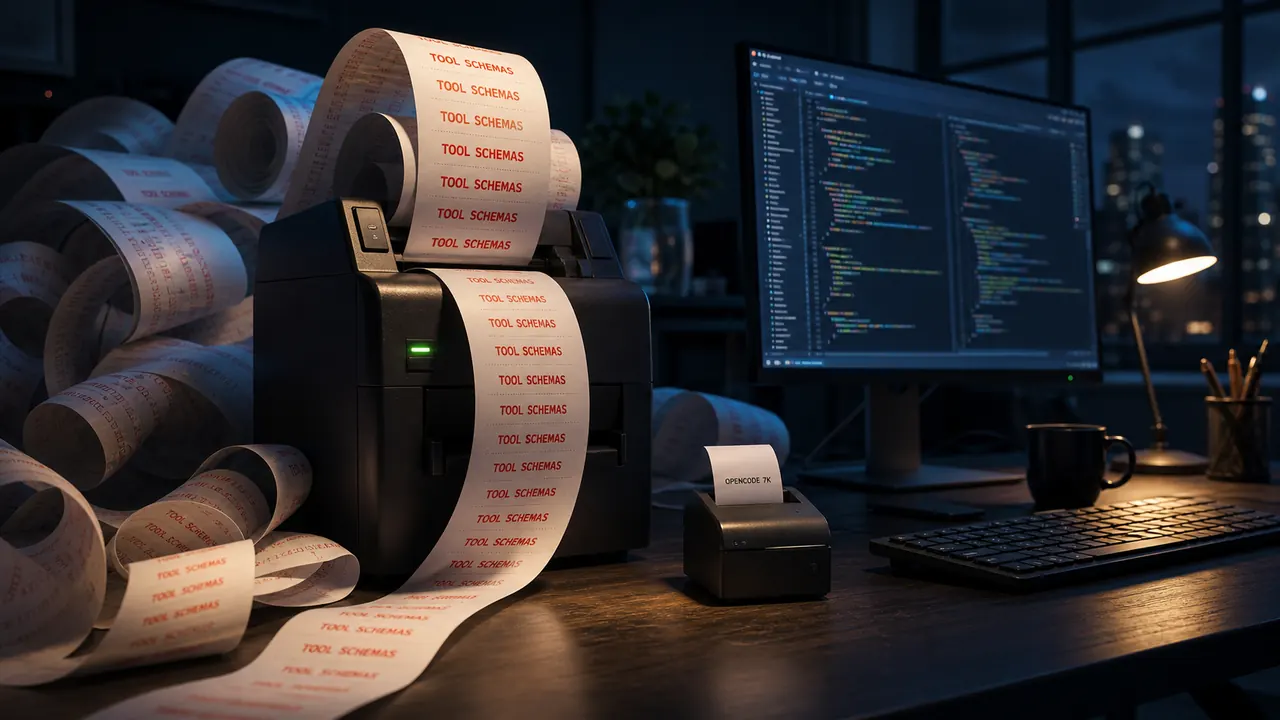
A detailed token overhead analysis reveals Claude Code burns roughly 33,000 tokens before processing any user input — 4.7x more than OpenCode's 7,000 — primarily due to 27 tool schemas totaling nearly 100,000 characters of definitions. The overhead directly erodes usable context and compounds dramatically with subagent delegation, where one task ballooned from 121,000 tokens to 513,000 when split across two agents. Real deployments with MCP servers and large instruction files routinely hit 75,000–85,000 tokens before a user types a single word.
Relevance 10/10Importance 7/10
Ploy AI published a detailed migration report moving a production coding agent from Claude Opus 4.8 to GPT-5.6, finding builds dropped from 8 minutes to 3:42 and cost fell from $3.06 to $2.22 per run. Key gotchas included GPT-5.6 inventing plausible values for unused optional tool parameters and fundamentally different prompt caching mechanics requiring architecture changes to achieve 83.7% cache hit rates. The model writes leaner code but trends toward clean, tightly-gridded design aesthetics that can override existing style guides if not carefully guided.
Relevance 9/10Importance 8/10
An arXiv paper argues that AI systems generating research-level mathematics, combined with declining U.S. support for math education, creates a dangerous strategic vulnerability. Mathematical comprehension — the ability to verify, challenge, and interpret proofs — is infrastructure comparable to semiconductor capability, and unlike code it cannot be rebuilt quickly once lost. The paper uses an AI's 2026 disproof of an Erdős conjecture as a concrete example and calls for AI systems to present decision-critical claims in formal, machine-checkable structures rather than persuasive black-box outputs.
Relevance 9/10Importance 7/10
George Hotz published a characteristically blunt take: he's genuinely enthusiastic about LLMs, self-driving, video generation, and coding agents as practical tools, but scorns both doom-mongering about "windows closing" and the strawman leap from "useful tool" to "imminent superintelligence." His core thesis is that AI progress is just general computing progress plus Moore's Law, meaning no frontier lab can actually monopolize the value — and that open-source restrictions are really about protecting corporate valuations, not safety.
Relevance 7/10Importance 8/10
Ireland's 80-plus datacenters — many operated by Microsoft and Digital Realty — consumed 7,663 gigawatt hours in 2025, now accounting for 23% of all metered electricity and surpassing both urban and rural household consumption combined. The figure has tripled since 2019, driven by AI and cloud infrastructure demand hitting a 5-million-person country with outsized datacenter density. Ireland's regulator implemented a new connections moratorium and now requires large operators to provide backup generation and feed surplus power back to the national grid.
Relevance 9/10Importance 6/10
Rich Sutton — the reinforcement learning legend behind the Bitter Lesson — argues that AI research keeps falling into the one-step trap: building world models that only predict one step ahead, causing errors to compound exponentially and rendering long-horizon reasoning computationally infeasible. The solution he advocates is temporally abstract models using options and General Value Functions, allowing systems to reason across multiple timescales without the exponential blowup. It connects directly to why current agent planning still struggles over long contexts.
Relevance 8/10Importance 6/10
Doug Turnbull argues that even with capable coding agents, humans should still write code themselves — not to compete with AI speed, but because direct engagement builds the architectural understanding that lets you catch problems agents will amplify. He frames agents as "freshly onboarded interns" who can compound bad decisions, and argues code is simply a more precise medium than English for expressing computation. The piece is a thoughtful counterweight to full-delegation workflows.
Relevance 5/10Importance 6/10
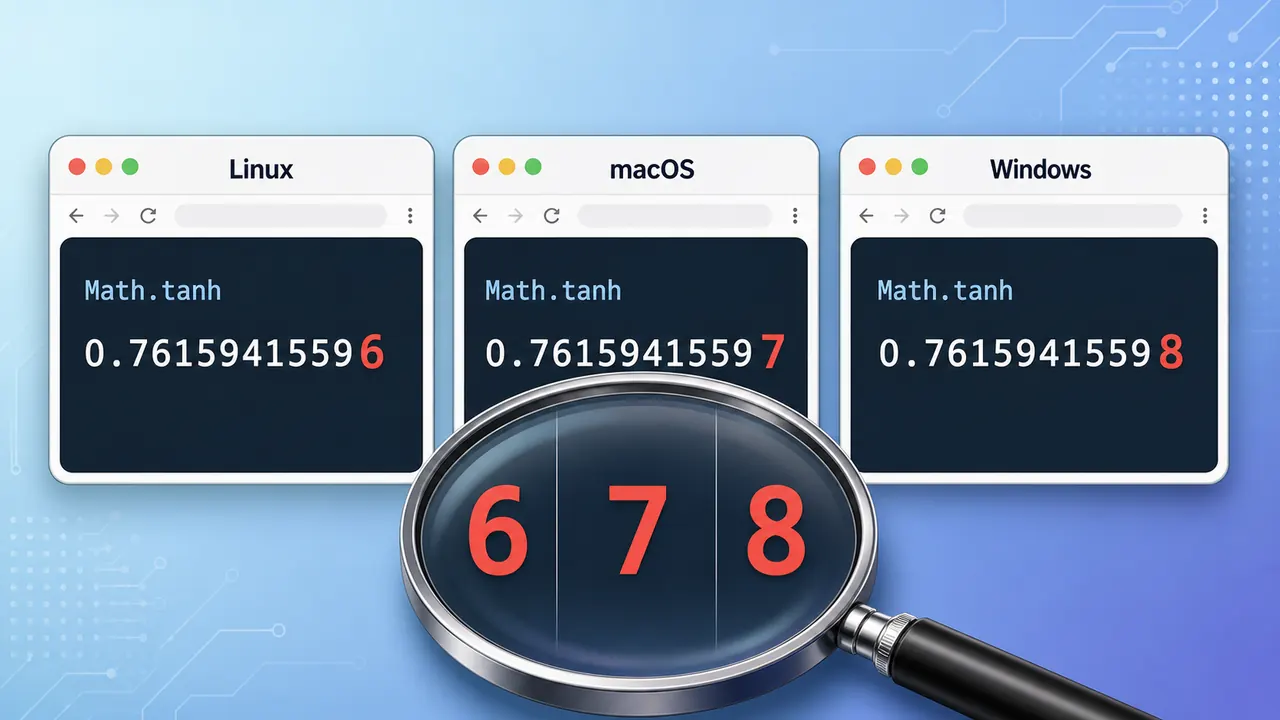
Starting with Chrome 148, calling Math.tanh(0.8) returns slightly different floating-point bit patterns depending on whether the underlying OS is Linux, macOS, or Windows — because V8 now delegates to each platform's native math library instead of its own portable implementation. The divergence is tiny (one or two units in the last place) but deterministic and impossible to fake, making it a reliable passive OS fingerprinting vector. Anti-bot systems can now trivially expose browser spoofing: a macOS User-Agent returning Linux's tanh value is instantly caught.
Relevance 3/10Importance 5/10
Sam Kahn traces how he went from voracious childhood reader to someone who couldn't finish books in his thirties — middle school social pressure, career anxiety, and above all smartphone intermittent reinforcement conspired against sustained reading. His recovery involved treating books as research with real output deadlines, writing reviews on Substack as accountability, and keeping his phone in airplane mode during reading time. It reads as embarrassingly relatable, which is probably why it's sitting on the front page.
Relevance 2/10Importance 5/10
Floh's Tiny Emulators project is a collection of browser-based emulators for classic 8-bit systems including the Commodore 64, ZX Spectrum, Amstrad CPC, and several East German computers, all running original software with joystick support right in your browser. It covers everything from CP/M 2.2 to demoscene productions and is a lovingly maintained passion project. Not AI, not startup — just clean engineering and genuine retro appreciation.

 HN Briefing PM