Relevance 9/10Importance 8/10
Ford has quietly rehired roughly 350 veteran engineers over three years after admitting that simply feeding design requirements into AI tools did not produce high-quality vehicles. The so-called "gray beards" now train younger staff and reprogram the automaker's AI systems to catch failure points before parts hit the plant floor, a fix Ford expects to cut costs by a billion dollars this year. It's a rare, concrete example of an automaker walking back AI-driven automation in favor of human expertise.
Relevance 10/10Importance 7/10
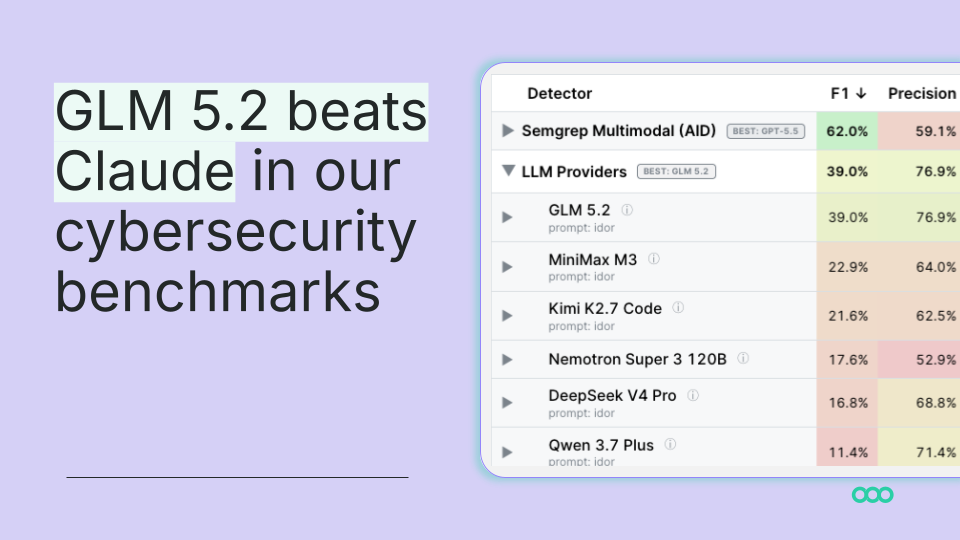
In Semgrep's IDOR vulnerability-detection benchmark, the open-weight GLM 5.2 posted a 39% F1 score versus Claude Code's 32%, and did it at roughly 17 cents per vulnerability found, about a sixth the cost of frontier models. Notably, GLM 5.2 pulled this off without the endpoint-discovery scaffolding that powered Semgrep's multimodal pipeline. The team cautions the result is specific to one vulnerability class, but frames it as a real shift in open-weight model viability for security work.
Relevance 9/10Importance 7/10
The author fed their shoulder MRI into Claude Code running Opus 4.8 to sanity-check a clinic's diagnosis of a Grade III tear. The AI analysis contradicted the clinic, and a follow-up comparative arbitration between the two reports concluded the original diagnosis was likely wrong, pointing instead to mild tendinosis. It's a vivid, if anecdotal, look at patients using coding agents as ad hoc diagnostic second opinions.
Relevance 8/10Importance 5/10
The piece argues that the recent retreat from aggressive token spending is temporary, driven by rising costs rather than a real change in incentives. As models grow more reliably accurate with more iterations — what the author calls "compounding correctness" — economically rational orgs will resume heavy token spend on autonomous agents running continuously without human babysitting. In short, tokenmaxxing isn't dead, it's just catching its breath.
Relevance 5/10Importance 7/10
The LineShine supercomputer in Shenzhen is the new TOP500 number one, delivering 2.198 sustained exaflops of FP64 — and doing it CPU-only. It's the first Chinese entry on the list in nine years, and it also tops the more real-world HPCG benchmark, not just raw LINPACK. A notable shake-up in the global supercomputing pecking order.
Relevance 6/10Importance 5/10
Kent Beck reframes "You Aren't Gonna Need It" as an economics principle, not a typing-cost rule. Building speculative structure early burns the option value of waiting for better information and pays expenses before any revenue arrives. His sharpest point: cheap AI-generated code doesn't weaken YAGNI, it just makes the violation cheaper to commit, which is worse.
Relevance 3/10Importance 5/10
Librepods is an open-source app that reverse-engineers Apple's proprietary protocol to bring AirPods features to Android and Linux. That includes switching noise-control modes, fast ear detection, accurate battery status, and head gestures — all without an Apple device. A classic community-driven jailbreak-the-hardware project.
Relevance 4/10Importance 4/10
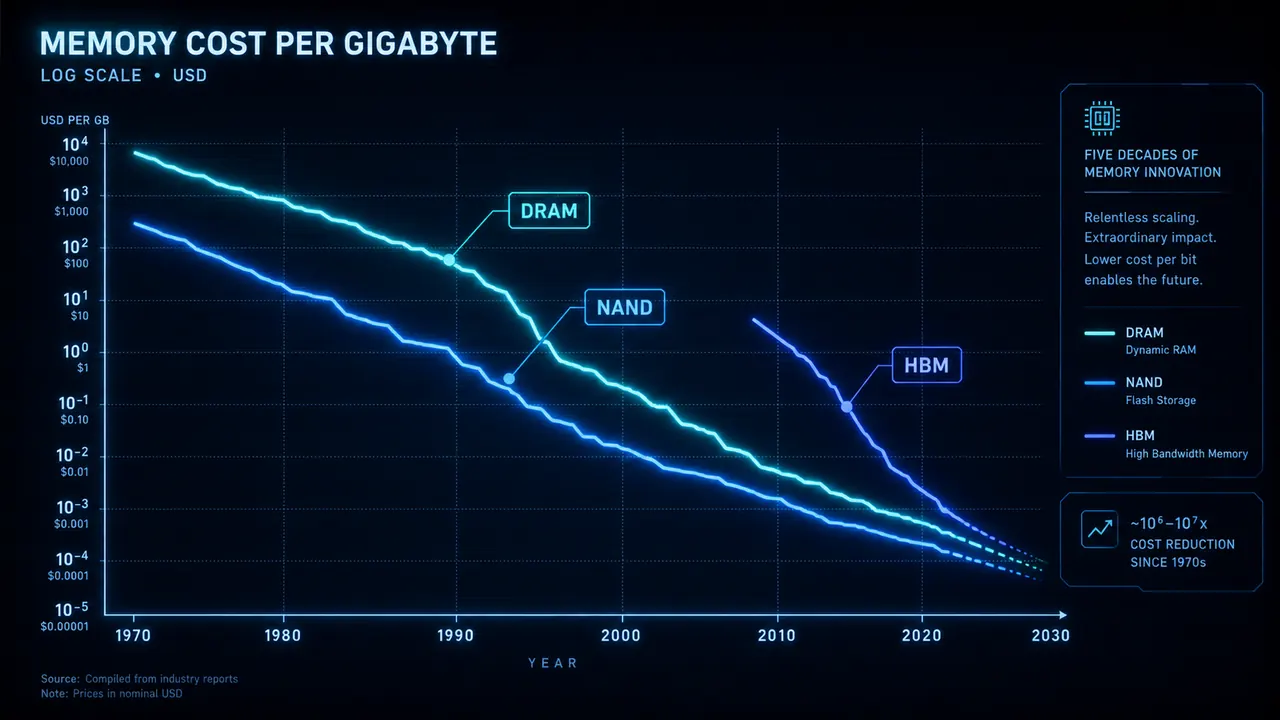
A Stanford-hosted interactive chart tracks the lowest dollar-per-gigabyte over decades for DRAM, NAND flash, and HBM on a log scale. It blends John McCallum's classic dataset with current retail pricing pulled from Amazon, and lets you filter, zoom, and export the data. HBM figures lean on analyst estimates since it has no public market.
Relevance 2/10Importance 5/10
The Atlantic chronicles the long goodbye to the Boeing 747, the four-engine "Queen of the Skies" that redefined mass air travel. As twin-engine jets win on fuel economy and economics, the jumbo is being steadily retired from passenger fleets. A reflective piece on the end of an aviation icon.
Relevance 2/10Importance 3/10
A retrocomputing deep-dive installing OpenBSD 7.8 on a 2009 Chinese MIPS-based Lemote Yeeloong netbook, booting the installer kernel directly via PMON onto a 32GB SD card root. The onboard Realtek Wi-Fi wouldn't cooperate, so the author finished the network install with an external Belkin USB adapter on a Ralink chipset. Pure hacker comfort food for a Sunday afternoon.

 HN Briefing PM