Relevance 9/10Importance 8/10
Princeton researchers used reinforcement learning and inverse design to let AI design radio-frequency integrated circuits from scratch, skipping human templates entirely. The system explored the design space on its own and produced novel chip layouts that beat state-of-the-art circuits on performance while collapsing design time by orders of magnitude. Diffusion models generated both interpretable and unconventional designs, hinting at a broader shake-up in how chips get built.
Relevance 8/10Importance 5/10
Adrafinil is a tiny macOS menu-bar app that prevents your Mac from sleeping only while AI coding agents are actively running, then lets it return to normal lid-close sleep once the work finishes. It uses reference-counted assertions to handle multiple overlapping agent sessions and adds thermal protection so your machine doesn't cook itself. It's a neat little artifact of the agent-coding era, where people now leave autonomous tools grinding away unattended.
Relevance 5/10Importance 7/10
IP Crawl is a browsable, filterable catalog of open webcams it found exposed on the public internet, letting anyone watch live feeds from around the world with no login. The pitch is that you can check whether a camera near you is exposed in under ten seconds. It's a stark, Shodan-flavored reminder of just how much unsecured hardware is sitting wide open out there.
Relevance 6/10Importance 5/10
TownSquare is a drop-in feature that turns an ordinary website into a shared social space, showing little stick figures for everyone currently browsing, what pages they're on, and a way to message in real time. The creator's goal is to bring back the old web feeling that there are actual humans on the other side of the screen. It's a charming counter-move against today's lonely, single-player internet.
Relevance 4/10Importance 6/10
This piece argues that buying digital media usually gets you only a revocable license, while discs and books give you a permanent, transferable copy that survives policy changes and shutdowns. The author backs it up with a long catalog of content removals, account deletions, price hikes, and dead servers. The takeaway: ownership is clearest when the copy stays under the buyer's control.
Relevance 3/10Importance 6/10
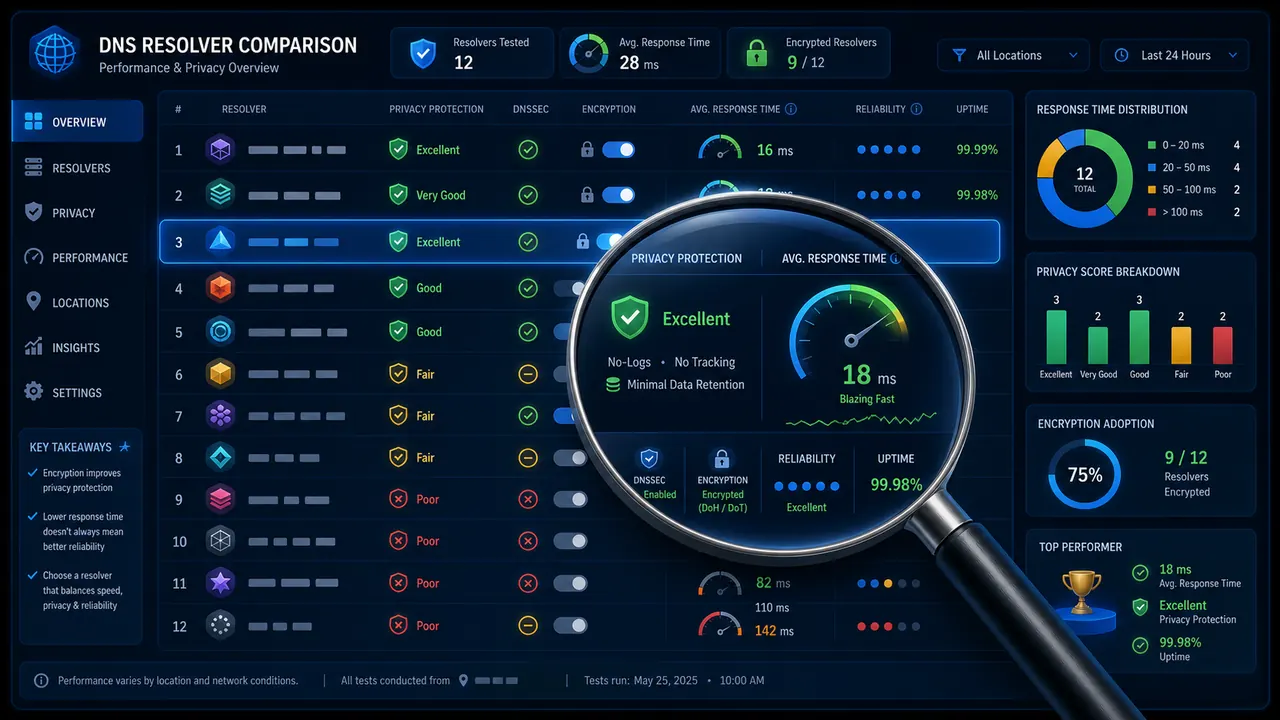
This guide compares 29 public DNS resolvers across privacy, security, speed, and encryption type, pairing an interactive finder with research-backed picks. It stresses that encryption hides your queries from the network but not from the resolver itself, and notes encrypted protocols like DNS-over-QUIC now match plain DNS on speed. Key advice: pick non-logging operators, check DNSSEC support, and weigh the jurisdiction your resolver sits in.
Relevance 2/10Importance 7/10
Hunterbrook examined more than 60 homeowners across 16 states who bought from D.R. Horton and Lennar and found pervasive defects from poor workmanship, cheap materials, and code violations. The investigation describes take-it-or-leave-it contracts that strip buyers of implied warranties and let builders define their own repair standards. Buyers are even discouraged from bringing realtors who know the traps, so problems surface only after it's too late to walk away.
Relevance 3/10Importance 5/10
This walkthrough uses unprivileged LXC containers to isolate risky GUI apps like browsers from the host system. By remapping user IDs and bind-mounting only the bare essentials, such as the X11 and audio sockets, a compromised app's reach is confined to an unused UID range. It's a practical way to box in malicious processes while keeping display and sound working.
Relevance 3/10Importance 4/10
Modern browsers fire MIDI data far faster than 1980s synths with tiny RAM buffers can handle, causing buffer overflows because vintage gear like the Yamaha DX7 can't tell the browser to slow down. The fix is to throttle the stream in JavaScript, splitting System Exclusive messages into small chunks with deliberate delays between them. It's a lovely bit of old-meets-new hardware whispering.
Relevance 1/10Importance 4/10
This study tested practical interventions to cut tick density along recreational trails in Ottawa, measuring how landscape management affects the abundance of disease-carrying ticks. The results point to targeted trail-edge management as a way to lower human exposure to tick-borne illness. It's a grounded public-health read amid an afternoon of code and chips.

 HN Briefing PM