Relevance 10/10Importance 9/10
Anthropic revisited an earlier robotics experiment to test whether newer Claude models could handle physical tasks that once needed a full human team. Claude Opus 4.7 blew past the original benchmark, knocking out four core tasks in 9 minutes 35 seconds versus 181 minutes for the human team. The catch: it still stumbled on precise, closed-loop control like autonomous ball retrieval, so fine-grained manipulation remains the hard part.
Relevance 10/10Importance 8/10
A Bayer-and-Thoughtworks case study, written up on Martin Fowler's site, dissects a production agentic system called PRINCE built from specialized Researcher, Reflection, and Writer agents. The takeaway is that reliability comes from the engineering harness around the model — orchestration, retries, validation, reflection loops — not raw model smarts. In regulated pharma research, trust is earned through granular citations and continuous faithfulness and relevancy metrics.
Relevance 9/10Importance 7/10
The author argues that functional AI-generated code isn't good enough when he hasn't personally reasoned through the problem. He describes throwing out all AI changes and starting over once he's actually consolidated his own understanding, which yields better designs. The core point: engineers need to keep critical oversight, because working code can still bake in bad design choices.
Relevance 8/10Importance 6/10
TownSquare is a lightweight tool that drops real-time visitor presence onto any website with a single script tag. Visitors can see each other, move around, and chat — no accounts, no algorithms. The pitch is stitching individual sites into a network of "inhabited corners of the web."
Relevance 7/10Importance 7/10
Loupe is an educational app that surfaces exactly what data any iOS app can pull through public APIs. It sorts the signals into three buckets: passive ones needing no permission, permission-gated data, and advanced side-channel tricks. The point is to show how apps can fingerprint and track a device without ever asking for your name or email.
Relevance 6/10Importance 6/10
Chris Foster argues that misunderstanding Cross-Origin Resource Sharing pushes developers into insecure workarounds instead of using it correctly. He points to a Zoom vulnerability where data got smuggled out via image dimensions rather than proper origin filtering. His fix: better education or simpler APIs, because bypassing the same-origin policy is a real security hazard.
Relevance 6/10Importance 6/10
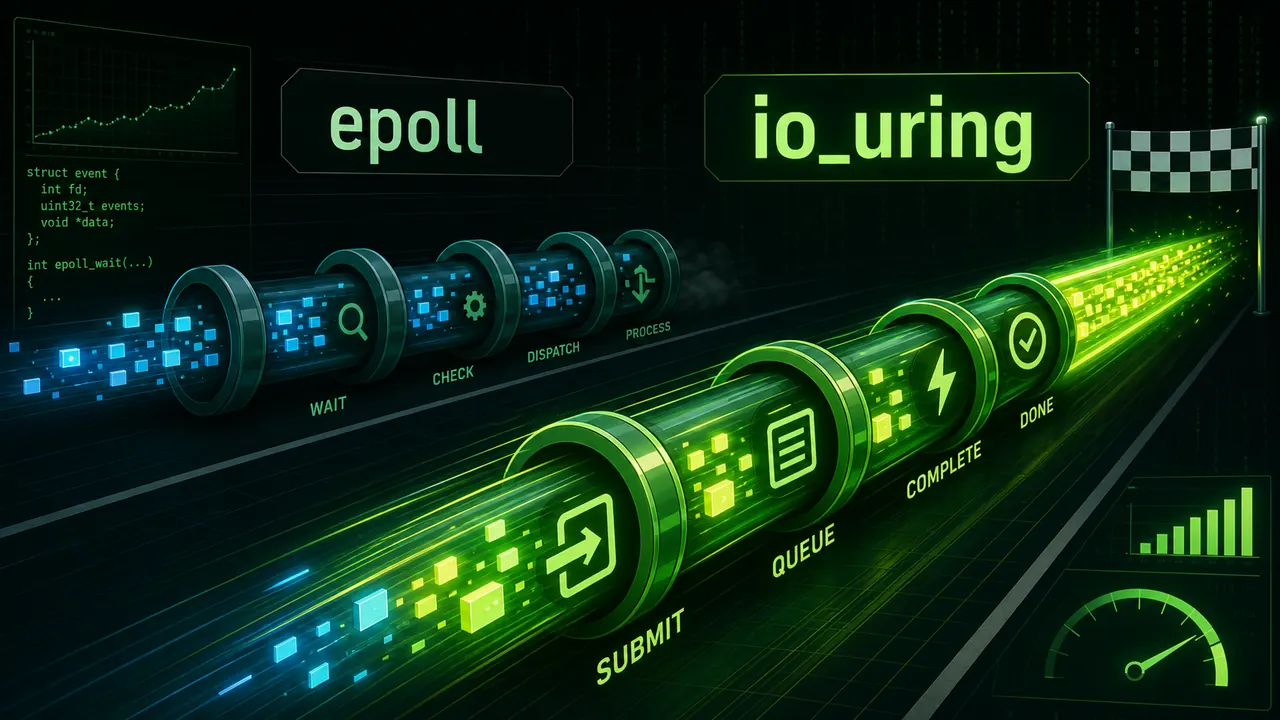
This deep dive contrasts the two Linux I/O models: epoll tells you when I/O is possible and needs separate syscalls to actually do it, while io_uring tells you when I/O is complete. The result is a syscall per batch instead of a syscall pair per operation, slashing overhead. For new high-performance projects, io_uring is increasingly the default pick.
Relevance 6/10Importance 5/10
UHF X11 turns the Apple Vision Pro into a full X11 display server, letting classic apps like xterm and xclock float as spatial windows in visionOS. It accepts remote connections over standard X11 TCP, so you can throw old Unix software up in mixed reality. It even ships CRT scanlines and phosphor effects for the full retro vibe.
Relevance 4/10Importance 6/10
A new paper in Neuron reports that slow, controlled breathing measurably shifts brain activity and changes how people make risky decisions. The study links a simple physiological lever to higher-level cognition and behavior. It's a reminder that the boundary between body and decision-making is thinner than we tend to assume.
Relevance 4/10Importance 5/10
Researchers argue our threat-detection wiring evolved for local dangers but now drowns in a global firehose of bad news. The same negativity bias that once kept us alive is processing wars, financial shocks, and disasters all at once, driving news fatigue in 40% of people worldwide. The unsettling part: brains haven't changed since prehistory, but the information load has exploded.

 HN Briefing PM