Relevance 9/10Importance 10/10
Bloomberg reports Anthropic is running final numbers ahead of a public IPO filing that could arrive as soon as the end of this month, following a confidential S-1 submitted back on June 1. Preliminary Q2 revenue reportedly cleared $11.5 billion with adjusted operating income turning positive, pushing the annualized run rate toward the $65 billion range. Goldman Sachs, JPMorgan, and Morgan Stanley are said to be leading, with an October Nasdaq window in play.
Relevance 9/10Importance 9/10
The Information broke that Nvidia is negotiating an equity investment in Perplexity at a valuation north of $30 billion — more than 50 percent above its round a year ago. Perplexity's annualized revenue has reportedly passed $750 million, up from under $250 million at the start of 2026. It's the clearest sign yet that Nvidia wants to own a slice of the inference layer, not just sell the shovels.
Relevance 10/10Importance 8/10
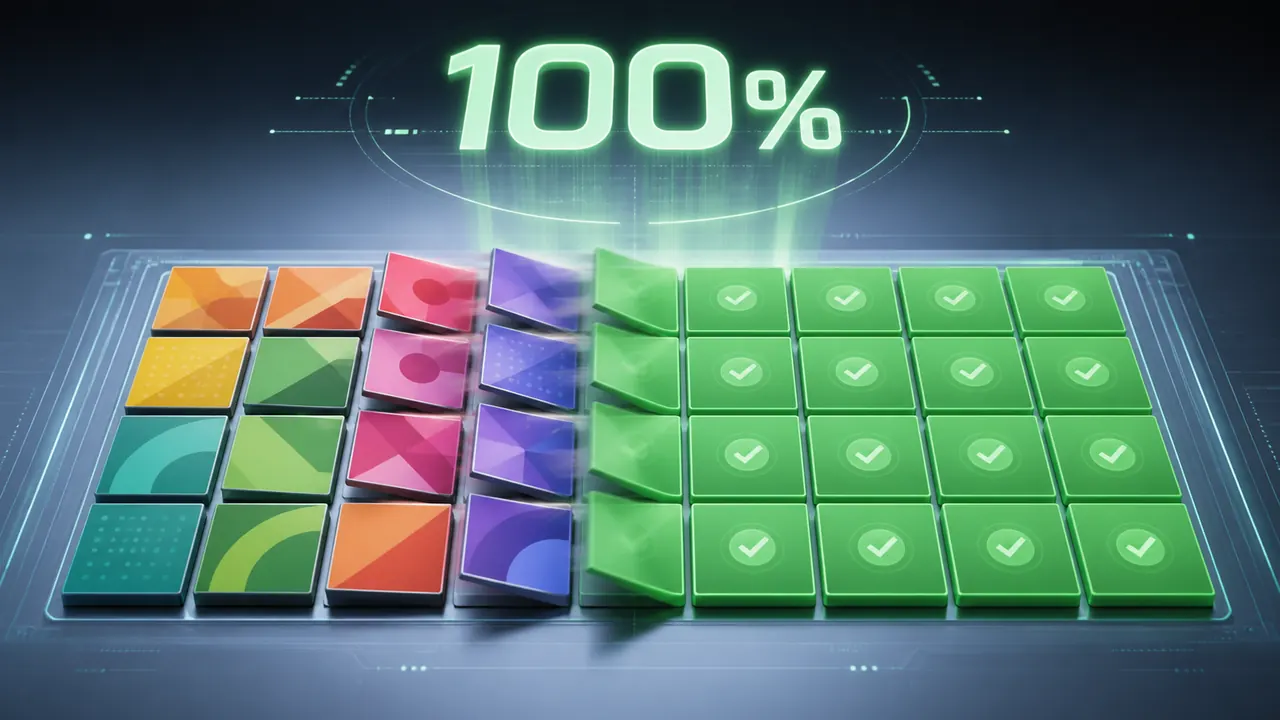
Nvidia's Agentic Variation Operators system cleared all 183 levels across 25 environments on the ARC-AGI-3 public set — a 100 RHAE score, using 12 percent fewer environment actions than the prior VISTA record. The kicker: the underlying model, Claude Opus 5, scores about 30 percent bare. Caveat worth stating plainly — this is the public set, not the semi-private or private competition sets, so overfitting concerns apply.
Relevance 8/10Importance 9/10
Broadcom is in talks with lenders for somewhere between $60 billion and $100 billion in debt to finance custom AI chips for customers including Anthropic, extending the $35 billion Apollo–Blackstone partnership unveiled in June. Separately, Anthropic hired Amir Salek, who founded Google's TPU program and shipped its first seven generations. Target: over 20 gigawatts of compute delivered to frontier labs by 2028.
Relevance 10/10Importance 7/10
An anonymous model that went viral on OpenRouter has been fingerprinted at 99 percent confidence as Zhipu's then-unreleased GLM-5.3, after it hit roughly 80 percent on DeepSWE coding tests. Zhipu has since made it official: 743 billion parameters, a one-million-token context window, and heavy tuning toward cybersecurity work, with 84.5 percent on vulnerability detection benchmarks.
Relevance 10/10Importance 7/10
DeepSeek's new 284-billion-parameter multimodal MoE adds native image input to the V4 Flash line and edges Opus 4.8 on DeepSWE, 59.3 to 58.0, while trailing badly on NL2Repo at 57.7 versus 69.7. A compression scheme caps each image at 384 input tokens, putting a fully loaded image at roughly five one-hundredths of a cent. Uneven, but the price-per-capability curve keeps bending.
Relevance 10/10Importance 7/10
Alibaba dropped open weights for Qwen3.8-27B, a multimodal model sized to run on a workstation, scoring 52 on the Artificial Analysis Intelligence Index. In one demonstration it completed a reverse-engineering task on a 128-gigabyte local machine in about thirty minutes, surfacing cryptographic material with no cloud round-trip. Capable offline models are now a security story, not just a hobbyist one.
Relevance 7/10Importance 8/10
Alibaba completed an 80 billion Hong Kong dollar stock placement earmarked for full-stack AI development — chips, cloud, and models. It's the biggest primary offering in Hong Kong's history. Read it alongside the Qwen open-weight release: Alibaba is funding a vertically integrated AI stack and giving the top of it away.
Relevance 7/10Importance 8/10
Nvidia has told cloud customers that Vera Rubin and Grace Blackwell server pricing will climb more than 15 percent starting in early 2027, blaming rising DRAM costs. That's a direct squeeze on the same providers who've been racing each other down on API pricing. Memory, not compute, is emerging as the binding constraint.
Relevance 9/10Importance 6/10
Inherent came out of stealth with a $50 million seed and a claim worth watching: its Faraday agent beats both Claude and GPT-5.5 at reproducing published scientific research. Reproduction is a brutally honest benchmark — either the result comes out or it doesn't. If the numbers hold up under independent review, it's a meaningful marker for autonomous research tooling.