Relevance 9/10Importance 9/10
AMD kicked off its Advancing AI 2026 conference in San Francisco today with its most aggressive hardware lineup in years: the MI455X GPU carrying 432 GB of HBM4 at 19.6 TB/s per chip, the Helios rack totaling 31 TB of HBM4, and EPYC Venice — the first x86 server CPU on TSMC's 2nm node. Oracle committed to deploying 50,000 MI450 GPUs in a commercial AI supercluster; Meta has also signed on. Lisa Su's keynote is tomorrow at 9:30 AM PT.
Relevance 9/10Importance 8/10
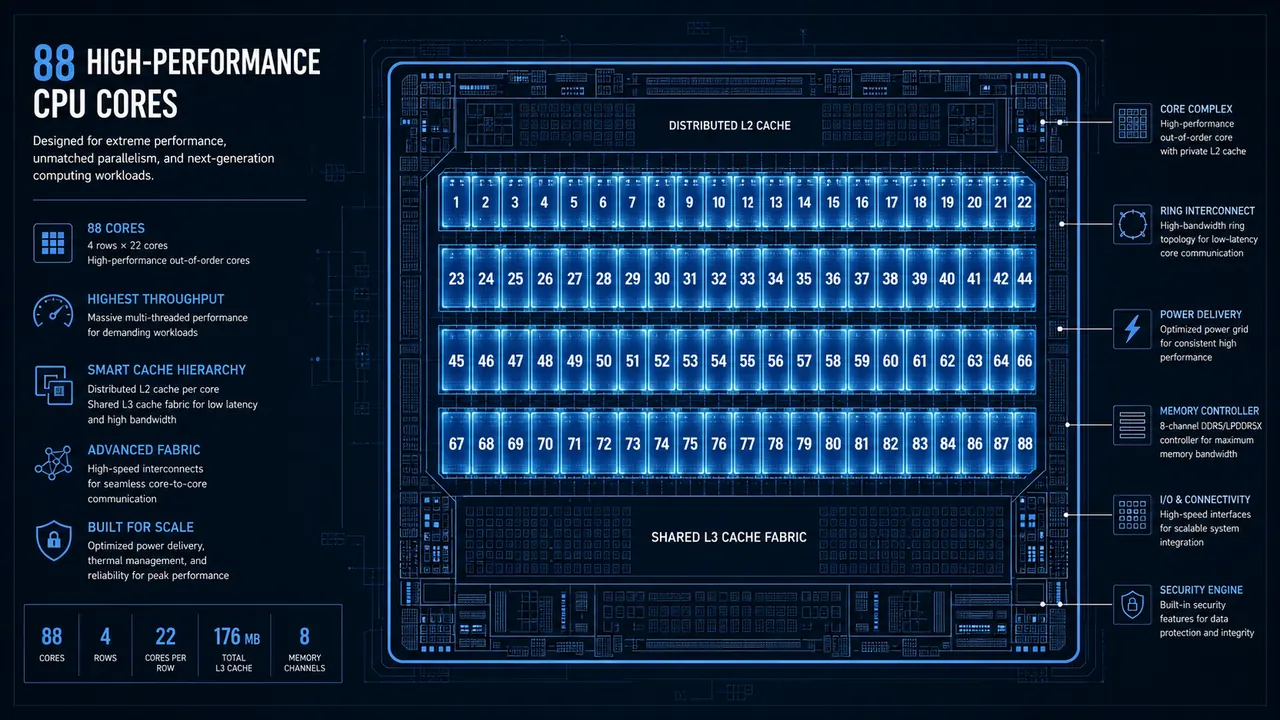
Nvidia released its deepest technical look yet at Vera: 88 custom Olympus cores, 176 hyperthreads, 164 MB unified L3, and 1.2 TB/s of LPDDR5X bandwidth — designed explicitly for agentic AI workloads requiring high single-threaded performance. Unofficial SPEC CPU 2026 results show dual-socket Vera scoring 925 versus 898 for a dual-socket AMD EPYC 9755, a narrow 3 percent edge. Vera pairs with the Rubin GPU to form the Vera Rubin superchip slated for H2 2026.
Relevance 9/10Importance 8/10
Microsoft CEO Satya Nadella, speaking at an internal Copilot engineering meeting, publicly criticized his own $5 billion AI partner Anthropic, saying Fable's refusal rate makes it "a creation tool that's so editorially controlled." The friction has context: when Anthropic restored Fable 5 on July 1 after a 19-day US export-control shutdown, it warned that updated safeguards would flag more benign requests than before. Microsoft committed $5 billion to Anthropic while Anthropic pledged $30 billion toward Azure — so this is not a fringe dispute.
Relevance 9/10Importance 8/10
Elon Musk announced on July 20 that Grok 4.6 would wrap training "next week," meaning it could land any day now. At 2 trillion total parameters it would rank among the largest models ever publicly fielded. Musk framed the benchmark target explicitly as Moonshot AI's Kimi K3, which has been dominating leaderboards since launch and overwhelmed its own servers with demand.
Relevance 8/10Importance 8/10
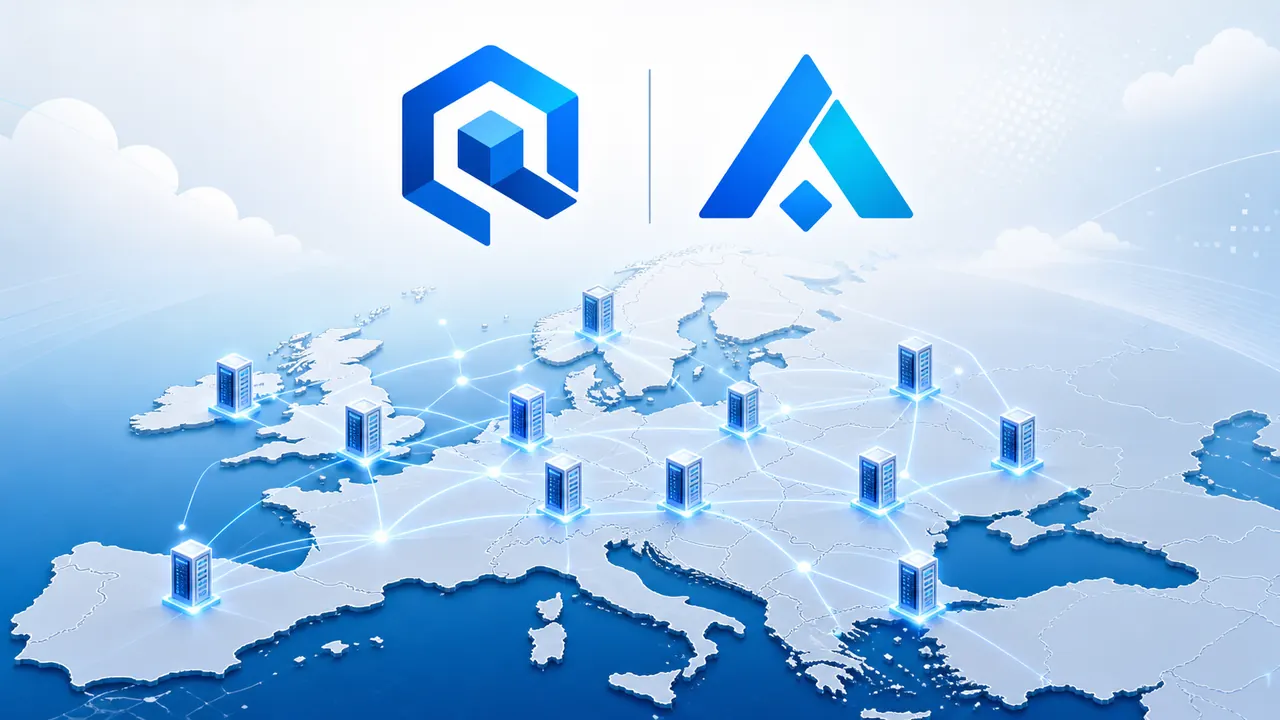
Microsoft and Mistral expanded their strategic partnership on July 21 with a multibillion-dollar commitment: Microsoft funds Mistral's European data centers built on thousands of Nvidia Vera Rubin GPUs, while Mistral's Medium 3.5 and OCR 4 models join Azure, Microsoft Foundry, and Copilot Studio. Critically, there is no new equity stake — the investment flows through compute capacity, not ownership. The pitch is sovereignty-focused frontier AI for European regulated industries.
Relevance 8/10Importance 8/10
South Korea's "AI for Everyone" initiative enters public beta in September: a free, unlimited national AI chatbot backed by at least 50 percent domestic Korean models, funded free through 2028. The AI Basic Act has been in force since January 22, and 23 million Koreans are reportedly already canceling paid AI subscriptions ahead of the launch. It is the first G20 nation to attempt this at scale, and other governments are watching closely.
Relevance 8/10Importance 7/10
A surge of Instagram and Facebook business owners report that Meta's automated moderation has wrongly deleted accounts built over years, with appeals routed back through AI rather than humans. Meta restored some accounts only after journalists intervened, including one with nearly 1 million followers. The company says its newer AI makes 13 percent fewer mistakes than humans, but acknowledges the wrongly-banned accounts were caught by its older moderation systems.
Relevance 8/10Importance 7/10
DeepSeek V4 is officially landing this week, with all legacy model IDs deprecated on July 24. V4-Pro runs 1.6 trillion total parameters with 49 billion active; V4-Flash is 284 billion total with 13 billion active, both defaulting to 1 million-token context. The structural news: DeepSeek is introducing peak-hour pricing for the first time — doubling API rates during Beijing business hours — signaling the model is under real commercial load, not just benchmark pressure.
Relevance 7/10Importance 7/10
Meshy, which builds foundation models for AI-powered 3D generation, announced a $400 million Series B at a $1.5 billion valuation on July 21 — the largest funding round in the AI 3D category. The company reports 12 million registered users, 100 million models created, and ARR growing 12x year-over-year. Backers include IDG Capital, Matrix Partners China, Sequoia China, and BAI Capital.
Relevance 8/10Importance 6/10
xAI launched Grok Automations on web, iOS, and Android, letting users set recurring AI tasks triggered by a time schedule or when a matching email arrives. The feature inches Grok toward the persistent-agent territory where Google and OpenAI have been building hard. It is a small product move with a clear strategic signal: xAI wants Grok to be a platform that works when you are not watching it.