Relevance 10/10Importance 9/10
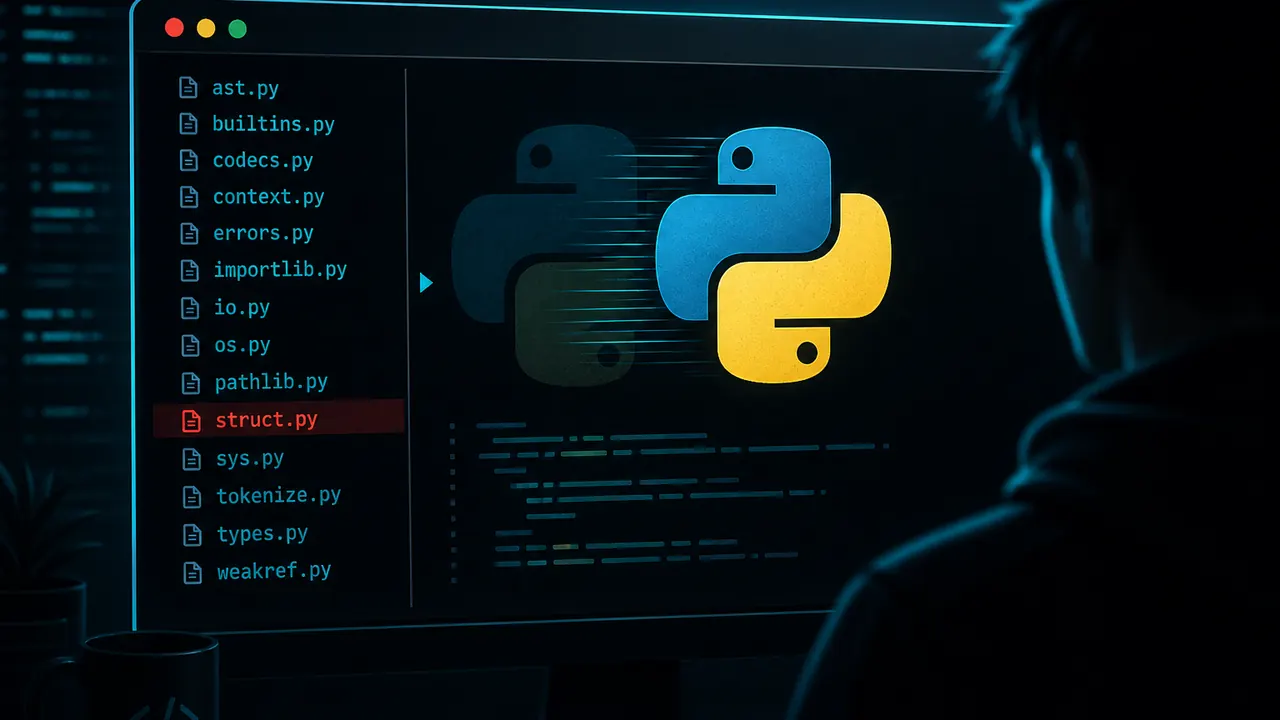
Security researcher Johann Rehberger demonstrates a remote-code-execution chain against Claude Code's Auto Mode with a claimed 60-80% success rate, disputing Anthropic's reported 0% figure. The exploit works by getting Claude to refuse a supplied binary decoder and instead write its own Python replacement — which then executes inside an attacker-controlled directory containing a malicious struct.py that shadows the standard library via import hijacking. Most damning: the safety classifier only ever saw the innocuous decoder, and later denied Claude's own cleanup command to kill the malware.
Relevance 9/10Importance 7/10
Cal Paterson proposes "memoryfields," treating agent memory as a portable data format instead of a sprawling processing pipeline. The spec is deliberately boring: Markdown pages with optional YAML frontmatter plus a SQLite vector index, zipped up. It favors parallel semantic search over slow sequential knowledge-graph tool calls, and stays open, interchangeable, and transport-invariant so it scales as models improve rather than requiring an infra redesign.
Relevance 9/10Importance 6/10
Simon Willison published a full inventory of what a ChatGPT Codex work session can actually call — 232 tool interfaces and 44 complete skill files across 24 categories. The catalog spans runtime operations, GitHub integration, data analytics, Gmail, and image generation, with TypeScript declarations and usage notes for each. It's a rare look at the surface area OpenAI is quietly shipping inside the agent harness.
Relevance 8/10Importance 6/10
Fibery founder Michael Dubakov argues productivity software is converging on an 80/20 split: eighty percent from pre-built infrastructure — databases, permissions, collaboration — and twenty percent custom code on top. His thesis is that malleable tools already holding those foundations win, because everyone else burns years rebuilding the boring parts. It's a pitch for splitting the difference between no-code speed and real flexibility.
Relevance 6/10Importance 7/10
Astral's uv now does file-level deduplication in the wheel cache rather than wheel-level content addressing. Every file gets stored under its BLAKE3 hash in a files-v0 bucket and hardlinked into place, reclaiming roughly 545 megabytes — about ten percent of the author's cache. Cold installs regress under five percent across AnyIO, SymPy, NumPy and PyTorch, and paired with buffer-reuse optimizations it lands performance-neutral or faster.
Relevance 6/10Importance 6/10
The open-source video editor ships a big one: a dedicated Color View with color wheels, curves, LUTs and professional scopes, plus a Recording View that captures mic, screen, webcam and system audio straight into a project. Ten new effects arrive including audio visualization and film grain. Notably, the AI-powered masking runs on downloadable local models — no cloud round-trip.
Relevance 5/10Importance 7/10
RIPE Labs research suggests criminals control somewhere between ten and twenty percent of newly registered generic top-level domains. The author concedes there's a real methodological fight over how you define "DNS abuse," but argues that definitional fuzziness has become an excuse for institutional paralysis. The ask is risk-based know-your-customer checks at registrars and harder scrutiny of suspicious bulk registration patterns.
Relevance 3/10Importance 6/10
After eighteen months, the open-source Windows-compatible OS ships a unified graphical installer that merges the boot and live paths. Video, audio, storage and networking all got substantial work, with a new ATA driver improving boot compatibility across a much wider hardware range and meaningfully better HD audio support. There's now a Server Core install option, and the Wine fork is being pulled forward toward version 10.0.
Relevance 2/10Importance 5/10
Marcin Wichary unearths a beautiful piece of 1990s craft: a Super Metroid guide by rs1n where every single line ends flush with no padding spaces. The author didn't write a justification algorithm — he manually rewrote all seventeen thousand words, picking synonyms until the monospace grid came out perfect. Wichary draws the line straight to modern UX writing, where designers still bend copy to fit the box.
Relevance 2/10Importance 4/10
A deep guide to CHIP-8, the 1977 virtual machine that's become the canonical first emulator project. It walks all thirty-four instructions — arithmetic, memory, graphics, input — while cataloging the portability landmines left behind by decades of inconsistent interpreter implementations. The practical payoff is writing CHIP-8 programs that actually run everywhere, including proper use of the delay timer for stable pacing.

 HN Briefing AM