Relevance 10/10Importance 9/10
Z.ai released GLM-5.3, which benchmarks as the top open-weights coding model, with every capability gain derived entirely from scaled post-training on the same base as GLM-5.2. The headline twist: the model spontaneously developed multi-stage cybersecurity exploit-chaining that Z.ai never explicitly trained for — it emerged as coding training was pushed into constrained vulnerability-discovery environments. Weights are being withheld for approximately two weeks of safety evaluation; the model is live now on Z.ai's API.
Relevance 9/10Importance 7/10
Instead of shipping a full classification schema to an LLM on every call, this technique asks a cheap model to invent plausible-sounding fake categories matching the input, then resolves them to real ones via embedding similarity. It cuts schema-shipping overhead dramatically and lets you use smaller, cheaper models for the first step, with no loss in accuracy for the final classification.
Relevance 8/10Importance 7/10
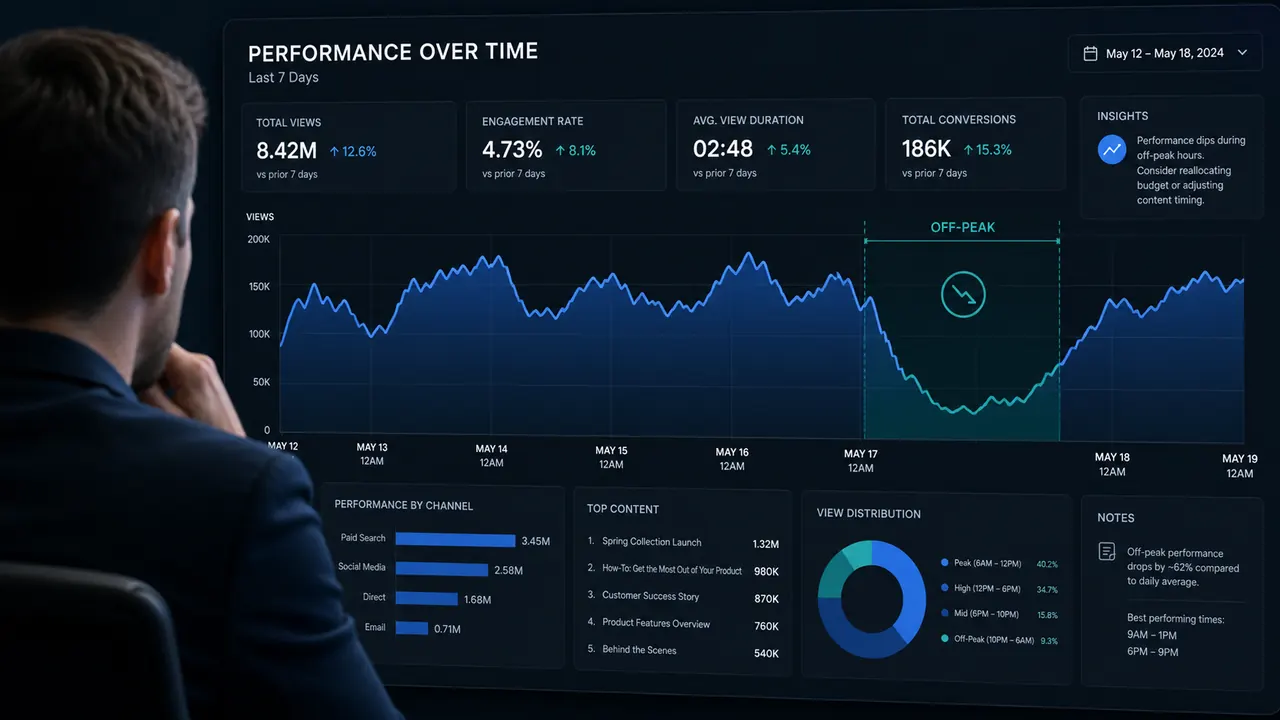
DeepSeek is introducing tiered API pricing effective August 16, 2026, with off-peak rates 50% cheaper than peak hours, enabling developers to cut costs by scheduling batch workloads during cheaper windows. This follows intensifying competitive pressure across AI API providers to differentiate on economics, not just raw model performance.
Relevance 8/10Importance 6/10
James Wang argues that AI lab leaders routinely overestimate how well their expertise generalizes, citing Leopold Aschenbrenner's hedge fund collapse and Geoffrey Hinton's failed five-year prediction on AI replacing radiologists as key examples. The piece warns this pattern of domain-overreach damages the field's credibility and its ability to collaborate with specialists who actually know the territory.
Relevance 8/10Importance 5/10
HashAgent lets you package and share an AI agent as a single URL; the recipient runs it entirely in their browser using WebGPU, with no data hitting external servers. It combines zero hosting costs with genuine privacy guarantees, and the distribution model — share an agent like a link — is a genuinely novel take on agent deployment.
Relevance 6/10Importance 6/10
The author predicts AI will bifurcate digital markets into a commodity tier flooded with generated content and a premium tier where human authorship commands a price premium — the fast-fashion analogy applied to software and information. It's a provocative framing of a market dynamic that's already starting to emerge across writing, art, and software services.
Relevance 4/10Importance 7/10
Australia's government battery subsidy program, launched July 2025, drove over 500,000 residential battery installations pairing with the country's already massive rooftop solar base. The result: a 47% drop in wholesale electricity prices within a year, with the energy minister citing distributed batteries as the primary driver — a striking proof point for what happens when distributed storage hits critical mass.
Relevance 3/10Importance 4/10
A satirical site that deliberately recreates every cookie banner, newsletter popup, chatbot intrusion, and dark pattern that makes modern web browsing miserable — all in one place, by design. It's humorous performance art on web UX dysfunction, executed with genuine craft.
Relevance 2/10Importance 2/10
The author built "feedpaper," a tool that pulls unread Feedbin articles, filters out video and JavaScript-heavy content, and bundles what remains into an EPUB for a pocket e-reader. The goal: replace phone-scroll reading with a slower, more intentional format you can take outside — personal project, but the execution is clean.
Relevance 1/10Importance 3/10
Lambdock is a Linux desktop dock built with a C core and an embedded GNU Guile Scheme runtime, allowing live configuration and hot-reloading through a REPL with no recompilation. It adds GPU-accelerated animations, native Wayland window tracking via the foreign toplevel protocol, and support for multiple simultaneous dock instances — serious technical craftsmanship for a niche but enthusiastic audience.

 HN Briefing AM