Relevance 10/10Importance 9/10
AI systems — OpenAI's Sol and Anthropic's Fable — have now disproven three major open mathematical conjectures including the Erdős Unit Distance conjecture and the Jacobian Conjecture, all with proofs formally verified in Lean. Kevin Buzzard at the Xena Project documents the pace at which AI is finding counterexamples faster than human mathematicians, coining the term "outcounterexampled." The formal verification step makes these results mathematically rigorous, not just plausible AI outputs.
Relevance 10/10Importance 9/10
Cursor published research showing that separating planning (frontier model) from execution (fast, cheap model) dramatically outperforms single-model approaches — their swarm hit 80% test suite completion building SQLite from scratch in four hours while the naive approach failed under two. The cost difference is staggering: $1,339 for the hybrid versus $10,565 for GPT-5.5 alone. Better coordination architecture, not raw model capability, is emerging as the real competitive advantage in AI engineering.
Relevance 9/10Importance 9/10
Ben Werd argues that China's strategy of releasing open-weight AI models is outcompeting America's locked-down proprietary approach because AI models have no durable moat — they're easily swapped. By releasing models freely, Chinese companies enable permissionless innovation across every sector, while US firms optimize for short-term licensing revenue. As the performance gap narrows, this strategic asymmetry becomes increasingly costly for American AI dominance.
Relevance 9/10Importance 8/10
Researchers at Unslop analyzed 12,750 arXiv papers and found roughly one-third of recent submissions exhibit machine-written characteristics, with computer science papers at 65% and math near 0.7%. The measurement is acknowledged as a lower bound — the detector can't distinguish lightly-edited AI text from fully human-written work, and math papers may score low due to LaTeX-heavy prose confounding the classifier. Even as a floor estimate, those numbers are hard to ignore for anyone thinking about scientific publishing integrity.
Relevance 9/10Importance 8/10
Kimi Work is a new desktop AI agent from Moonshot AI that bills itself as a "system-level digital employee" for knowledge workers, combining autonomous web browsing, background Python execution, local file integration, and a built-in Cron engine for scheduled tasks. Privacy is addressed through explicit user authorization before any file modifications occur. It targets the same multi-step workflow automation space many Western AI startups are chasing, and it's a polished product launch.
Relevance 10/10Importance 7/10
Nativ is a fully open-source (MIT license) Mac app that runs frontier-class open models entirely on Apple Silicon using MLX-VLM, with zero accounts, zero subscriptions, and zero cloud data sharing. It features curated model access from Google (Gemma), Cohere, and Liquid AI with streaming responses and per-message performance metrics. It directly addresses the growing demand for AI capability without the associated surveillance and subscription surface area.
Relevance 8/10Importance 7/10
Bloomy is a Y Combinator S26 startup building an AI-powered mastery learning platform for K-12 students, rooted in the "Bloom 2-sigma problem" — the finding that one-on-one tutoring dramatically outperforms classroom instruction. Their BloomyBot tutor uses Socratic scaffolding rather than handing over answers, and students must hit 90% proficiency before advancing to the next skill. It's a disciplined and well-considered take on AI in education from a crowded but high-stakes space.
Relevance 1/10Importance 5/10
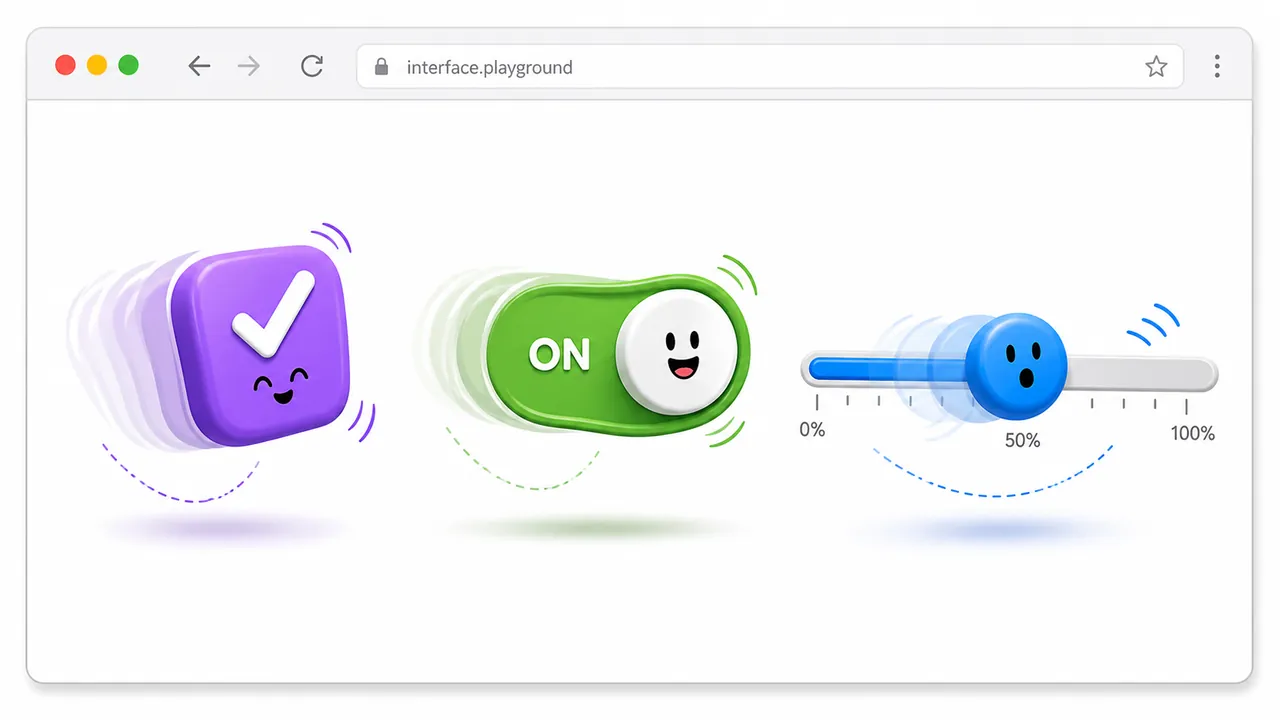
Jelly UI is a dependency-free Web Components library that applies soft-body physics to native HTML form elements — checkboxes, sliders, and buttons that squish, bounce, and wobble. It ships with 40 custom elements, built-in dark mode, RTL support, and WCAG AA accessible color tokens, all via a single script tag. It's delightful, it's polished, and it scratches a very specific creative itch in frontend development.
Relevance 1/10Importance 5/10
Hyprland 0.55 replaces its custom HyprlangConfig format with Lua, moving from declarative settings to full procedural scripting that lets users define custom layouts directly in configuration. The release also adds ICC color profile support, FP16 renderer precision, improved fullscreen scrolling support, and a new Layout API. The old format remains supported during transition, making this a major but non-breaking evolution for the popular Wayland tiling compositor.
Relevance 2/10Importance 4/10
Sean Barrett's 2012 classic is resurfacing today: a systematic photo-based takedown of how game engines implement SSAO, showing that real-world corners darken far more subtly than any typical SSAO implementation produces. Barrett did pixel-level measurements of actual photographs and found the effect is minor and inconsistent, while rendered SSAO corners look like someone smudged them with ink. The piece is fourteen years old and game engines still ship with overtuned SSAO — some things never change.

 HN Briefing PM