Relevance 10/10Importance 10/10
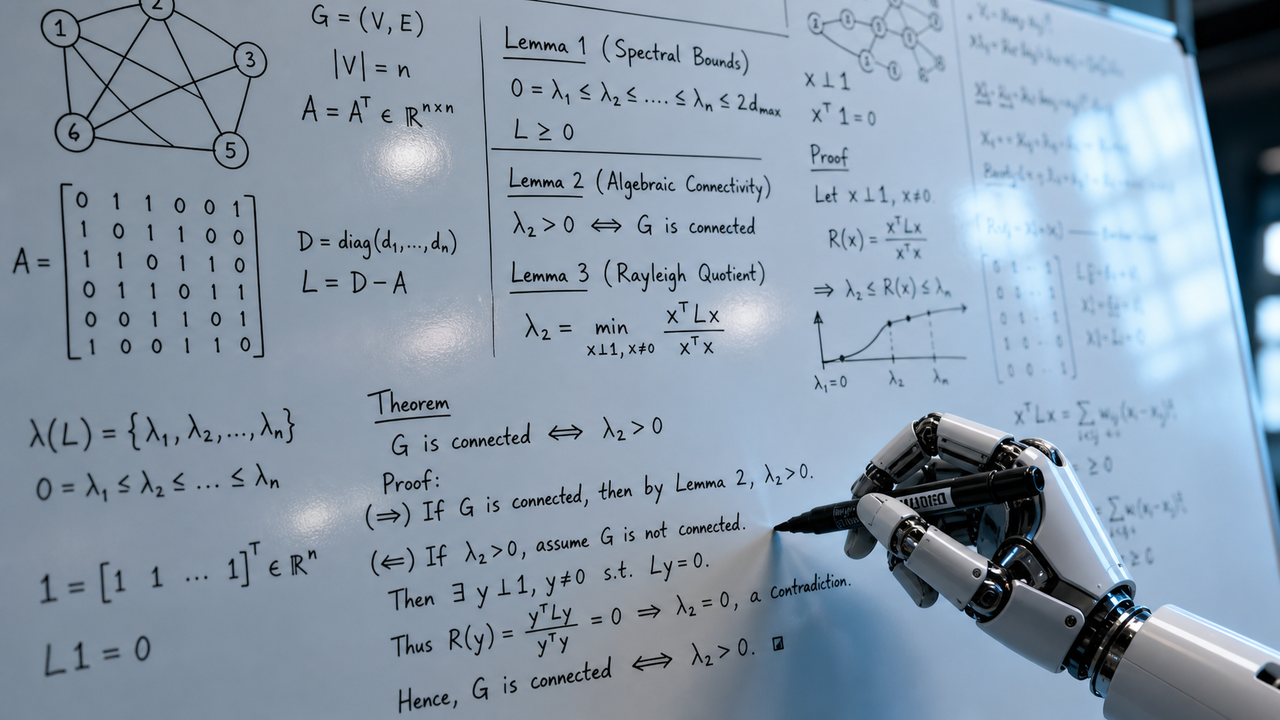
OpenAI is claiming GPT-5.6 Sol Ultra produced a proof of the Cycle Double Cover Conjecture — a decades-old open problem in graph theory — in under an hour using 64 parallel subagents. The proof runs just three pages and is said to exploit "a clever trick that somehow all the experts missed." The math community is cautiously intrigued but formal verification in a proof assistant like Lean is still absent, and some commenters flagged potentially fabricated references.
Relevance 8/10Importance 9/10
A new report from the Centre for the Analysis of State Practices documents systematic use of frontier AI — ChatGPT, Claude, Gemini, Grok, Meta AI, and DeepSeek — by Boko Haram operatives for attack planning, weapons troubleshooting, and IED design. The adoption is organized through dedicated units and internal training programs, with knowledge spreading across transnational jihadist networks. The researchers conclude that terrorist AI adoption has "advanced further and more systematically than prior analysis has recognized."
Relevance 10/10Importance 7/10
A benchmark from tryai.dev pitted 12 AI models against four coding tasks: a Doom-style raycaster, a 3D Rubik's Cube, a calculator, and Conway's Game of Life. GPT-5.6 Sol dominated complex tasks, Claude Fable 5 excelled on the Rubik's Cube, and Grok 4.5 emerged as a cost-effective frontier alternative. Open-source models kept pace on simple, well-documented tasks but fell behind when complexity got novel.
Relevance 10/10Importance 6/10
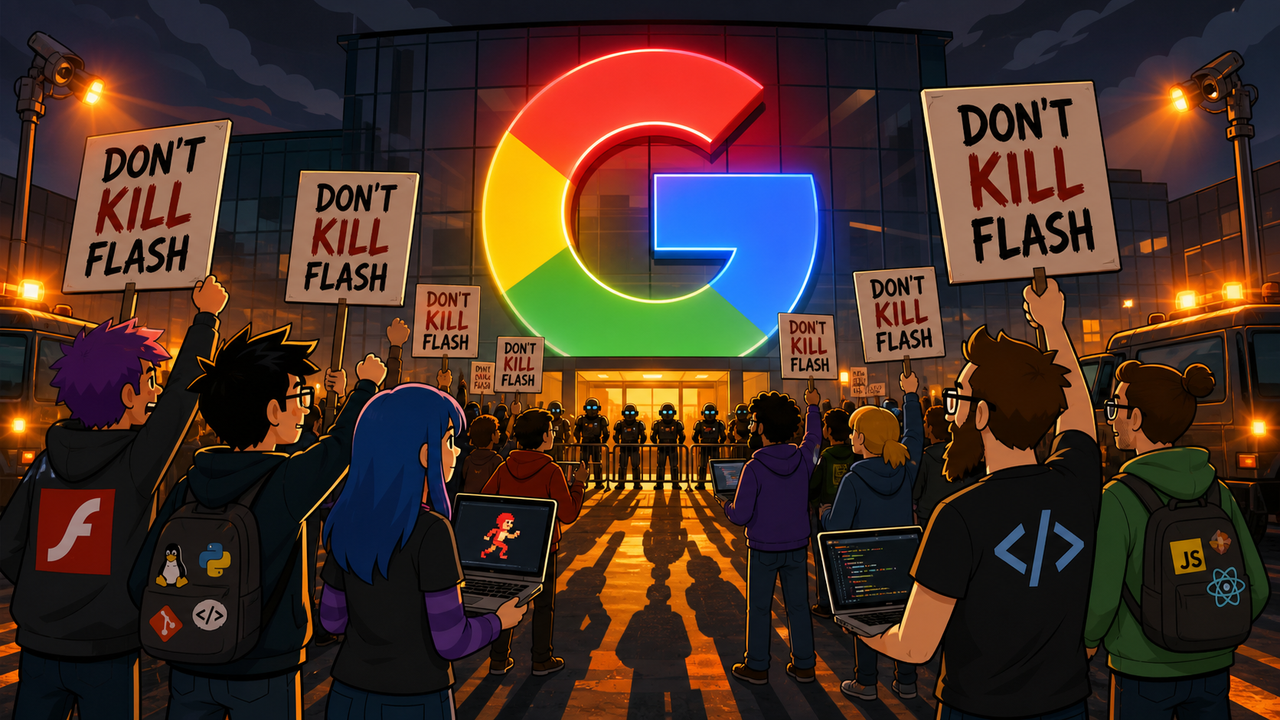
A developer forum thread on Google's AI discussion board is rallying opposition to the planned discontinuation of Gemini 2.5 Flash. Developers report the model's latency-to-performance ratio is unmatched — especially in regions like Australia where 300-400ms response times make it uniquely viable for voice agents, while the successor clocks in at 600-800ms. The thread highlights a persistent tension in AI tooling: companies racing to ship new models while developers who've built production systems on existing ones face costly migration with no comparable alternative.
Relevance 3/10Importance 8/10
New York City is moving to require that subscription cancellation be as easy as sign-up and that all mandatory fees be disclosed upfront at the point of sale. The Mamdani administration's proposal covers gyms, SaaS tools, streaming services, event tickets, and apartment listings — targeting dark patterns like hidden fees, retention funnels, and missing renewal reminders. This directly affects every subscription-based startup doing business in NYC, and if it catches on, more cities will follow.
Relevance 3/10Importance 6/10
Jeff Geerling's QuadRF is a 4x4 MIMO software-defined radio with phased array technology that visualizes radio frequency signals in real time, creating what he calls "RF augmented reality" overlaid directly on a live camera feed. It can detect drones by their RF control signals in the 4.9-6 GHz band and map WiFi networks as heat maps right through walls — the whole kit costs around $500 and is open-source on Crowd Supply. What previously required military-grade equipment is now a maker project.
Relevance 6/10Importance 2/10
Moss is a YC F25 startup building real-time semantic search with sub-10ms retrieval for conversational AI applications — running in the browser, at the edge, on-device, or in the cloud — already serving 5M+ voice minutes across 100+ countries. They're hiring a Senior or Staff SDK Engineer with Rust expertise to maintain production SDKs across seven languages including JavaScript, Python, Swift, Android, Elixir, C, and Rust. Compensation ranges from $60K to $300K plus equity.
Relevance 3/10Importance 5/10
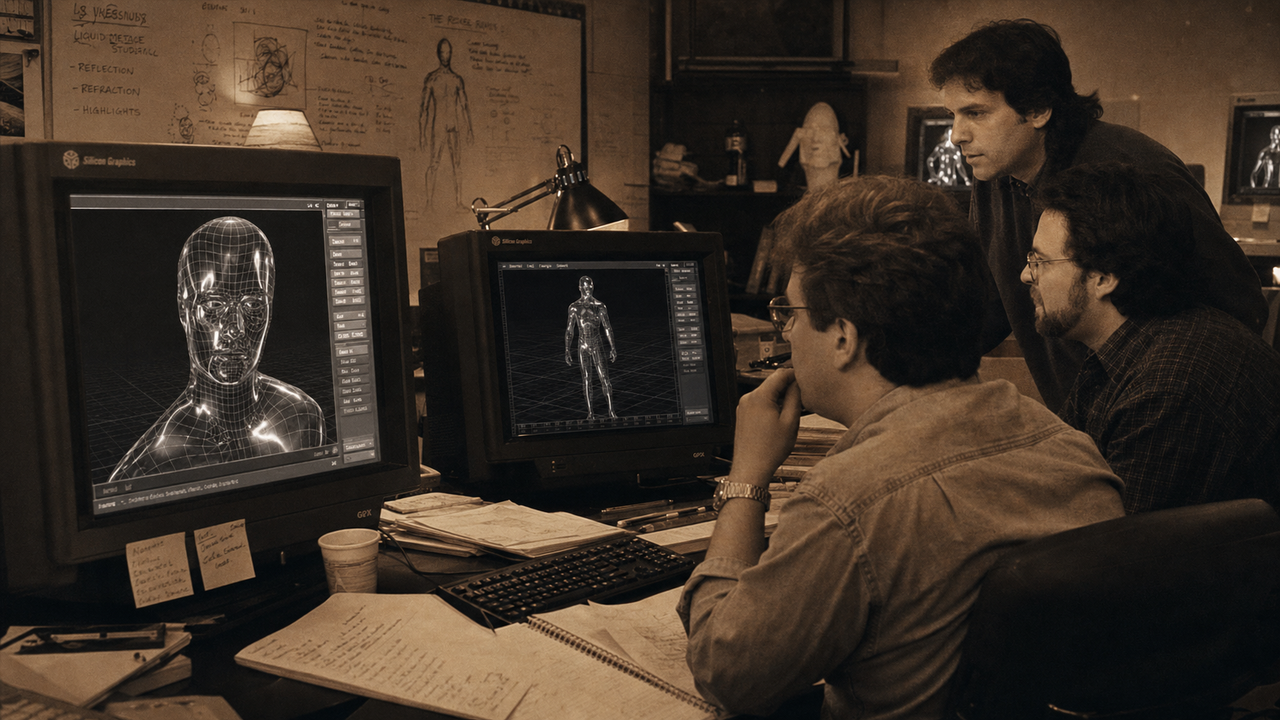
This 2017 VFXBlog oral history covers how ILM's team had to invent most of their tools from scratch to produce the liquid-metal effects in Terminator 2. Key innovations included the "Body Sock" tool for smooth animated surface stitching, model interpolation for the T-1000's five transformation stages, and a custom "poly alloy" shader that simulated mercury-like reflectance — none of which existed in commercial software at the time. It's a timeless story about what happens when the problem you need to solve is harder than any existing tool can handle.
Relevance 2/10Importance 5/10
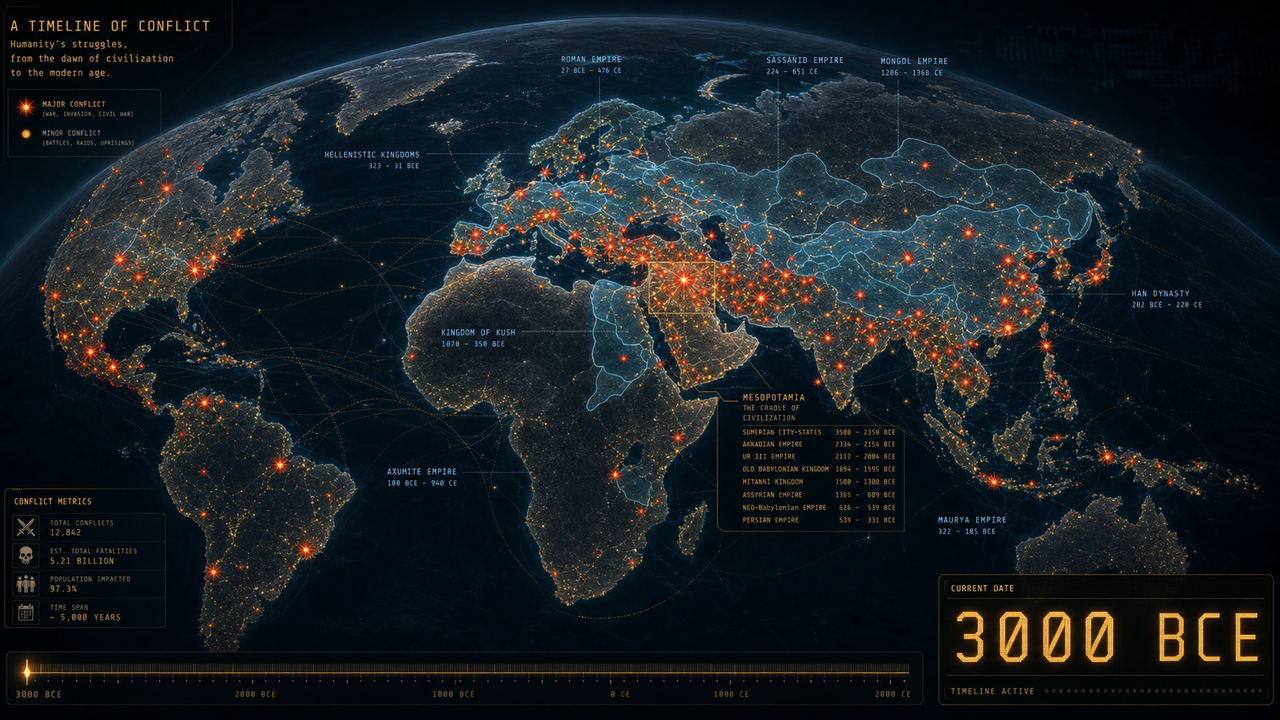
War Atlas is an interactive map documenting 10,584 recorded military conflicts across 5,000 years of human history, paired with 427 reconstructed empire borders, casualty estimates, and primary-source citations. Users can scrub a timeline from 3000 BCE to the present, filtering by region and watching empires rise and fall. It's the kind of deeply ambitious solo data project that HN consistently surfaces and celebrates.
Relevance 1/10Importance 4/10
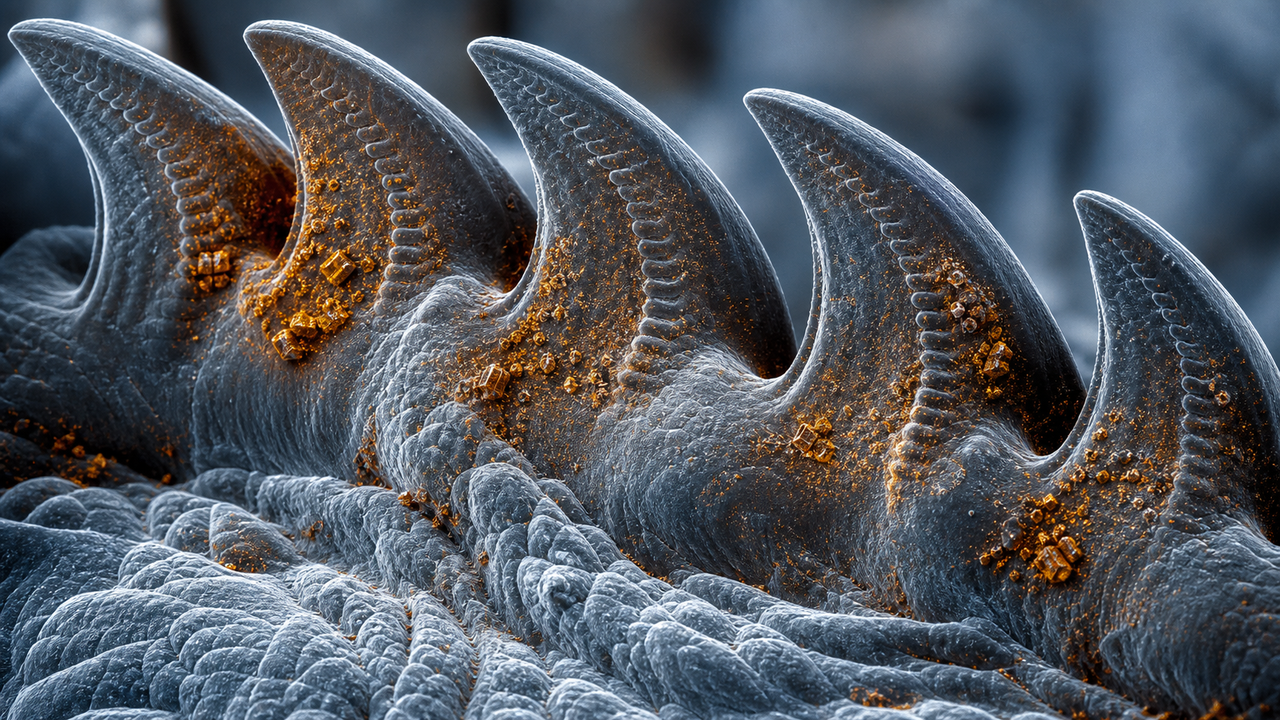
This 2015 Smithsonian piece resurfaced on HN: snail teeth, made of goethite nanofibers (an iron-containing crystal) embedded in a protein matrix, are roughly five times stronger than most spider silk, dethroning the previous record holder. The structure can withstand extreme stress while remaining flexible, and engineers are studying it as a blueprint for next-generation composite materials. Nature solved the "strongest material" problem millions of years before we thought to look at a limpet's mouth.

 HN Briefing PM