Relevance 10/10Importance 10/10
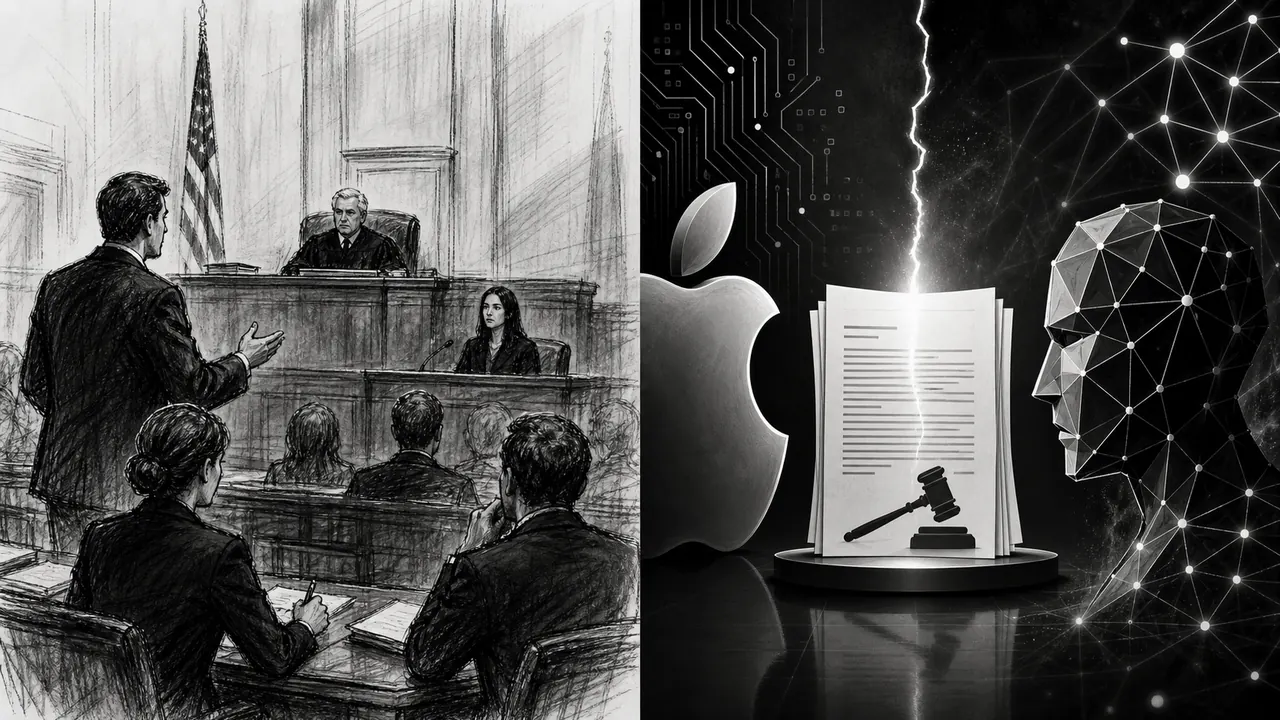
Apple filed a lawsuit against OpenAI alleging former employees walked out the door with CAD files, circuit board manufacturing documents, design specs, and internal project codenames. The complaint names ex-VP of product design Tang Tan — who joined Jony Ive's design startup before OpenAI acquired it for $6.5 billion — and senior engineer Chang Liu, and claims OpenAI leadership "normalized and exemplified" the misconduct. With over 400 former Apple employees now at OpenAI, this is the most explosive legal filing in the AI industry in years.
Relevance 10/10Importance 8/10
I.J. Good's seminal 1965 paper that introduced the concept of the "intelligence explosion": a machine smart enough to surpass human ability at designing machines would trigger an exponential runaway, which Good called "the last invention that man need ever make." Written 60 years before current AGI debates, the paper anticipates recursive self-improvement, alignment risk, and virtually every concern dominating AI discourse today. Its appearance on HN the same day Apple sued OpenAI is not going unnoticed in the comments.
Relevance 8/10Importance 7/10
LWN digs into how residential proxy networks — criminal botnets and quasi-legitimate VPN services alike — are being used to scrape web content for AI training at industrial scale, with each request appearing as an ordinary home-IP browser visit. CAPTCHAs and proof-of-work defenses are ineffective when attackers control millions of devices, and those countermeasures primarily harm legitimate users. The piece argues this arms race could push the open web toward walled gardens permanently, not by policy but by necessity.
Relevance 5/10Importance 7/10
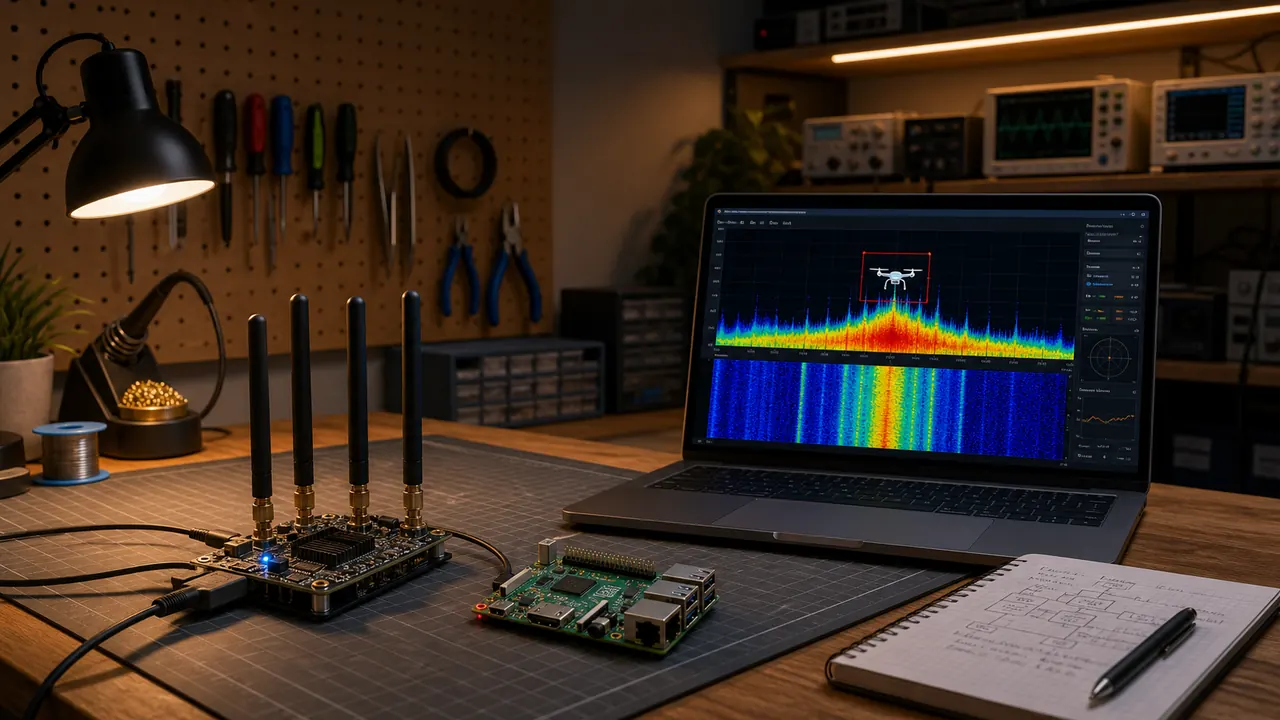
Jeff Geerling reviewed the QuadRF, a $499 phased-array SDR device built on a Raspberry Pi 5 and an FPGA with four coherent antennas clocked to picosecond-level timing, rendering a live RF overlay at 30fps on a phone or laptop. He flew a DJI Mini Pro 4 drone behind his studio and watched the QuadRF track it in real time, then watched WiFi signals moving through his walls. Radio-frequency awareness that used to require a military-grade budget now ships in a kit from Crowd Supply.
Relevance 5/10Importance 6/10
Google added "platform properties" to Search Console, giving creators a unified view of how their Instagram, TikTok, X, and YouTube content performs in Google Search and Discover — clicks, impressions, top queries, and growth milestones — with no personal website required. It's Google positioning itself as the measurement layer for the creator economy, pulling social platforms' content into its own analytics infrastructure. Quiet feature, significant strategic move.
Relevance 2/10Importance 7/10
Brown University chemists published research in Science showing that relativistic effects fundamentally alter triple bond structure in heavy elements like bismuth — electrons traveling at a significant fraction of light speed blur the classic sigma/pi bond distinction, producing "one pi and two hybrid sigma-pi bonds" instead of the textbook configuration. The lead researcher described it as: "The boundary between a sigma bond and a pi bond is now sort of smeared." The findings have real implications for bismuth-based solar cells and quantum materials.
Relevance 5/10Importance 3/10
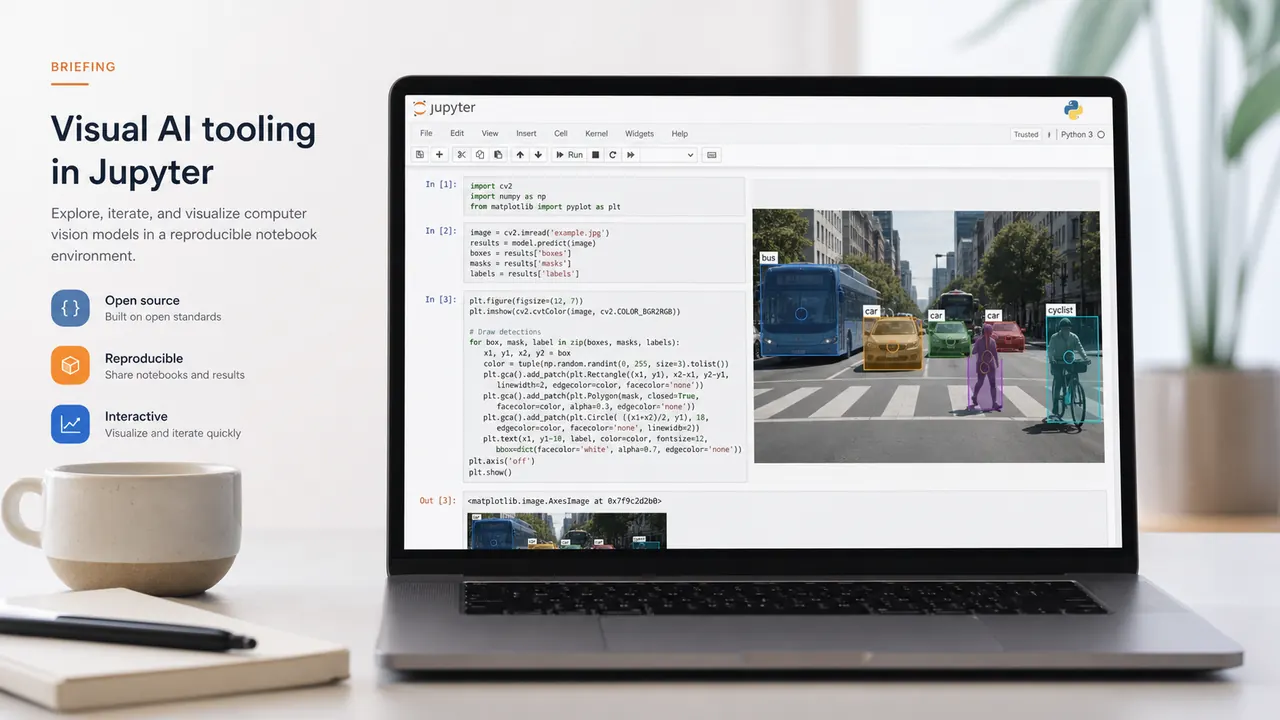
Otary is a Python library combining image processing and geometric computation in a single API, letting developers work with spatial shapes and image data in the same workflow. Newly released tutorials cover image loading and cropping, shape and intersection analysis, OCR, and key information extraction. It targets the gap between image libraries like Pillow and full geometry engines, aimed at Python developers working in computer vision and document processing.
Relevance 3/10Importance 4/10
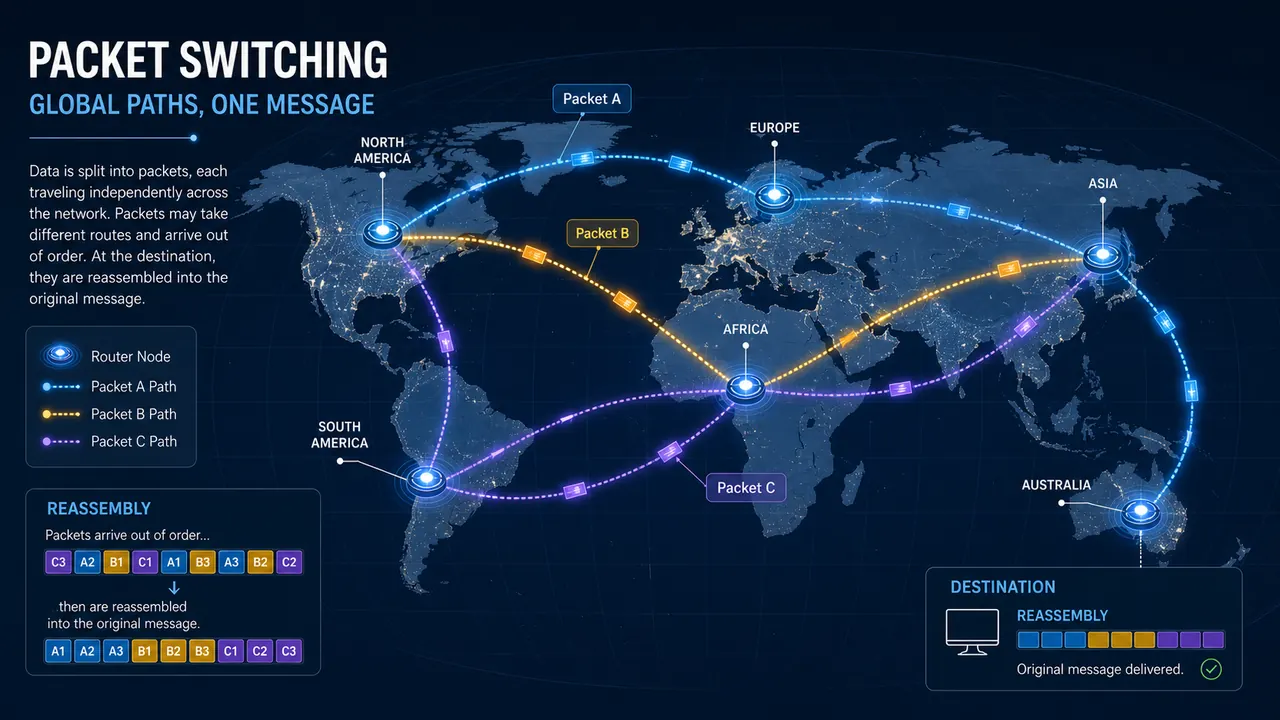
A thorough first-principles walkthrough tracing how the internet works from telegraph regeneration through packet switching, TCP/IP, BGP, DNS, CDN, NAT, and DHCP. Its central insight: the internet's reliability isn't engineered top-down but emerges from billions of local decisions — congestion control, collision avoidance, route announcements — with no central coordinator. A strong reference piece for anyone building a foundational mental model of the infrastructure underneath everything else we discuss here.
Relevance 3/10Importance 4/10
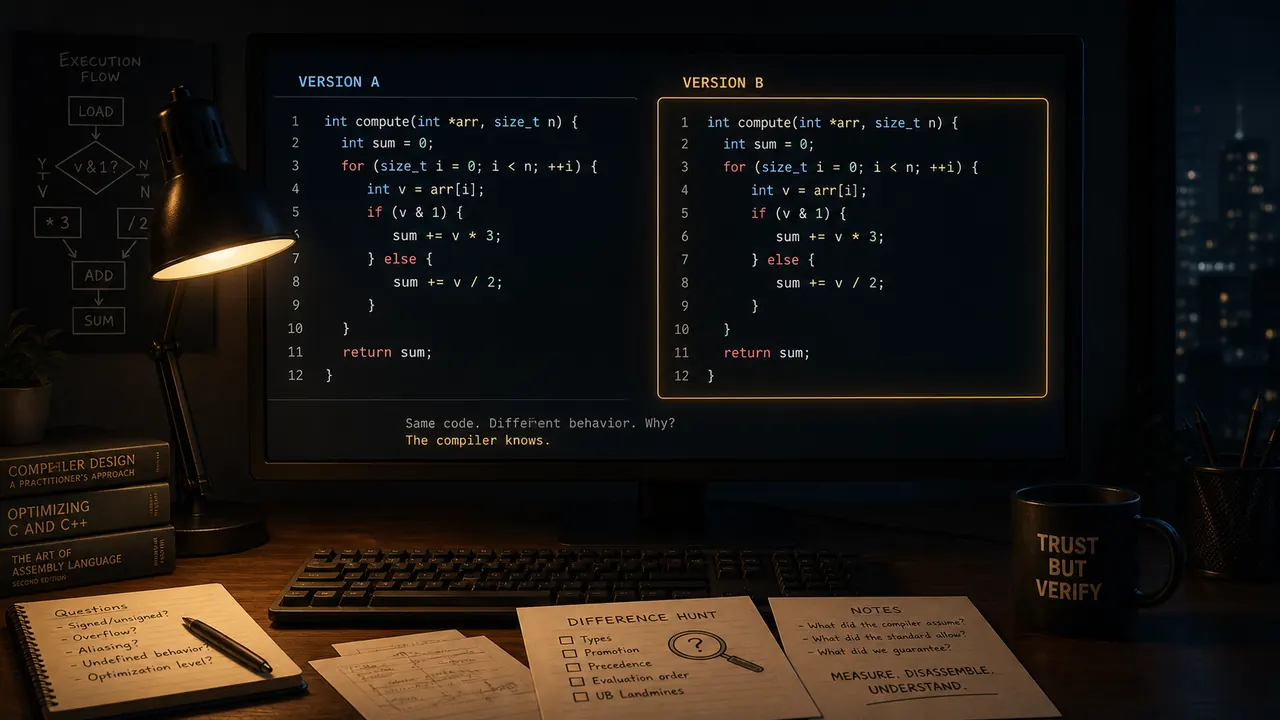
A sharp C performance deep-dive showing that a purely stylistic rewrite — changing a conditional pointer increment to a post-increment idiom — caused Clang to switch from branch-based to branchless machine code, yielding a 6.2x speedup in a quicksort implementation that then outpaced C++'s std::sort. GCC does not make this optimization regardless of how you write the source. The conclusion: code performance on hot paths can hinge on whether your compiler happens to recognize your particular idiom as branchless-eligible.
Relevance 4/10Importance 3/10
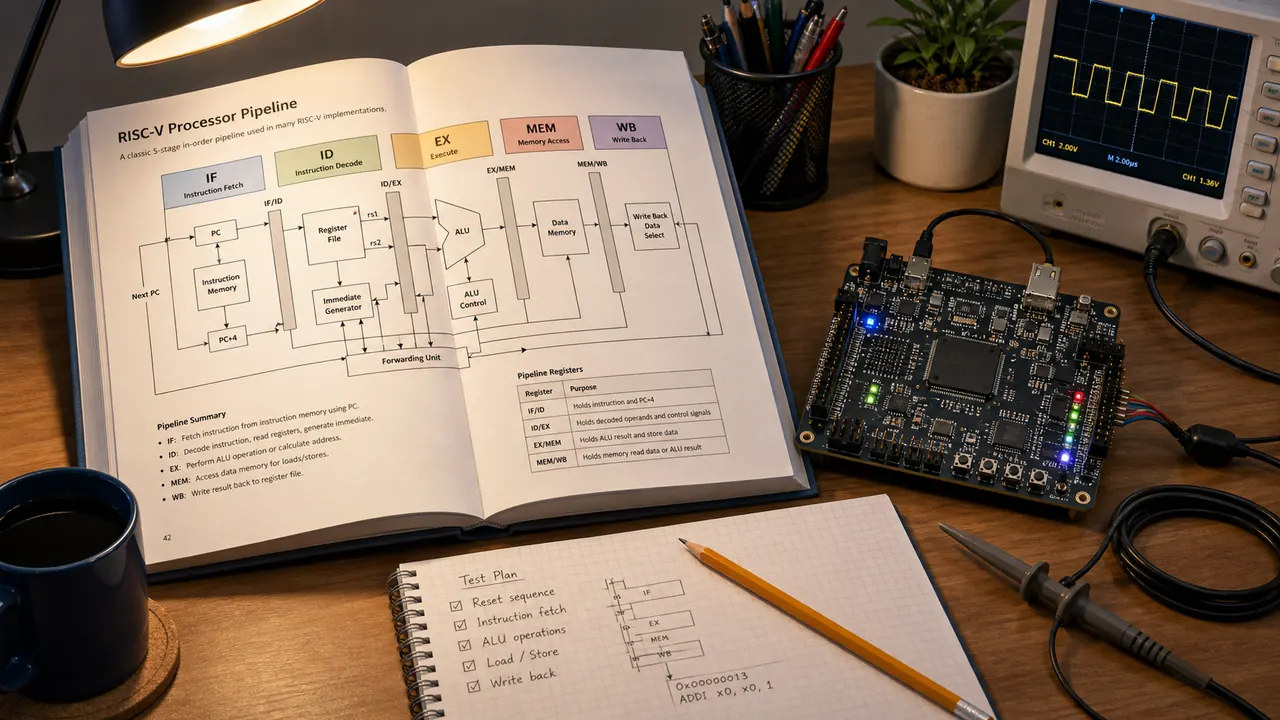
A new textbook by David Harris, James Stine, Sarah Harris, and Rose Thompson covering full processor and SoC design using the open-source RISC-V instruction set. By teaching chip design on a freely available ISA rather than proprietary architectures, the book democratizes hardware education at a moment when custom silicon — AI inference chips, edge devices, embedded systems — has become more strategically valuable than at any point in the past two decades.

 HN Briefing AM