Relevance 10/10Importance 9/10
After missing three launch deadlines and a full architectural restart, Google's Gemini 3.5 Pro has hit general availability today. The model carries a 2-million-token context window, Deep Think reasoning on the Ultra tier, and API pricing around $1.25 input / $10 output per million tokens — landing squarely in the premium frontier tier alongside Claude Sonnet 5 and GPT-5.6. Google has not officially confirmed all specs, but the rollout appears to be underway.
Relevance 9/10Importance 9/10
On the sidelines of WAIC in Shanghai today, 29 countries including Indonesia, Brazil, Russia, Pakistan, South Africa, Cuba, and Venezuela signed the charter establishing the World Artificial Intelligence Cooperation Organization — a permanent intergovernmental body headquartered in China. UN Secretary-General Guterres attended the signing. The US has no equivalent multilateral proposal on the table.
Relevance 10/10Importance 8/10
Meta just made its first real move into paid frontier AI APIs with Muse Spark 1.1 — a multimodal agentic model with 1M-token context, computer use across desktop, browser, and mobile, and support for parallel subagent delegation. Pricing is $1.25 input / $4.25 output per million tokens, with $20 in free credits and US-only availability to start. This is Meta directly contesting Anthropic and OpenAI on enterprise API ground for the first time.
Relevance 10/10Importance 8/10
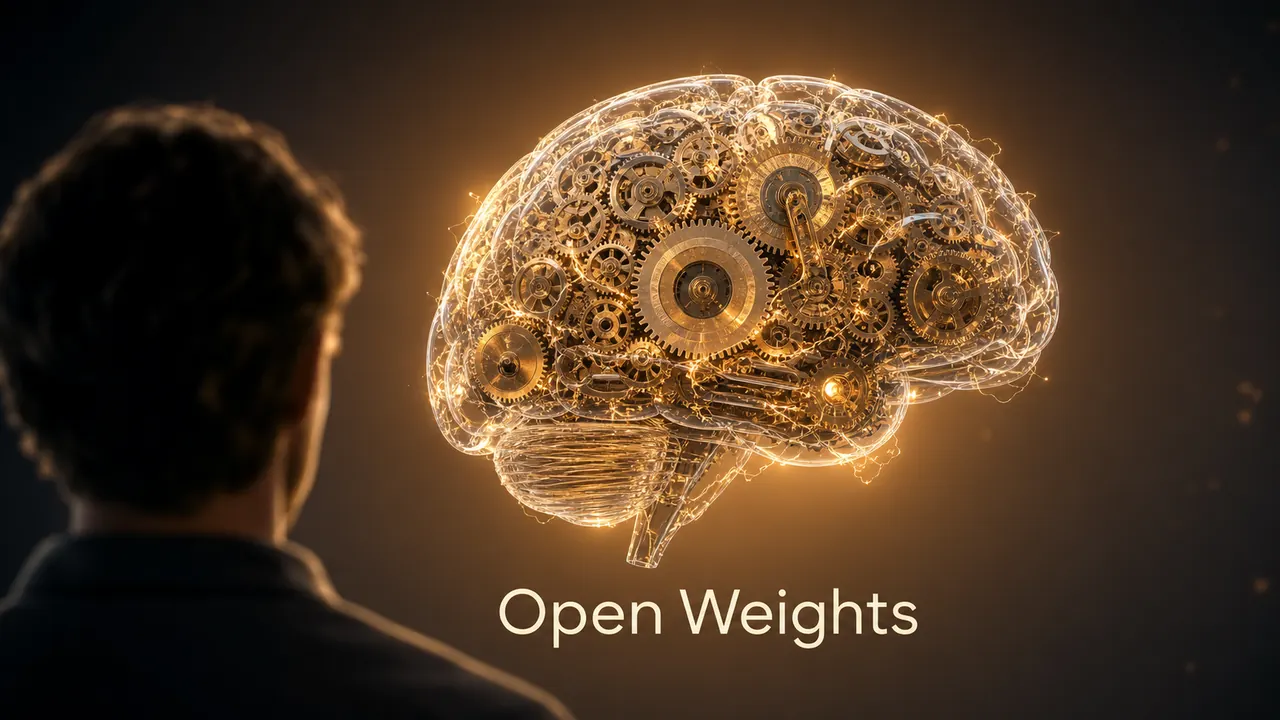
Former OpenAI CTO Mira Murati's startup dropped its first model this week: Inkling, a 975B-parameter MoE (41B active per token) trained on 45 trillion tokens of text, image, audio, and video, and released as open weights on Hugging Face. Murati is explicitly not positioning it as the strongest model available — the pitch is maximal customizability for enterprise fine-tuning via the company's Tinker tool. Bridgewater Associates is among early customers.
Relevance 9/10Importance 8/10
Anthropic, Blackstone, and Hellman and Friedman jointly launched Ode with Anthropic this week — a $1.5B professional services company that embeds forward-deployed AI engineers inside enterprises to own implementations end-to-end. Goldman Sachs, General Atlantic, Apollo, Sequoia, and GIC are also investors. Operating Claude-first but model-agnostic when needed, Ode mirrors OpenAI's deployment services play and signals that frontier labs believe the services layer is as strategically important as the models themselves.
Relevance 7/10Importance 9/10
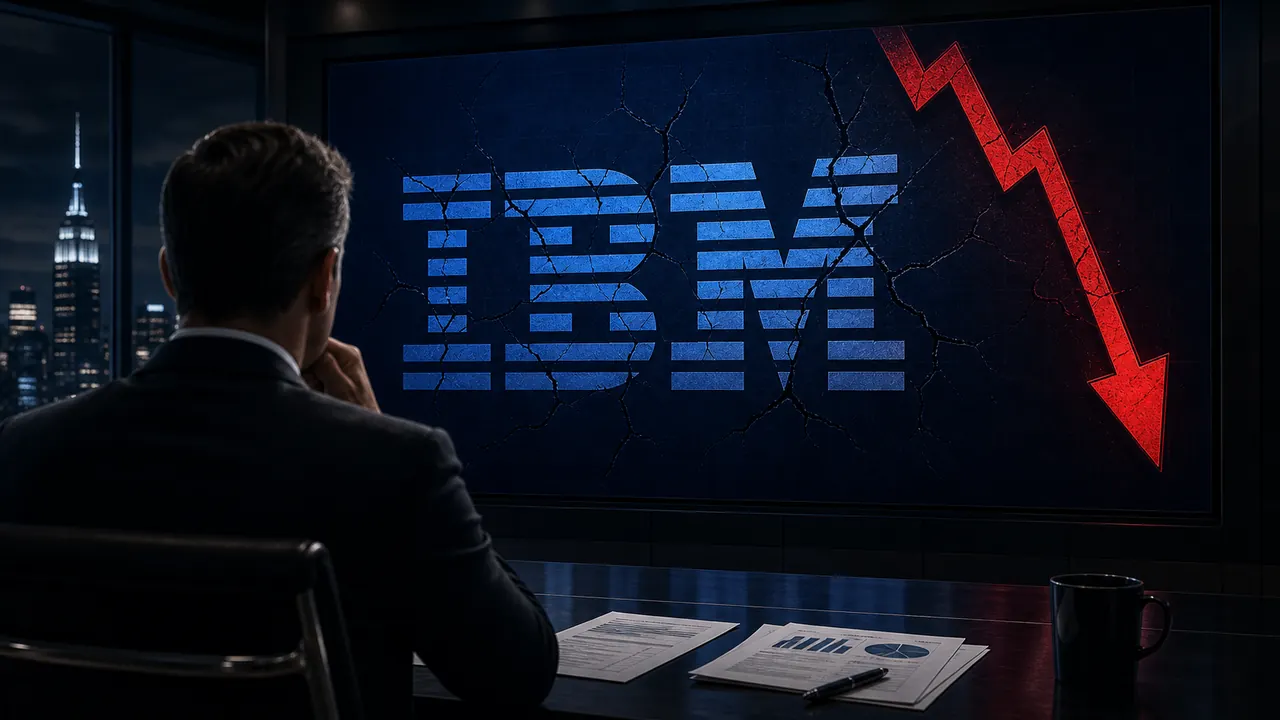
IBM pre-announced Q2 results last week that missed on both EPS ($2.93 vs. $3.01 expected) and revenue ($17.2B vs. $17.86B), triggering a 25% single-day drop — its worst ever, worse than Black Monday 1987 — erasing roughly $68.8B in market cap. CEO Arvind Krishna said enterprise clients dramatically redirected late-June spending away from IBM software and infrastructure toward AI hardware. Bloomberg is calling it "a hammer slamming down on tech's AI outsiders," and Citi flagged contagion risk to similar legacy vendors.
Relevance 8/10Importance 8/10
The release of Moonshot AI's Kimi K3 — a 2.8 trillion parameter open-weight model priced at $3 per million tokens at launch — has rattled semiconductor and AI infrastructure stocks today, with Bloomberg explicitly invoking the January 2025 DeepSeek shock. Investors are pricing in what a free-weight frontier model at that scale means for US AI hardware economics. Open weights drop July 27; the market clearly didn't wait.
Relevance 8/10Importance 8/10
As Xi Jinping keynotes WAIC and 29 nations sign WAICO in Shanghai, the US bipartisan Great American Artificial Intelligence Act of 2026 is drawing renewed legislative attention. The 269-page Obernolte-Trahan draft would mandate transparency disclosures, third-party audits, 15-day safety incident reporting, and whistleblower protections — while preempting state AI laws for three years. That preemption clause is the main flashpoint; AI safety advocates are fighting it hard.
Relevance 9/10Importance 7/10
Mistral quietly entered the robotics space with Robostral Navigate, an 8B model that steers robots through unknown environments using only a single RGB camera and plain-language instructions — no depth sensor, no LiDAR required. It hits 76.6% on unseen R2R-CE benchmarks, beating multi-sensor approaches by more than four points. Coming one day after Mistral relaunched its consumer product as Vibe and announced a datacenter push, this rounds out a company in the middle of a serious strategic pivot.
Relevance 9/10Importance 7/10
OpenAI is deprecating its Atlas standalone AI browser on August 9 — less than a year after launch — moving all browser-based agentic capabilities into the ChatGPT desktop app and a new Chrome extension. The strategic takeaway OpenAI drew: the browser is a feature layer, not a product destination. Atlas gets absorbed into ChatGPT as the single super-app. The death of a standalone AI browser at OpenAI is worth noting as others, including Google and Perplexity, still have browser ambitions of their own.