Relevance 10/10Importance 10/10
OpenAI released GPT-5.6 on July 9, 2026 — a three-tier model family (Luna, Terra, Sol) with Sol being their most capable model to date, especially for cybersecurity and biology tasks. The rollout went through an unprecedented U.S. government safety review before going public, the first time a model release has triggered this kind of scrutiny. It's live now across ChatGPT, Codex, and the OpenAI API, with Terra offering GPT-5.5-class performance at half the cost.
Relevance 10/10Importance 8/10
Colibri is a single C file (~1,300 lines) that runs GLM-5.2, a 744-billion-parameter mixture-of-experts model, on a 32GB laptop with no GPU. The trick: keep the dense layers in RAM as int4 quantized weights (~9.9 GB) and stream 370 GB of routed expert weights from disk on demand with LRU caching and async readahead. It runs at roughly 0.05 to 1 token per second depending on hardware — slow, but it works, locally, with no cloud dependency.
Relevance 8/10Importance 7/10
Scarf moved its new API development from Haskell to Python, with AI coding agents as the tipping point: Haskell's compile times and ecosystem friction became untenable when running parallel agent workflows. The author's core argument is that if an LLM generates a working implementation faster than your build completes, the language itself is the bottleneck. Haskell's community is seen as prioritizing type theory research over the agent-friendly tooling — faster builds, better docs, composable workflows — that would keep it relevant.
Relevance 7/10Importance 6/10
The argument: LLMs learn from patterns in your existing codebase, so bad habits you merge become training signal for everything the model writes next. Every shortcut — duplicated logic, no abstraction, quick hacks — is a signal about how things are done here, and the AI will replicate it at scale. This makes code quality standards more important with AI, not less.
Relevance 5/10Importance 6/10
The best tools disappear when you use them — you're focused on the work, not the instrument. The author pushes back against romanticizing steep learning curves and clever workarounds as virtues, arguing that confuses the feeling of cleverness with actual productivity. Good defaults beat maximal configurability; the best tool is simply the one you forget you're using.
Relevance 4/10Importance 6/10
Using Mexican cavefish as the metaphor — fish that evolved away their eyes because darkness removed the selective pressure to keep them — this piece argues fast-growing companies do the same to good engineering. Success removes the incentive to do careful work, the org fills with people who only know the company's flawed status quo, and good practices become vestigial traits the culture actively rejects. Talented engineers either leave or undergo what the author calls professional apoptosis.
Relevance 3/10Importance 5/10
Charles Choi explores how Emacs can treat any CLI tool as a service: shell out to it, get a response, display the result — no reimplementation required. He demonstrates with wttr.el, a 67-line weather widget that wraps the wttr.in command-line tool as a client-server interaction. It's a clean composability pattern that lets Emacs integrations stay thin without giving up capability.
Relevance 1/10Importance 5/10
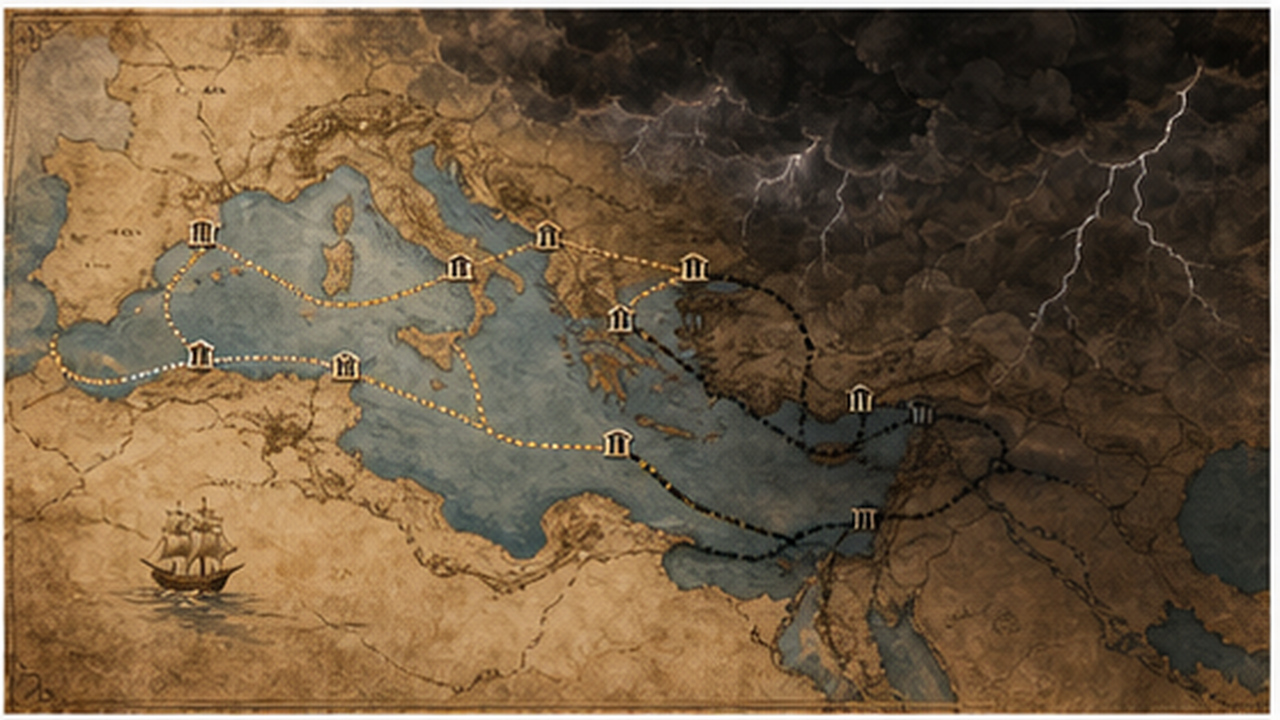
Around 1200 BCE, nearly every major civilization in the eastern Mediterranean — Mycenaean Greece, the Hittites, the Levantine city-states — was destroyed or severely weakened within about fifty years. Bret Devereaux (ACOUP) walks through the leading theories: climate-driven crop failures, severed trade networks, mass migrations, and cascading warfare, none of which alone explains the scale. It's a compelling case study in how interconnected systems fail simultaneously when enough stressors stack up.
Relevance 2/10Importance 4/10
A developer deployed a blocklist to reject disposable email signups, then got blocked by their own system when their personal forwarding alias was caught in the net. The core problem: blanket blocklists can not distinguish between public throwaway inboxes and legitimate privacy tools like Firefox Relay or Apple Hide My Email. The cost is asymmetric — a bot finds a new address in seconds, a real privacy-conscious user gets hard-rejected — and the fix is treating blocklist matches as one signal, not a binary gate.
Relevance 1/10Importance 4/10
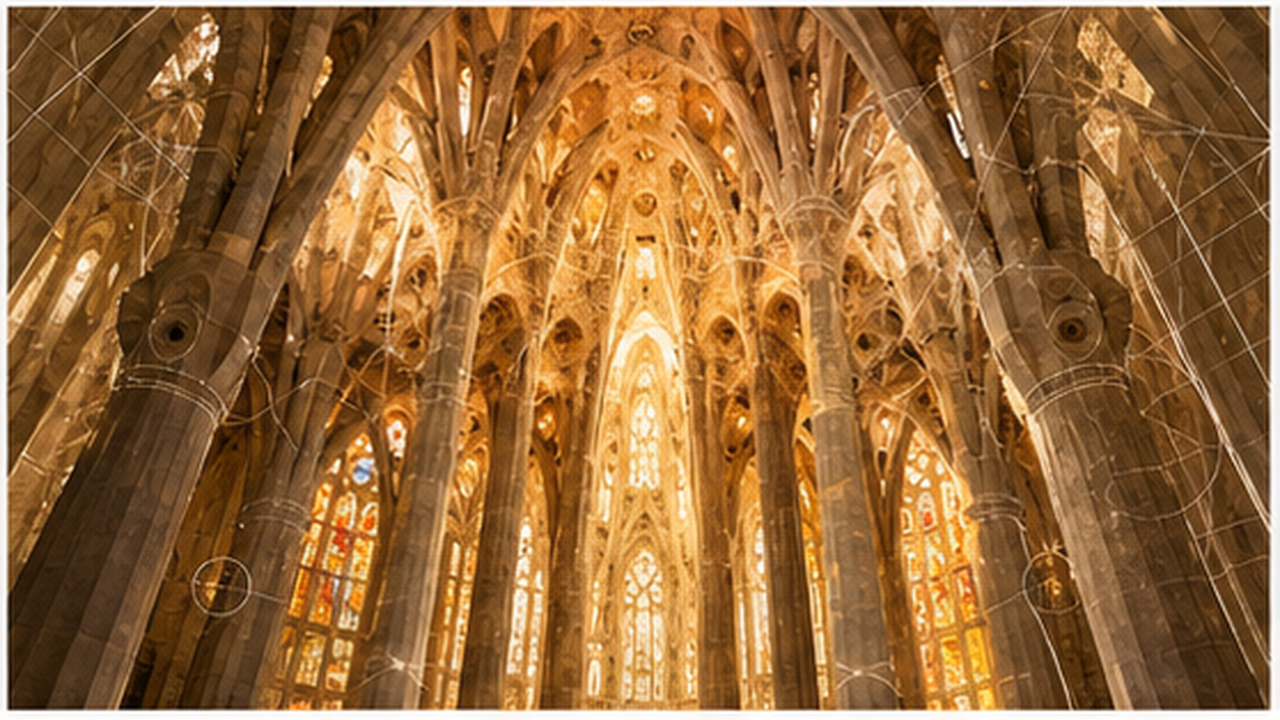
Gaudi's Sagrada Familia is organized around the number 12 and a 7.5-meter base module that governs every major dimension from tower heights to the total footprint. Structural forms are equally deliberate: catenary arches for load efficiency, tree-branching double-helix columns, and polyhedra atop each tower. On the Passion facade, a magic square sums to 33 in every direction — the age of Christ at the crucifixion.

 HN Briefing AM