Relevance 10/10Importance 9/10
OpenAI has received Department of Commerce clearance to release all three GPT-5.6 models — Sol, Terra, and Luna — publicly starting July 9. Sol is the flagship for complex reasoning and agentic workloads at $12.50/$75 per million tokens; Terra offers near-GPT-5.5 performance at half the price; Luna is the budget entry at $1/$6. The trio has been restricted to roughly 20 government-vetted partners since their June 26 debut.
Relevance 9/10Importance 9/10
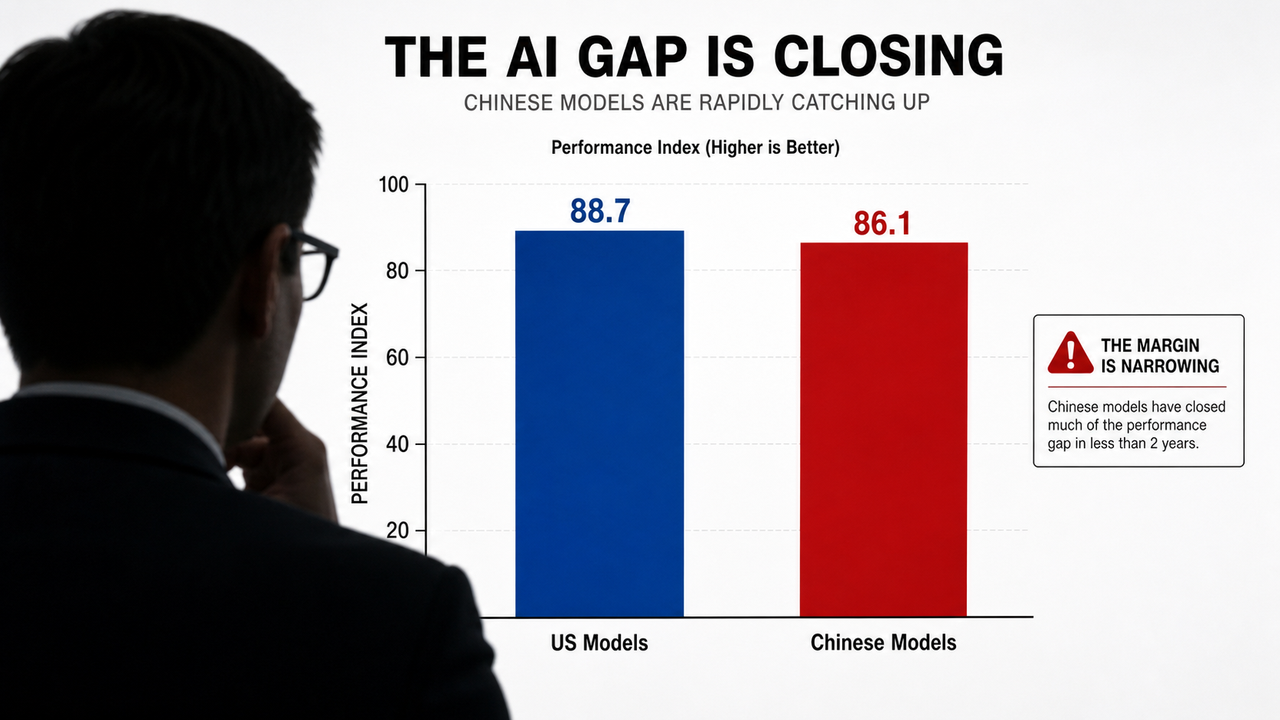
A CNBC investigation confirms Z.ai's GLM-5.2 and other Chinese models have captured a stunning share of US enterprise AI spend — 60 to 90 percent cheaper than comparable US alternatives, with GLM-5.2 scoring within a percentage point of Claude Opus 4.8 on at least one agentic benchmark. Vercel tracked GLM-5.2's daily token volume growing 27x and its customer count growing 80x in its first full week on the platform. Data-jurisdiction concerns still limit regulated-sector adoption, but the cost argument is winning general workloads.
Relevance 10/10Importance 8/10
As of today, access to Anthropic's most advanced Fable 5 model requires usage credits at $10 per million input tokens and $50 per million output — the end of any promotional free tier. Anthropic is cushioning the transition by allowing Claude Pro subscribers to use Fable 5 for up to 50% of their weekly limits at no extra charge temporarily. Sonnet 5 holds its introductory $2/$10 pricing through August 31.
Relevance 8/10Importance 9/10
The United Nations Global Dialogue on AI Governance convened in Geneva on July 6–7, the first forum to bring every member nation to the table on AI regulation. A 40-member Independent Scientific Panel co-chaired by Yoshua Bengio delivered its central finding: science currently cannot guarantee that increasingly capable AI systems will not cause catastrophic harm. The panel warned that AI is approaching or surpassing human capabilities in many domains faster than governments can adapt.
Relevance 9/10Importance 8/10
Google DeepMind delayed Gemini 3.5 Pro to perform a full architectural rebuild — scrapping the 2.5 Pro codebase and targeting improvements in mathematical reasoning, coding, and SVG generation to compete with GPT-5.6 Sol and Fable 5. The rebuilt model introduces a 2 million token context window and a Deep Think Reasoning Layer, and currently remains in limited Vertex AI enterprise preview. If July 17 holds, Google enters a market that will already have absorbed the GPT-5.6 launch.
Relevance 7/10Importance 8/10
Thrive Holdings — a one-year-old holding company tied to Josh Kushner's Thrive Capital and backed by OpenAI — has closed $2 billion from SoftBank, Altimeter Capital, and D1 Capital Partners to acquire and retool accounting, legal, and IT services firms with AI. OpenAI holds a stake and is contributing researchers and engineering talent to the initiative. The play is AI-driven margin expansion through rollups of fragmented, repetitive-work-heavy industries.
Relevance 8/10Importance 7/10
Anthropic published a case study showing Alberta's Ministry of Technology and Innovation deployed Claude Code agents to scan the entire provincial government codebase — 466 million lines — in under 20 hours, a task that previously would have taken years. A red-team agent probed each application from the outside like an attacker; a blue-team agent assessed defenses against 95 security controls and generated remediation plans pointing to exact files to fix. All AI-proposed changes underwent human review and approval before deployment.
Relevance 8/10Importance 6/10
Bespoke Labs closed $40 million — a $31.75M Series A led by Wing VC and joined by Mayfield, plus an earlier $8.25M tranche backed by Google DeepMind chief scientist Jeff Dean — to build custom reinforcement learning environments for post-training AI agents. The company's thesis is that the bottleneck in reliable agentic AI is not the base model but the quality of environments that teach long-horizon task completion. Post-training infrastructure is fast becoming one of the most actively funded subfields in AI.
Relevance 7/10Importance 7/10
Tenstorrent CEO Jim Keller flatly denied reports that Qualcomm was in advanced talks to acquire the AI chip startup for $8–10 billion, saying the company is staying independent and focused on its RISC-V Galaxy Blackhole platform and Japan operations. In a twist, Qualcomm separately confirmed it is acquiring Modular — an AI inference software startup — in an all-stock deal valued at approximately $3.9 billion. The AI hardware and inference stack continues to see aggressive consolidation pressure, just not always where the rumors point.
Relevance 7/10Importance 7/10
In 24 days, NSA and CISA are required to deliver a classified benchmarking process that determines which AI models qualify as "covered frontier models" requiring formal pre-release government review. The deadline also triggers international access rules and a repeatable review framework for future model launches — the same process that held GPT-5.6 to 20 partners for weeks. If this framework lands cleanly, it becomes the structural foundation for US AI governance; if it slips, the vacuum continues.