Relevance 10/10Importance 9/10
Full specs are now confirmed for OpenAI's three-tier GPT-5.6 family: Sol hits 96.7% on Terminal-Bench 2.1 (new state of the art) and introduces "max reasoning" and "ultra mode" for agentic work, priced at $5 input / $30 output per million tokens; Terra matches GPT-5.5 performance at half the cost ($2.50 / $15); Luna targets speed and affordability at $1 / $6. All three remain in government-gated preview with general availability expected mid-July. OpenAI also confirmed Sol will run on Cerebras hardware at up to 750 tokens per second — frontier intelligence at unprecedented speed.
Relevance 10/10Importance 9/10
Anthropic launched Claude Science, a research workbench with 60+ preconfigured tools spanning genomics, proteomics, and cheminformatics, now in beta for Pro, Max, Team, and Enterprise users on macOS and Linux. Simultaneously, the company announced an internal drug discovery program targeting neglected diseases historically underserved by pharma. Early partners include Novo Nordisk and the Allen Institute. Life sciences head Eric Kauderer-Abrams framed the move as needing to "live" the science alongside researchers — not just benchmark against it.
Relevance 9/10Importance 8/10
Chinese AI developer Z.ai debuted ZCode, a free agentic development environment built on its GLM-5.2 model, available on Windows, macOS, and Linux. GLM-5.2 ranks second on the Code Arena benchmark — one point behind Anthropic's Fable 5, narrowly ahead of GPT-5.5. ZCode supports mobile session monitoring via WeChat, Feishu, and Telegram, and requires user approval before high-privilege actions. Paid plans start at $16.20/month. Enterprise legal teams will note: China's data law applies to every GLM-5.2 API call.
Relevance 8/10Importance 8/10
The UN Global Dialogue on AI Governance convenes in Geneva on July 6, bringing Member States together to negotiate international frameworks for AI safety and equitable access. The summit follows warnings from the UN's Independent International Scientific Panel that AI agent capability is doubling every four to seven months while governance infrastructure is not keeping pace. At stake: who writes the rules, and who gets locked out of the benefits.
Relevance 8/10Importance 8/10
A Guardian investigation found that OpenAI and partner Nscale never visited Cobalt Park — the "AI growth zone" named as the centerpiece of the UK Stargate announcement — before making their 2025 pledge. On-the-ground reporting found an active scaffolding yard, no planning submissions, and no evidence of site assessment. OpenAI formally paused Stargate UK in April 2026, citing electricity costs roughly four times higher than in the US. The findings expose a structural flaw in how the UK government tallies AI investment: pledges are counted at announcement, not at execution.
Relevance 8/10Importance 8/10
AWS added Mechanical Turk to its "Services in Maintenance" list, closing the 2005 crowdsourcing marketplace to new customers on July 30 and signaling full shutdown ahead. The platform had found a second life labeling training data for AI models, but Amazon now steers that use case to SageMaker Ground Truth. There is real symbolic weight here: Mechanical Turk built the labeled datasets that made modern AI possible — and the AI it helped create is a primary reason it no longer has a future.
Relevance 9/10Importance 7/10
OpenAI introduced GeneBench-Pro, a research-grade benchmark testing AI agents on computational biology tasks designed around real-world scientific ambiguity. The launch is a direct response to Anthropic's VirBench and signals that life sciences has replaced coding as the next major AI capability battleground. With SWE-bench largely saturated after two years of competition, expect genomics and proteomics to drive the next benchmarking arms race.
Relevance 8/10Importance 7/10
In an interview with The Decoder, Mistral CEO Arthur Mensch used the June 12 Fable 5 export control incident as a case study for why enterprise reliance on closed AI systems is dangerous. His framing: "proprietary AI models give labs a front-row seat" to their customers' operations, and any export control, pricing change, or outage can instantly disable mission-critical infrastructure. Broader warning: Europe has roughly two years to build independent AI stacks before dependence on American-controlled models becomes structural.
Relevance 9/10Importance 6/10
A new arXiv paper introduces DiscoBench, a 211-sample benchmark across 11 real-world domains testing whether search agents can detect ambiguous queries and ask clarifying questions before proceeding. Key finding: agents search repeatedly rather than flag unclear requests, and that strategy often performs worse than guessing. The benchmark surfaces a meaningful gap between retrieval capability and interactive problem-solving — two skills current evaluations treat as correlated when they are not.
Relevance 7/10Importance 6/10
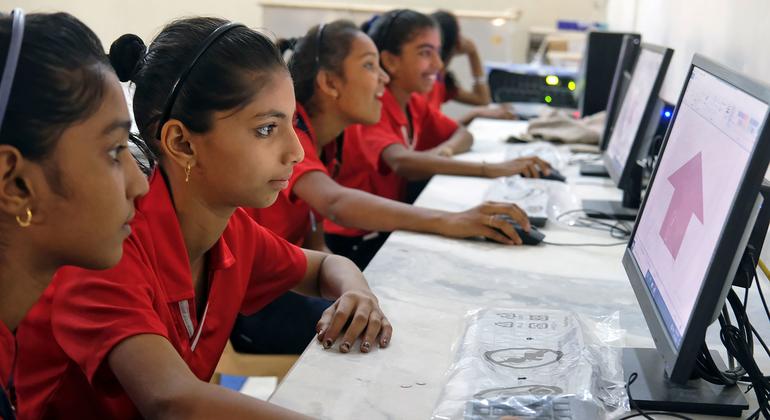
Schools like Alpha School are marketing AI-powered personalized tutoring combined with Socratic workshops at luxury tuition rates, targeting affluent families on the premise that AI will deliver a competitive edge. The equity problem is plain: the same tutoring capability increasingly available at near-zero marginal cost is being repackaged as an exclusive service. Outcome data remains thin, and the market is expanding regardless.