Relevance 9/10Importance 10/10
Oracle's fiscal-2026 annual report, filed June 23, shows headcount dropping from roughly 162,000 to about 141,000, and the filing itself states that deploying AI "has resulted, and may continue to result, in reductions to our workforce." It's one of the first times a major company has put an AI-jobs claim directly into a regulatory document. Restructuring costs hit $1.84 billion while AI cloud capex jumped 162% to $55.7 billion — the buildout and the cuts marching in lockstep.
Relevance 7/10Importance 10/10
Beijing struck back on June 22, placing export controls and government-procurement bans on 56 American defense, aerospace, and rare-earth companies after Washington expanded its military blacklist to 65 Chinese entities including Alibaba and Baidu. The escalation lands just days after the US pulled Anthropic's top models from foreign access, hardening the tech-and-trade cold war around AI supply chains. Rare-earth producers MP Materials and USA Rare Earth are among the named targets.
Relevance 9/10Importance 9/10
Qualcomm is in advanced talks to buy AI-infrastructure software firm Modular for about $4 billion, fresh reporting confirmed June 24. It's Qualcomm's second big AI play in weeks, alongside a pursuit of Tenstorrent worth up to $10 billion, and the target here is Nvidia's stickiest advantage — its CUDA software stack. Modular's valuation would more than double from its $1.6 billion mark of nine months ago.
Relevance 10/10Importance 8/10
As of June 23, Claude Fable 5 is no longer bundled into Pro, Max, Team, and seat-based Enterprise plans at no extra cost, ending the 13-day complimentary window Anthropic opened on June 9. The model had been forced fully offline June 12 by a US export-control directive before partial restoration, and the structural markers to watch now are July 8 for government ID verification and August 1 for the 60-day Executive Order deadline. A turbulent launch becomes a turbulent monetization.
Relevance 8/10Importance 8/10
Getty announced a multi-year display partnership on June 21 that will surface its licensed photos inside ChatGPT's search and discovery results, with attribution and explicitly no model-training rights. The market reaction was violent in the best way — Getty shares spiked as much as 200% in pre-market trading June 22. After years of suing AI labs over training data, a major stock-photo house just found a way to get paid by one instead.
Relevance 8/10Importance 9/10
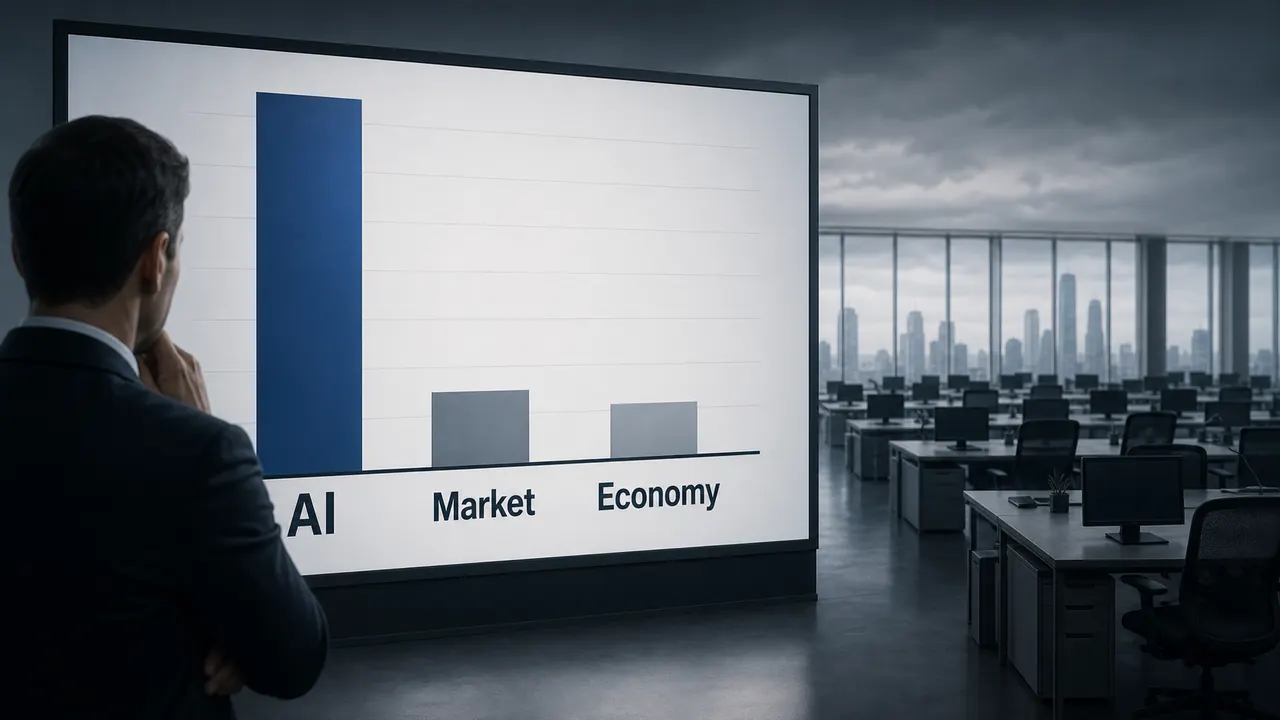
Challenger, Gray & Christmas attributed about 38,579 of May's job cuts to AI — the most it has ever logged in a single month and the third straight month AI led all stated reasons, outpacing market conditions for the first time. US tech alone shed 38,242 roles, its heaviest month in nearly two years. The caveat worth keeping: this is employer self-attribution, and the "AI washing" question hasn't gone away.
Relevance 7/10Importance 9/10
The "Magnificent Seven" plus Broadcom and Oracle have lost roughly $2.7 trillion in combined market value across June as investors take a harder look at who's actually funding the buildout and when it pays off. It's the clearest sign yet that the market is starting to price the bill, not just the promise. Capex keeps climbing; patience is getting expensive.
Relevance 9/10Importance 7/10
The much-hyped late-June launch for OpenAI's GPT-5.6 has effectively evaporated: prediction-market odds for a June 22–28 release collapsed from roughly 83% to about 18% over the past few days, pushing the most likely window into July. OpenAI still has no official announcement, system card, or release note — only chief scientist comments calling it a "meaningful" leap on long documents and reliability. Hype, meet calendar.
Relevance 9/10Importance 7/10
xAI's Grok 4.3 is now generally available on Amazon Bedrock at $1.25 input and $2.50 output per million tokens — the cheapest US-lab frontier reasoning model on the platform, with a 1-million-token context window. xAI touts the lowest hallucination rate among frontier models, but independent AA-Omniscience benchmarks tell a messier story: about 49% accuracy at a roughly 26% hallucination rate, with internal and external numbers diverging sharply. More knowledge bought at a slightly higher hallucination cost.
Relevance 9/10Importance 7/10
Google's flagship Gemini 3.5 Pro is inside its promised June general-availability window, but as of June 23 it remains a limited Vertex AI enterprise preview rather than a public launch. Prediction markets put the odds of a release by June 30 at a coin-flip-ish 50–55%. The headline specs — a 2-million-token context window and "Deep Think" reasoning — are real; the public rollout is the part still in suspense.