Relevance 10/10Importance 9/10
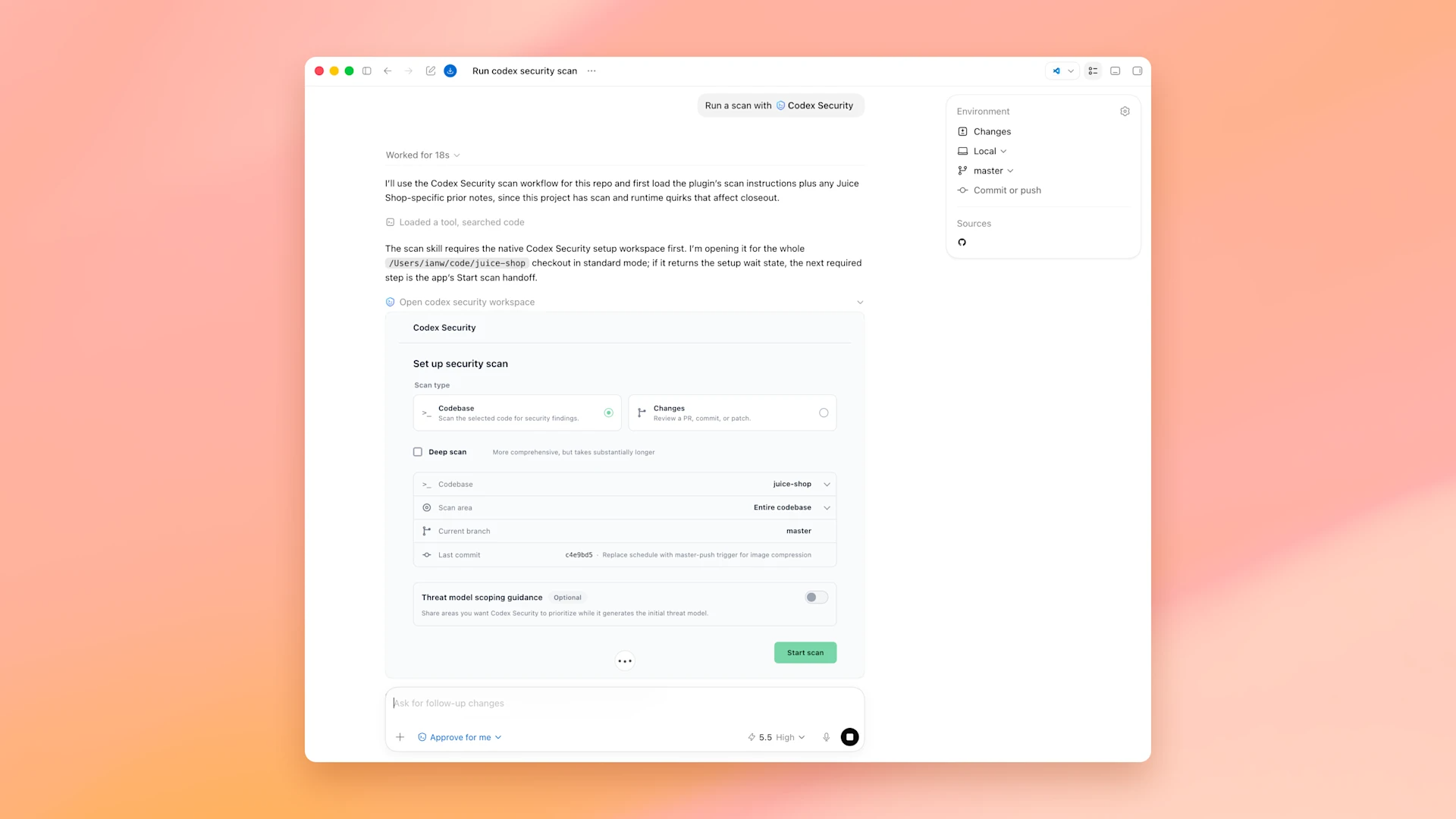
OpenAI expanded its Daybreak security program with the full release of GPT-5.5-Cyber, its strongest model yet for finding and patching software flaws, scoring 85.6% on CyberGym versus 81.8% for standard GPT-5.5. Alongside it, OpenAI launched Patch the Planet, co-founded with Trail of Bits and partnered with HackerOne, to fix open-source vulnerabilities at scale across cURL, Python, Go, and more. Every AI-generated finding gets human review before reaching a maintainer, and the model itself is restricted to vetted defenders only.
Relevance 9/10Importance 8/10
Anthropic hit elevated error rates across all models and platforms starting around 14:19 UTC today, with Claude.ai, the API, Claude Code, and Cowork all affected; Downdetector blew past 8,000 reports in the US alone. Claude for Government was spared, and a fix was being implemented within minutes of identification. It's the second major Claude outage in three weeks, landing at an awkward moment ahead of Anthropic's planned IPO.
Relevance 9/10Importance 8/10
SpaceX inked a deal giving Reflection AI access to Nvidia GB300 chips at the Colossus 2 data center near Memphis, with payments of $150 million a month starting July 1 totaling up to $6.3 billion through 2029. Reflection, last valued at $25 billion, is betting on American open-source frontier models to rival OpenAI, Anthropic, and Google. The agreement pushes SpaceX's outside committed compute revenue past $80 billion, though a 90-day exit clause leaves real flexibility on both sides.
Relevance 8/10Importance 9/10
The Regional Court of Munich issued a temporary injunction (case 26 O 869/26) holding Google directly liable for false claims its AI Overviews invented about two publishers, tying them to scams that appeared in none of the linked sources. Crucially, the court classified the AI summary as Google's own content, rejecting the limited liability that shields traditional search results. It may be the first ruling holding an AI firm responsible for AI-generated speech, with implications for every chatbot on the market.
Relevance 8/10Importance 8/10
Morgan Stanley forecasts global AI-linked debt issuance will nearly double to roughly $570 billion this year, with nearly $236 billion already sold by May 31 — about four times the pace of 2025. Hyperscaler capital spending is set to consume close to 100% of operating cash flows, versus a 10-year average of 40%, so bonds are now funding the buildout. For ordinary 401(k) investors, AI is quietly becoming the largest single position in investment-grade credit.
Relevance 7/10Importance 7/10
SPCX shares cratered as much as 16.4% to around $152 on June 22, a three-day losing streak from a $225 peak hit just days after its $135 IPO. The trigger: a planned inaugural bond offering of at least $20 billion to refinance the bridge loan behind the $60 billion Cursor acquisition, plus newly available options letting short sellers finally hedge. The selloff shows investors are starting to scrutinize how the AI compute land-grab actually gets paid for.
Relevance 8/10Importance 7/10
As of today, Anthropic's Fable 5 is no longer bundled free into Pro, Max, Team, and Enterprise plans, moving to usage credits at $10 per million input tokens and $50 per million output — double Claude Opus 4.8's pricing. Because the model was offline from June 12 to roughly June 18 under the export-control directive, subscribers effectively got only a handful of days from the advertised 13-day complimentary window. The abrupt pricing flip is fueling enterprise interest in multi-provider fallback and open-weight alternatives.
Relevance 8/10Importance 6/10
Beyond the SpaceX compute pact, Reflection AI is positioning itself as the US answer to Chinese open-weight leaders, pitching American-built open-source models that can compete with closed frontier systems. The $25 billion valuation signals serious investor appetite for an open alternative as enterprises grow wary of single-vendor lock-in after the Fable 5 disruption. Nvidia sits on both sides of the trade, supplying the GB300 chips that make the whole thing run.
Relevance 8/10Importance 6/10
MiniMax's M3 lands with a 1-million-token context window, native multimodality, and the top open-weight SWE-Bench Pro score at 59.0%, while Z.ai's 744-billion-parameter GLM-5.2 leads the open-weight intelligence index. Epoch AI also added nine fresh external benchmarks on June 22 spanning agentic work, cybersecurity, and research-level physics. The momentum underscores how fast open weights are eroding the closed labs' lead on coding and agents.
Relevance 8/10Importance 6/10
Google's Gemini 3.5 Pro is now inside its general-availability window, tracked for June 23-30, with a 2-million-token context window — the largest in any production frontier model. Pricing lands at $15 per million input tokens and $60 per million output, roughly 10x the Flash tier, with the Deep Think reasoning mode gated behind a $250-a-month Ultra subscription. It remains in limited enterprise preview as Google times the launch against Fable 5 and the still-unreleased GPT-5.6.